Key Findings
Yale University’s ERASE project has been awarded a significant $4 million grant from the National Science Foundation (NSF), marking a crucial step forward in the development of large-scale, fault-tolerant quantum computers. This substantial funding injection is set to accelerate research and development efforts aimed at realizing practical quantum computing, which is currently hampered by the inherent instability of qubits.
Technical Details
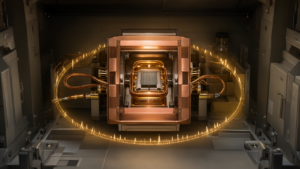
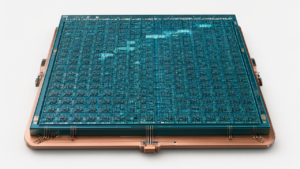
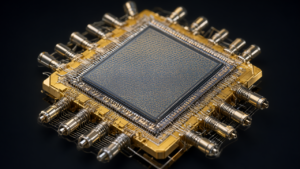
The ERASE project is pioneering a distinctive and innovative approach to quantum error correction, a formidable challenge in building reliable quantum machines. Specifically, it leverages a technology known as “erasure flag” qubits. This method is designed to enhance the efficiency and precision of error correction processes by making it easier to identify the location of errors when they occur. By pinpointing errors more effectively, the project aims to overcome the fragility of current qubits, which are highly susceptible to environmental noise and suffer from short coherence times. The initiative benefits significantly from the involvement of Quantum Circuits, Inc. (QCI), a Yale spin-off recently acquired by D-Wave Quantum. The integration of QCI’s expertise and resources, combined with D-Wave’s industrial capabilities, is expected to substantially boost the project’s momentum, facilitating the seamless transition from fundamental research to industrial application.
Background & Context
Quantum computing holds immense promise for revolutionizing fields such as drug discovery, materials science, and financial modeling by tackling problems beyond the reach of even the most powerful classical supercomputers. However, the path to widespread adoption has been obstructed by the inherent instability and error proneness of quantum systems, a phenomenon known as decoherence. Investments in sophisticated error correction technologies, like those pursued by the ERASE project, are therefore critical to breaking through this barrier. The U.S. government has identified quantum technology as a top national strategic priority, and this NSF grant is a testament to the ongoing commitment to establish and maintain a leading edge in the global quantum race.
Strategic Significance & Outlook
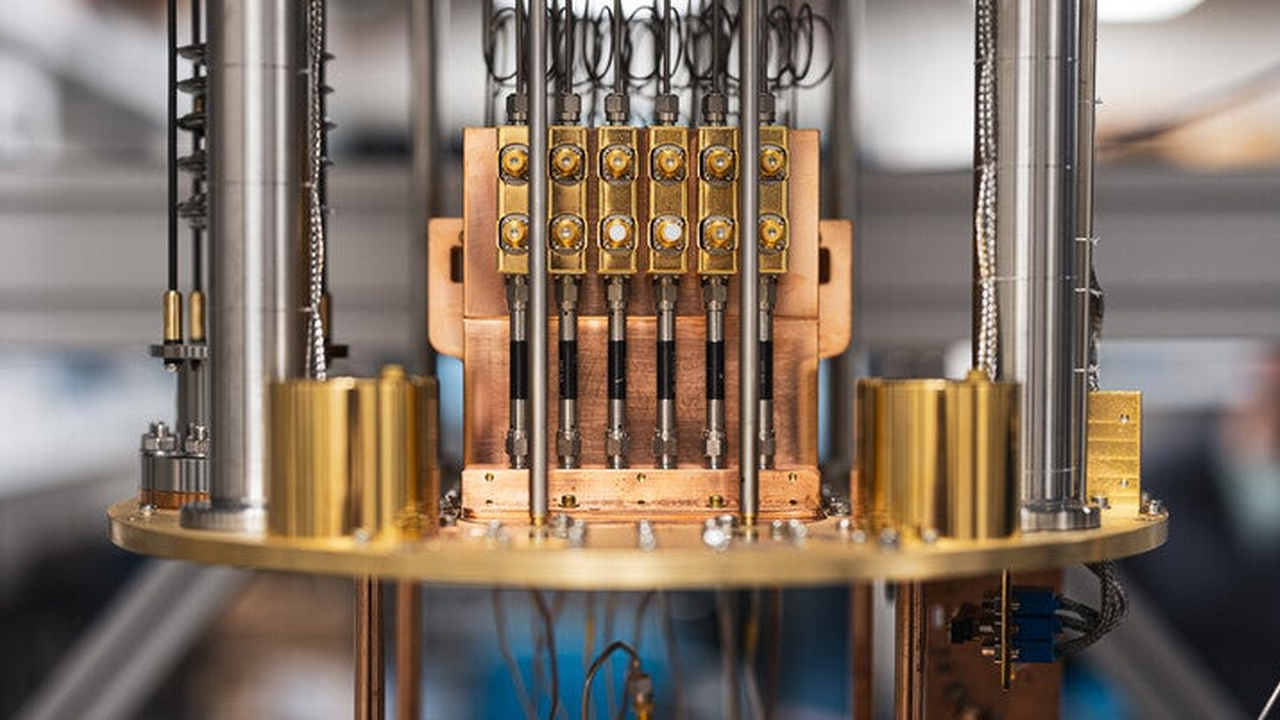
With this new funding, the ERASE project will focus on creating the initial hardware and software blueprints for building fault-tolerant quantum computers. This includes optimizing quantum architectures, developing advanced control systems, and implementing robust error correction algorithms. Furthermore, the project is also committed to fostering the next generation of quantum technology talent in Connecticut, thereby building a skilled workforce essential for the emerging quantum economy. The successful realization of large-scale, robust fault-tolerant quantum computers would unlock computational capabilities currently deemed impossible, profoundly impacting science, industry, and society. This endeavor represents a significant milestone in transitioning quantum computing from a theoretical pursuit to a tangible, real-world technological force.
Source: https://news.yale.edu/2026/06/25/new-vision-quantum-computing-takes-big-step-forward-new-grant
Get our weekly technology intelligence — free
Receive an infographic that lets you judge at a glance whether each field’s analysis report is worth reading.
Subscribe Free — Weekly Tech Intelligence
By subscribing, you’ll receive Troy-Technical’s weekly technology intelligence newsletter.
- Your email and selected fields are used only to deliver the newsletter.
- We never share your information with third parties.
- You can unsubscribe anytime via the link in each email.
See our Privacy Policy for details.
Takes about a minute · Unsubscribe anytime