Key Findings
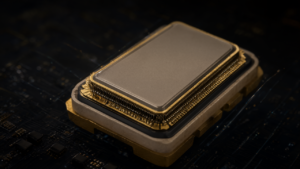
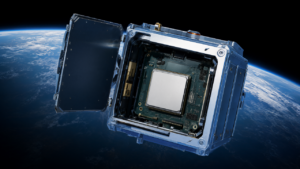
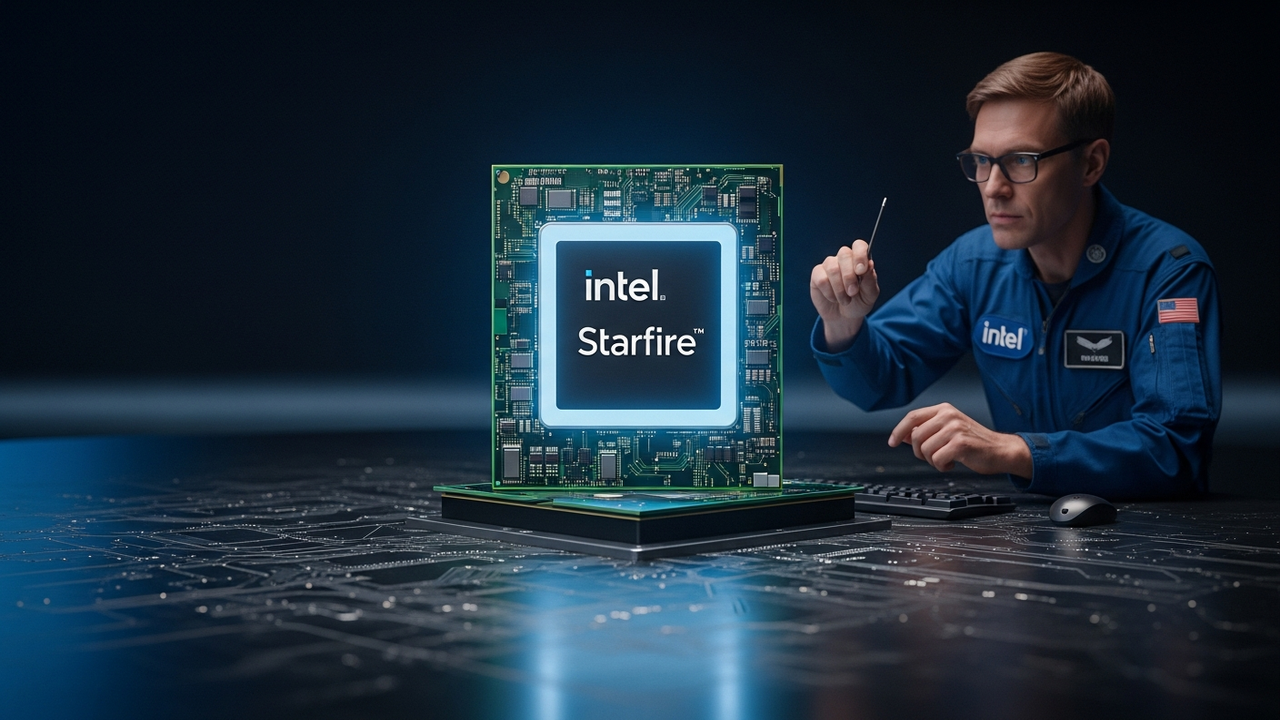
Intel introduced “Starfire” in July 2026, the company’s first processor specifically designed for space missions. This groundbreaking System-on-Chip (SoC) integrates advanced AI acceleration capabilities with enhanced resilience to withstand the harsh radiation environments of space, significantly boosting on-board data processing power.
Technical Details
The “Starfire” processor is manufactured using Intel’s state-of-the-art 18A process technology and features the company’s innovative Foveros 3D packaging, allowing for high-density integration of multiple chiplets. This architecture enables a combination of high computational performance and low power consumption. Specifically, the SoC includes eight high-performance x86 CPU cores, integrated Xe graphics, and a dedicated AI acceleration engine delivering an impressive 75 TOPS (Tera Operations Per Second). This enables real-time execution of AI workloads such as image recognition, data compression, fault diagnostics, and autonomous navigation directly on spacecraft. Furthermore, Starfire incorporates a comprehensive radiation-hardened design, ensuring robustness against single-event effects (SEE) and total ionizing dose (TID) caused by cosmic rays and solar proton events. Engineering samples are slated for customer delivery in Q3 2026, with the ongoing certification process focused on ensuring long-term reliability and radiation tolerance for demanding space environments.
Background & Context
Traditional space systems have been largely constrained by communication bandwidth and latency, as massive amounts of data were typically processed by ground stations on Earth. However, with the exponential increase in data generated by satellites and probes, the demand for on-orbit edge computing and AI processing has surged. This shift enables real-time decision-making, enhanced autonomous operations, and optimized data transmission back to Earth. Intel’s “Starfire” is developed to meet these next-generation space computing needs, representing a crucial milestone in accelerating the “smartification” of the space industry. In the highly competitive space sector, Intel aims to carve out new market opportunities by delivering both high performance and radiation resilience.
Strategic Significance & Outlook
The introduction of the “Starfire” processor is expected to bring about a significant transformation in the design and operation of space missions. It will enable probes to conduct more advanced scientific analysis on-board, and satellites to extract meaningful information from Earth observation data in real-time, enhancing responsiveness for anomaly detection and disaster monitoring. In the long term, it holds the potential to become a foundational technology for improving the autonomy and intelligence of robots in lunar bases and Mars missions. Intel is anticipated to further evolve this processor and build an ecosystem to support diverse space applications. The fusion of radiation hardening and high-performance AI will be key to expanding the frontiers of space.
Get our weekly technology intelligence — free
Receive an infographic that lets you judge at a glance whether each field’s analysis report is worth reading.
Subscribe Free — Weekly Tech Intelligence
By subscribing, you’ll receive Troy-Technical’s weekly technology intelligence newsletter.
- Your email and selected fields are used only to deliver the newsletter.
- We never share your information with third parties.
- You can unsubscribe anytime via the link in each email.
See our Privacy Policy for details.
Takes about a minute · Unsubscribe anytime