Key Findings
TSMC’s advanced packaging technologies, CoWoS and SoIC, represent the most significant physical bottlenecks in the production of AI GPUs and accelerators today. Global demand for CoWoS is projected to almost double from 1.3-1.4 million wafers in 2026 to an estimated 2.5-2.7 million wafers by 2027. Despite significant investments in capacity expansion by TSMC and its partners, the supply of advanced packaging is still anticipated to be 10-20% short of demand, posing a critical challenge for the rapidly expanding AI sector.
Technical / Clinical Details
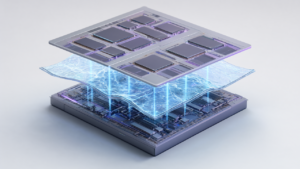
CoWoS (Chip-on-Wafer-on-Substrate) is a leading 2.5D packaging technology that horizontally integrates multiple chips, such as High Bandwidth Memory (HBM), onto an interposer. SoIC (System-on-Integrated-Chips), on the other hand, is TSMC’s proprietary 3D packaging technology that vertically stacks chiplets, enabling higher integration density and shorter interconnect paths. As AI applications demand ever-increasing performance, these technologies are vital for maximizing the processing power and efficiency of AI processors. Specifically, AI GPUs and accelerators require memory bandwidths reaching hundreds of gigabytes per second to terabytes per second, a feat largely enabled by CoWoS integration of HBM.
Background & Context
The escalating complexity and scale of AI models have pushed traditional 2D packaging to its performance limits, accelerating the transition to advanced packaging technologies. The expansion of AI workloads in data centers and cloud infrastructure is driving the demand for high-performance AI chips, leading to unprecedented requirements for CoWoS and SoIC packaging capacity. TSMC is responding with massive investments, including the construction of new advanced packaging facilities in Chiayi. Major OSAT (Outsourced Semiconductor Assembly and Test) providers like ASE/SPIL and Amkor are also collaborating to boost capacity. However, the growth in demand continues to outpace these supply-side augmentations.
Strategic Significance & Outlook
The persistent supply-demand gap in advanced packaging could impact the volume and market expansion of AI chips in the short term. This situation not only compels TSMC and OSAT companies to make further investments but also intensifies the competition in developing new packaging materials and equipment. Furthermore, customer companies may explore strengthening relationships with multiple suppliers or investing in their own in-house packaging technology development to diversify supply chain risks. In the long run, this bottleneck is expected to accelerate further innovation in packaging technologies and the establishment of more efficient production processes, ultimately shaping the future trajectory of the semiconductor industry.
Source: https://exponentialindustry.com/blog/2026-08-10-tsmc-cowos-soic-ai-advanced-packaging-bottleneck/
Get our weekly technology intelligence — free
Receive an infographic that lets you judge at a glance whether each field’s analysis report is worth reading.
Subscribe Free — Weekly Tech Intelligence
By subscribing, you’ll receive Troy-Technical’s weekly technology intelligence newsletter.
- Your email and selected fields are used only to deliver the newsletter.
- We never share your information with third parties.
- You can unsubscribe anytime via the link in each email.
See our Privacy Policy for details.
Takes about a minute · Unsubscribe anytime