Key Findings
A recent review paper in the cultivated meat sector systematically organizes the main scientific, sustainability, and regulatory challenges facing this nascent industry, emphasizing the urgent need for fundamental improvements in biomanufacturing technologies to achieve cost-effective large-scale production.
Technical / Clinical Details
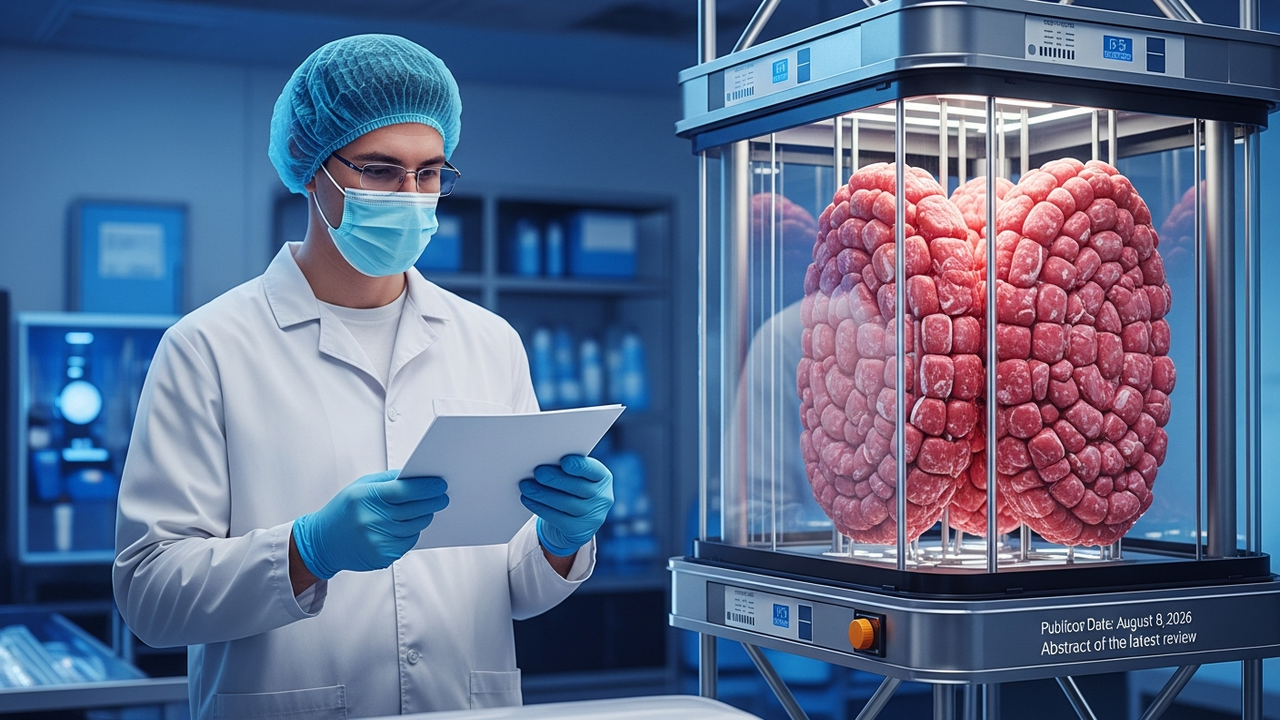
For successful commercial production of cultivated meat, efficient cell proliferation under culture conditions that mimic the in vivo environment is essential. The review particularly highlights the importance of microcarrier technology for large-scale culture of anchorage-dependent cells. Microcarriers are microscopic particles that significantly increase the surface area for cell attachment and growth, enabling high-density culture within bioreactors. However, existing microcarrier technologies face challenges in terms of cell detachment efficiency, cost, and risk of cell damage. Furthermore, the composition of culture media, especially the cost of growth factors, heavily influences the final price of cultivated meat. To resolve these issues, substantial innovation in overall biomanufacturing methods is required, including the development of more efficient cell culture media, media recycling technologies, and continuous culture processes.
Background & Context
Cultivated meat has garnered global attention as a sustainable alternative to traditional livestock farming, addressing issues such as environmental impact (greenhouse gas emissions, water and land use), animal welfare, and food security. However, the technology is still in its early stages, and numerous hurdles exist for scaling up from laboratory to industrial production. Crucially, current manufacturing costs are significantly higher compared to conventional meat products, necessitating dramatic improvements in production efficiency to offer cultivated meat at an attractive price point for consumers. Regulatory challenges, including safety assessment, labeling rules, and consumer acceptance for cultivated meat, also pose barriers to market introduction.
Strategic Significance & Outlook
As this review indicates, the comprehensive improvement of biomanufacturing processes—including the evolution of microcarrier technology, development of cost-effective culture media, and innovative bioreactor design—is indispensable for the cultivated meat industry to achieve sustainable and commercial success. Regulatory bodies must establish clear and consistent guidelines for this new food category. Researchers, engineers, and investors must seek collaborative approaches to overcome these technical and regulatory challenges. Cultivated meat holds immense potential to transform our food systems towards sustainability, and future developments in technology and market formation are keenly watched.
Get our weekly technology intelligence — free
Receive an infographic that lets you judge at a glance whether each field’s analysis report is worth reading.
Subscribe Free — Weekly Tech Intelligence
By subscribing, you’ll receive Troy-Technical’s weekly technology intelligence newsletter.
- Your email and selected fields are used only to deliver the newsletter.
- We never share your information with third parties.
- You can unsubscribe anytime via the link in each email.
See our Privacy Policy for details.
Takes about a minute · Unsubscribe anytime