Key Findings
iPSC-derived therapies are rapidly emerging, with particular emphasis on their potential as scalable solutions for allogeneic treatments and complex diseases. Closed and automated cell culture systems are identified as key to overcoming major manufacturing challenges for iPSC-derived therapies, leading to significant cost reductions and improved consistency.
Technical / Clinical Details
iPSC-derived therapies involve differentiating iPSCs, generated from patient somatic cells, into target cell types. This allows for not only autologous transplantation but also allogeneic transplantation, where cells derived from healthy donor iPSCs can be used for multiple patients. Allogeneic transplantation has the potential to reduce manufacturing costs, enable off-the-shelf product availability, and provide broader patient access. However, achieving this requires overcoming several technical challenges:
- **Optimization of Genetic Engineering**: Precise gene-editing technologies are needed to enhance differentiation efficiency into target cells and reduce the risk of tumor formation.
- **Establishment of GMP-Grade Production**: Safe and high-quality iPSC-derived cells suitable for clinical use must be manufactured according to stringent Good Manufacturing Practice (GMP) standards.
- **Consistency in Large-Scale Manufacturing**: Maintaining consistent cell quality, purity, and functionality is paramount even in mass production.
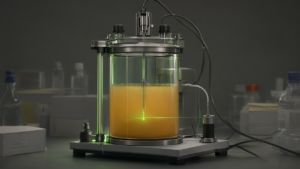
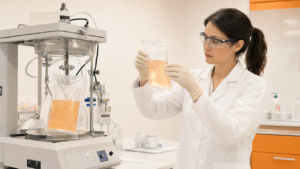
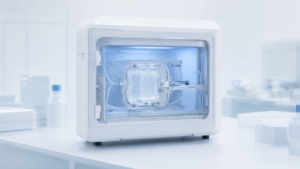
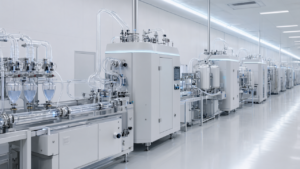
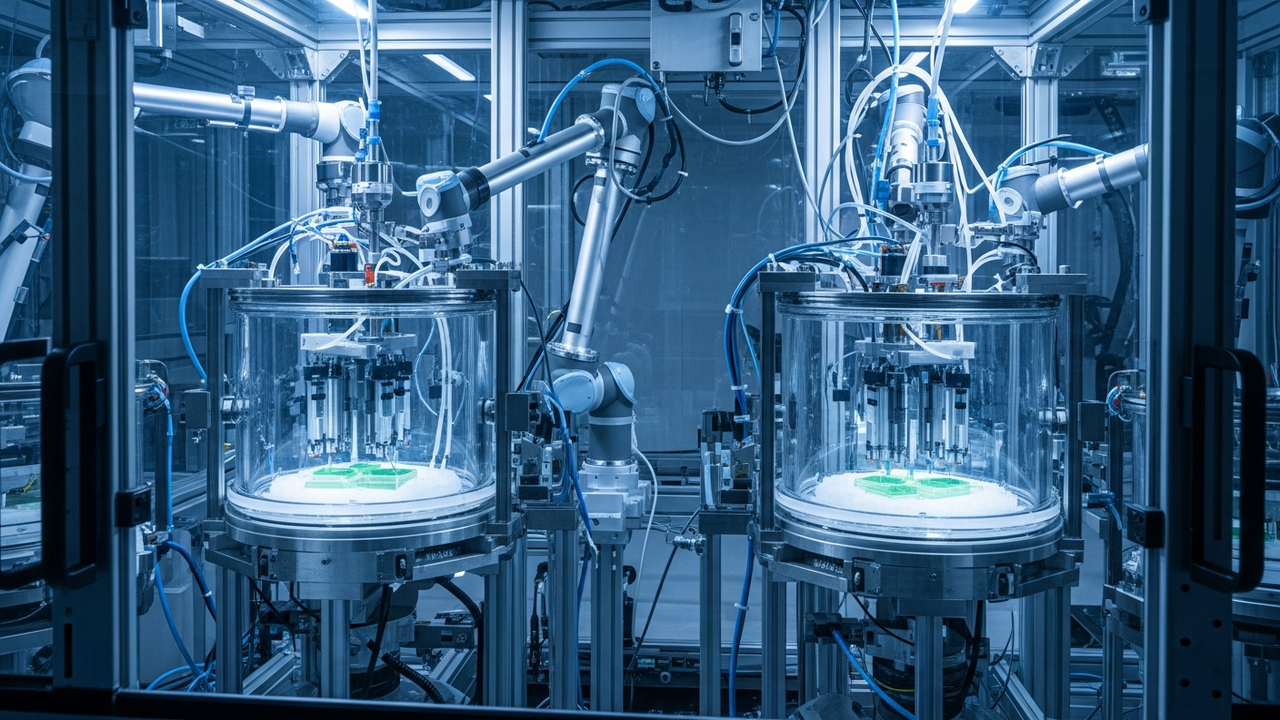
To address these challenges, the article emphasizes the importance of closed and automated cell culture systems. Closed systems minimize the risk of external contamination and maintain aseptic conditions. Automated systems standardize each step of the culture process (e.g., media exchange, cell passaging, cell harvesting), eliminating human error and improving consistency and reproducibility. Furthermore, automation in process analytics is crucial for real-time monitoring of cell conditions and culture environment changes, enabling rapid, data-driven decision-making and ensuring scalability.
Background & Context
The field of regenerative medicine and cell therapy holds the promise of revolutionary solutions for diseases that are difficult to treat with conventional methods. iPSCs, in particular, are highly anticipated as an unlimited cell source due to their self-renewal and pluripotency characteristics. However, their commercialization has long been plagued by bottlenecks such as manufacturing complexity, high costs, and lack of scalability. The transition to closed, automated manufacturing platforms is an inevitable evolution to overcome these barriers, guiding iPSC-derived therapies from research to clinical application and widespread market adoption.
Strategic Significance & Outlook
Advancements in closed, automated cell culture systems will significantly improve the cost-effectiveness of iPSC-derived therapies and enhance patient access. This is expected to accelerate clinical applications across a wide range of disease areas, including cancer, neurodegenerative diseases, cardiovascular diseases, and ocular disorders. Investors and pharmaceutical companies view these manufacturing technology innovations as drivers of explosive growth in the iPSC-derived therapy market and creators of new business opportunities. Ultimately, these technologies are anticipated to become the standard manufacturing processes for regenerative medicine, ushering in a future where safer, more affordable treatments are established for patients worldwide.
Get our weekly technology intelligence — free
Receive an infographic that lets you judge at a glance whether each field’s analysis report is worth reading.
Subscribe Free — Weekly Tech Intelligence
By subscribing, you’ll receive Troy-Technical’s weekly technology intelligence newsletter.
- Your email and selected fields are used only to deliver the newsletter.
- We never share your information with third parties.
- You can unsubscribe anytime via the link in each email.
See our Privacy Policy for details.
Takes about a minute · Unsubscribe anytime