Background
The accelerating adoption of electric vehicles (EVs) underscores a critical demand for enhanced battery performance, directly influencing driving range, charging speed, safety, and cost. Excessive heat generation is a primary contributor to battery performance degradation and reduced lifespan. While conventional active cooling systems often introduce complexity and weight, this innovative adhesive sheet presents a simpler, high-performance passive thermal management solution, potentially increasing design flexibility and contributing to lighter vehicle architectures.
Key Findings
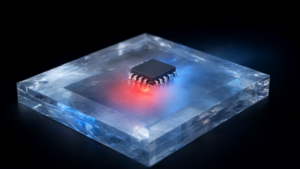
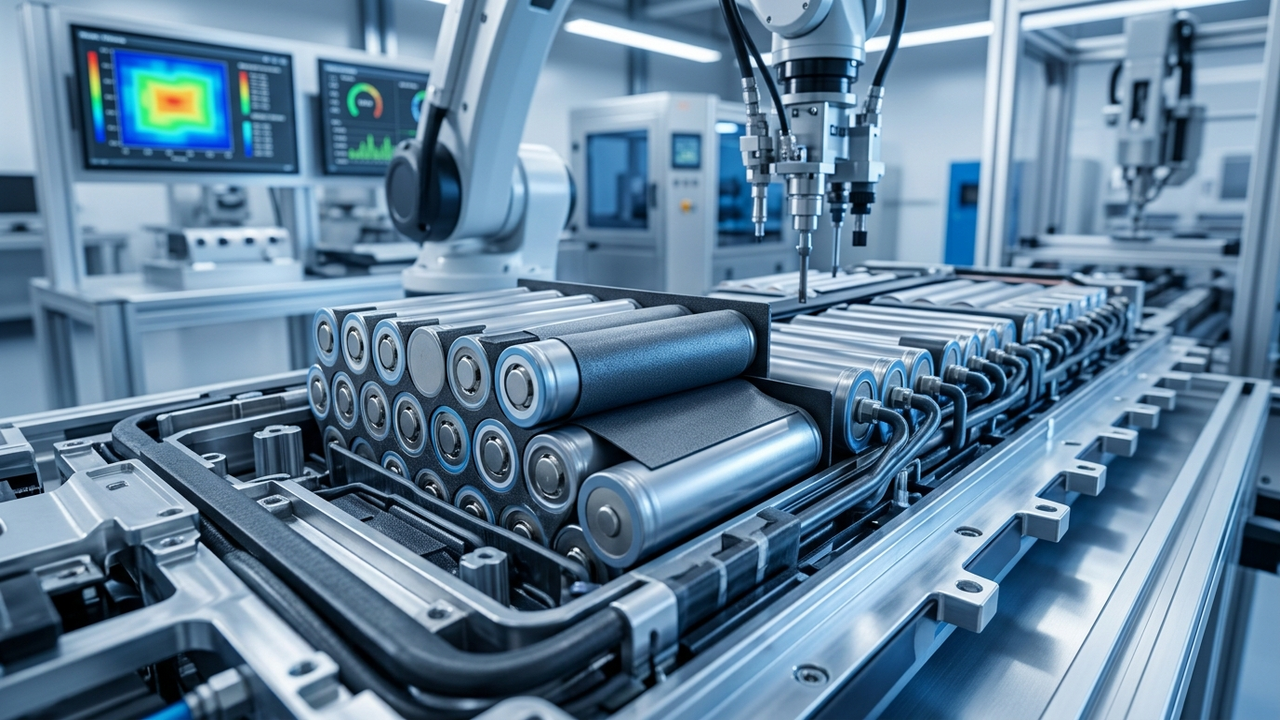
A pioneering thermally conductive adhesive sheet, developed by a Japanese company, was unveiled at Techno-Frontier 2026, poised to revolutionize electric vehicle (EV) battery thermal management. This advanced material effectively homogenizes temperature distribution across individual battery cells within modules, significantly extending battery lifespan and bolstering overall EV safety and efficiency.
Technical Details
The newly developed adhesive sheet exhibits superior thermal conductivity exceeding 8 W/m-K, coupled with robust adhesive characteristics. This performance is achieved through proprietary thermal filler technology and advanced polymer design, enabling a thinner material profile and enhanced heat dissipation compared to conventional thermal interface materials. Its versatile sheet form factor simplifies integration into intricate battery module designs, optimizing EV manufacturing processes. By ensuring a more uniform temperature distribution, the material minimizes thermal stress on battery cells, thereby mitigating common degradation factors such as increased internal resistance and capacity fade. Furthermore, its dual function as an adhesive provides robust mechanical stability, safeguarding battery modules from operational vibrations and external impacts.
Strategic Outlook
Beyond electric vehicles, this technology holds significant promise for thermal management in other high-heat-generating electronic components, including data center servers and power semiconductors. The company plans future developments aimed at further enhancing thermal conductivity and improving recyclability to reduce environmental impact, aligning with broader sustainability goals across the electronics and automotive industries.
Get our weekly technology intelligence — free
Receive an infographic that lets you judge at a glance whether each field’s analysis report is worth reading.
Subscribe Free — Weekly Tech Intelligence
By subscribing, you’ll receive Troy-Technical’s weekly technology intelligence newsletter.
- Your email and selected fields are used only to deliver the newsletter.
- We never share your information with third parties.
- You can unsubscribe anytime via the link in each email.
See our Privacy Policy for details.
Takes about a minute · Unsubscribe anytime