Key Findings
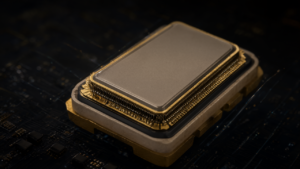
EPC Space has unveiled three new radiation-hardened eGaN (gallium nitride) power transistors—the EPC7050PCSH, EPC7066PCSH, and EPC7065PCSH—specifically designed for high-performance power conversion within next-generation space computing systems. These devices boast rated voltages of 15V, 25V, and 40V respectively, capable of supporting up to 101A of continuous current, and exhibit exceptional radiation tolerance exceeding 1Mrad Total Ionizing Dose (TID). This introduction marks a pivotal advancement in addressing the power delivery challenges for AI and High-Performance Computing (HPC) applications in spacecraft.
Technical / Clinical Details
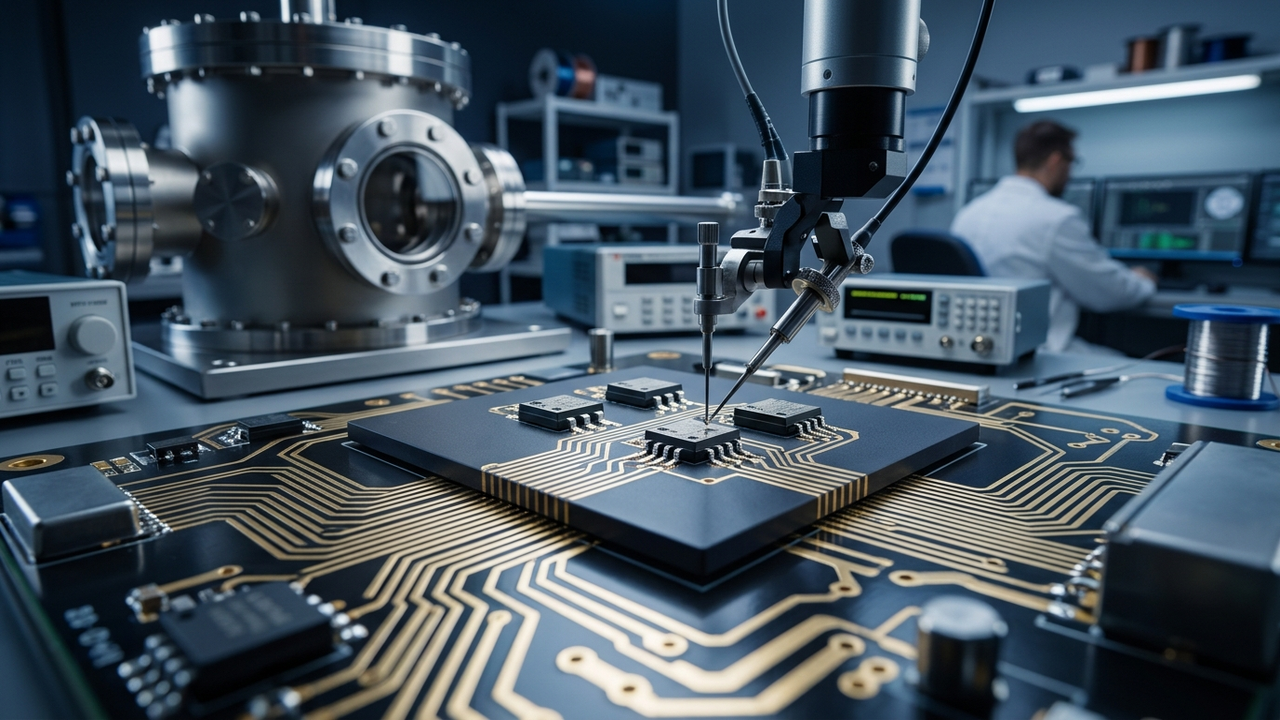
The newly launched eGaN FETs leverage the inherent advantages of gallium nitride technology to deliver the high performance and reliability required for space environments. Their ultra-low on-resistance (RDS(on)) minimizes power losses, while high current capabilities ensure stable power delivery to demanding AI processors and HPC modules. Furthermore, their rapid switching speeds enhance power conversion efficiency and simplify thermal management across the system. These attributes are critical for reducing the size and weight of power conditioning circuits in spacecraft, where space and mass are severely constrained. Encased in robust PQFN (Plastic Quad Flat No-Lead) packages, these devices are designed to withstand the harsh vibration and thermal cycling prevalent in space. The radiation tolerance exceeding 1Mrad TID is essential for ensuring device functionality and system longevity in long-duration missions and high-radiation orbits.
Background & Context
Modern space missions, encompassing Earth observation, communications, and deep-space exploration, increasingly require the processing of more complex and data-intensive tasks. This has accelerated the adoption of AI and HPC capabilities onboard spacecraft, creating an urgent demand for highly efficient and radiation-tolerant power conversion solutions. Traditional silicon-based power transistors have struggled to meet these requirements due to their inherent susceptibility to radiation, and limitations in power density and switching speed. GaN technology, with its superior bandgap and electron mobility compared to silicon, enables operation at much higher frequencies, lower losses, and greater efficiency, positioning it as a game-changer for space power conversion. EPC Space’s new products lead this technological trend, driving innovation in power systems across the space industry.
Strategic Significance & Outlook
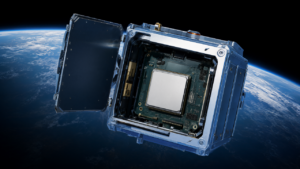
The introduction of EPC Space’s radiation-hardened eGaN FETs opens up new avenues for spacecraft design, enabling the deployment of smaller, yet more powerful, onboard AI processors, data centers, and communication systems in space. Improvements in power delivery efficiency and reliability will contribute to increased spacecraft payload capacity, extended mission durations, and the development of more autonomous space systems. This is an indispensable factor for crewed missions to Mars and the Moon, large-scale satellite constellations, and next-generation deep-space probes. Through this innovative technology, EPC Space is poised to shape the future of space computing and play a critical role in accelerating humanity’s progress in space exploration.
Source: https://www.powerelectronicsnews.com/epc-space-launches-rad-hard-15v-25v-and-40v-egan-fets/
Get our weekly technology intelligence — free
Receive an infographic that lets you judge at a glance whether each field’s analysis report is worth reading.
Subscribe Free — Weekly Tech Intelligence
By subscribing, you’ll receive Troy-Technical’s weekly technology intelligence newsletter.
- Your email and selected fields are used only to deliver the newsletter.
- We never share your information with third parties.
- You can unsubscribe anytime via the link in each email.
See our Privacy Policy for details.
Takes about a minute · Unsubscribe anytime