Key Findings
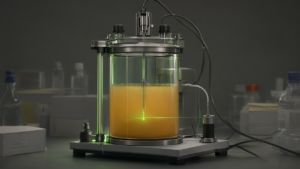
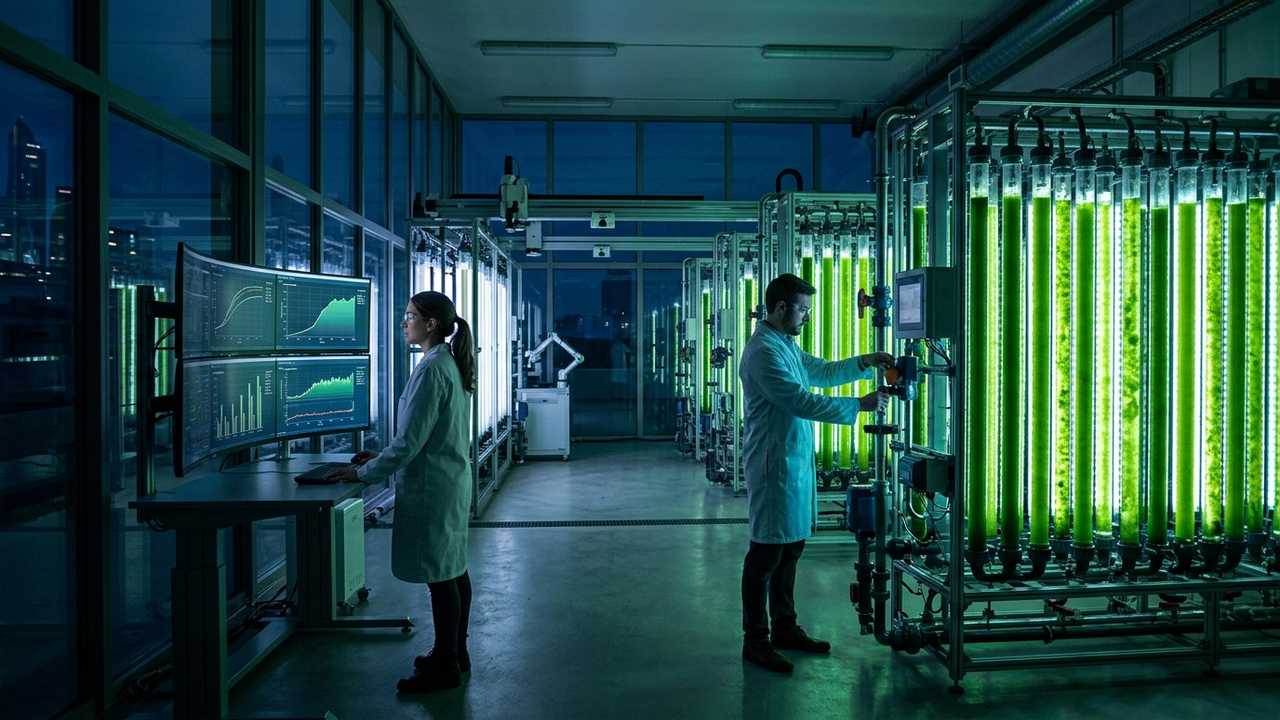
An academic paper, ‘VerdaML,’ published in ‘Frontiers in Bioengineering and Biotechnology,’ introduces an explainable, dual-objective machine learning (ML) framework designed for optimizing microalgal photobioreactor cultivation. This AI-driven interactive decision support system offers a groundbreaking approach to accurately predict biomass yield and model the risk of nitrogen-stress induction for lipid accumulation in Verrucodesmus verrucosus, thereby maximizing both biomass productivity and lipid content.
Technical and Clinical Details
The VerdaML framework is built upon ensemble machine learning techniques, enabling detailed analysis of how culture conditions (e.g., light intensity, CO2 supply, nutrient concentrations) impact microalgal growth and lipid production. It is particularly adept at deciphering complex interactions among multiple factors, which has traditionally been challenging for conventional models, leading to significantly improved prediction accuracy. The system is specifically designed to identify the optimal balance for ‘nitrogen-stress induction,’ where nitrogen limitation enhances lipid accumulation while potentially inhibiting biomass growth. Through VerdaML’s interactive dashboard, users can simulate various scenarios to devise optimal cultivation strategies that achieve production targets while minimizing environmental impact.
Background and Industry Context
Microalgae have garnered substantial interest as a sustainable source for biofuels, high-value chemicals, and nutraceuticals. However, optimizing culture conditions in photobioreactors has been a formidable challenge due to the intricate interplay of numerous environmental parameters. Prior research often focused on a single objective, such as biomass yield, with limited comprehensive approaches to simultaneously optimize multiple production goals like biomass and lipid content. VerdaML bridges this gap, paving the way for achieving both economic viability and environmental sustainability in industrial-scale bioproduction. The acceleration of AI integration into bioprocesses is also evident in PhD-level research, where AI-driven digital twins are being developed for real-time optimization of microbial lipid fermentations.
Future Outlook
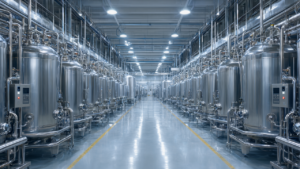
The implementation of VerdaML holds significant potential to enhance the efficiency and sustainability of microalgal bioproduction. This framework is expected not only to shorten optimization times in R&D but also to reduce operational costs at commercial scales and ensure product consistency. In the future, AI-driven systems like VerdaML are anticipated to be applied to other microbial and cell culture systems, assisting decision-making across diverse bioproduction processes. This advancement will further propel the automation and intelligentization of biomanufacturing as a whole, contributing to the broader development of the bioeconomy.
Get our weekly technology intelligence — free
Receive an infographic that lets you judge at a glance whether each field’s analysis report is worth reading.
Subscribe Free — Weekly Tech Intelligence
By subscribing, you’ll receive Troy-Technical’s weekly technology intelligence newsletter.
- Your email and selected fields are used only to deliver the newsletter.
- We never share your information with third parties.
- You can unsubscribe anytime via the link in each email.
See our Privacy Policy for details.
Takes about a minute · Unsubscribe anytime