Key Findings
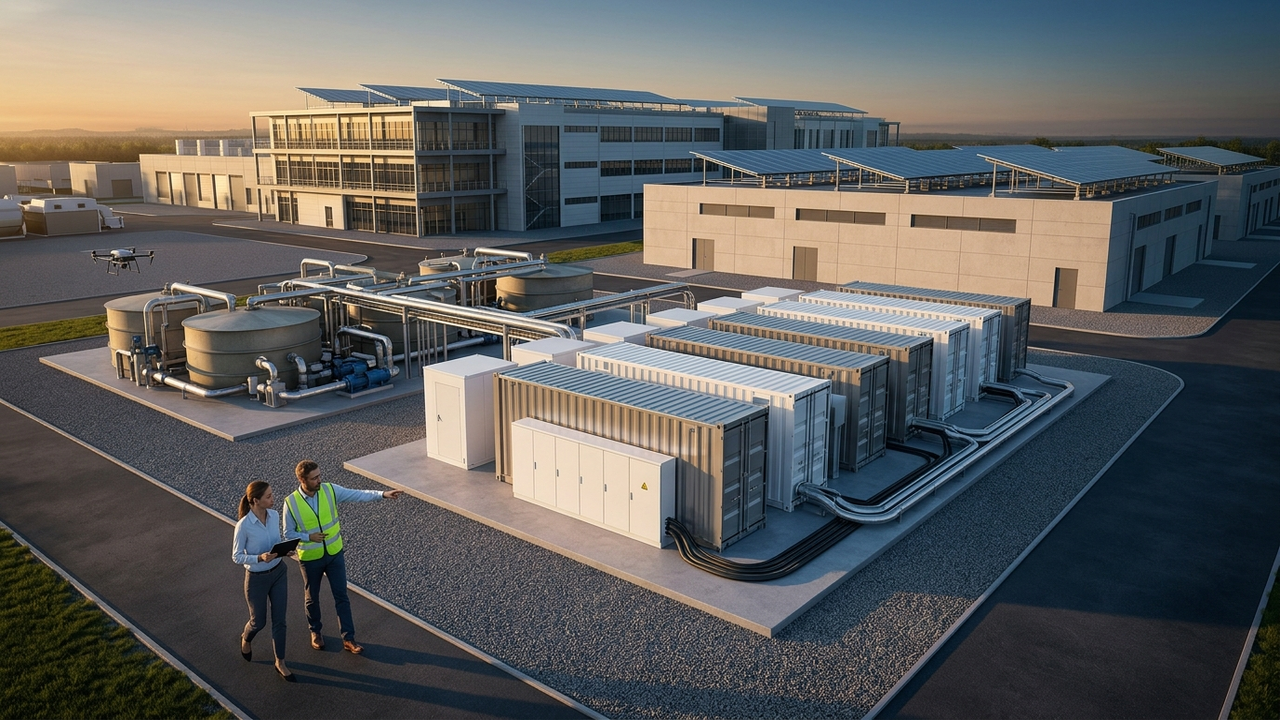
The Chief Executive Officer of ESS Inc., an energy storage solutions provider, has articulated a fundamental strategic shift for the company. After grappling with the commercialization targets for its iron flow battery technology, ESS Inc. will now pivot its focus towards the development and deployment of Sodium-Ion Battery Energy Storage Systems (BESS). This strategic realignment is designed to overcome a series of challenges the company has faced since its public listing in 2021, aiming to deliver products with enhanced reliability, cost-effectiveness, and market suitability.
Technical Transition: From Iron Flow to Sodium-Ion
ESS Inc. had previously championed its proprietary iron flow battery technology, which uses an iron and salt-water based electrolyte. However, the company encountered greater-than-anticipated difficulties in manufacturing scalability, long-term performance retention, and achieving cost competitiveness against rival technologies. While iron flow batteries offer the theoretical advantage of utilizing inexpensive and abundant materials, several barriers became evident during actual commercial deployment. In contrast, sodium-ion batteries hold the promise of delivering energy density and cycle life comparable to lithium-ion batteries, but with cheaper and more universally abundant raw materials. Recognizing the rapid advancements in sodium-ion technology and strong market demand, ESS Inc. has determined that concentrating resources in this area is the path to long-term success. Notably, sodium-ion batteries are quickly gaining traction as a viable alternative to lithium-ion in the large-scale stationary energy storage market.
Background and Industry Context
The energy storage market is experiencing rapid expansion driven by the increased integration of renewable energy and grid modernization efforts. Concurrently, this market is characterized by intense technological innovation and cost competition. In such an environment, over-reliance on a single technology carries the risk of being unable to adapt to market shifts. ESS Inc.’s strategic pivot demonstrates a company’s willingness to flexibly respond to market realities and technical challenges. Early-stage technologies, such as iron flow batteries, often face unforeseen difficulties during commercialization despite their promised advantages. Sodium-ion battery technology, on the other hand, has seen rapid maturation recently, with major players like CATL announcing mass production, which likely underpinned ESS Inc.’s decision.
Future Outlook and Strategic Significance
ESS Inc.’s shift in focus to sodium-ion BESS represents a crucial juncture that will define its future trajectory. If successful, this transition could enable the company to establish a new competitive advantage in the evolving energy storage market, leading to revenue recovery and sustainable growth. While venturing into a new technological domain necessitates significant R&D investment, supply chain restructuring, and the formation of new partnerships, the potential for success is substantial if solutions align with market needs. ESS Inc.’s future developments will serve as a compelling case study demonstrating the diversity of energy storage technologies and the dynamic nature of the market.
Get our weekly technology intelligence — free
Receive an infographic that lets you judge at a glance whether each field’s analysis report is worth reading.
Subscribe Free — Weekly Tech Intelligence
By subscribing, you’ll receive Troy-Technical’s weekly technology intelligence newsletter.
- Your email and selected fields are used only to deliver the newsletter.
- We never share your information with third parties.
- You can unsubscribe anytime via the link in each email.
See our Privacy Policy for details.
Takes about a minute · Unsubscribe anytime








Comments