Key Findings
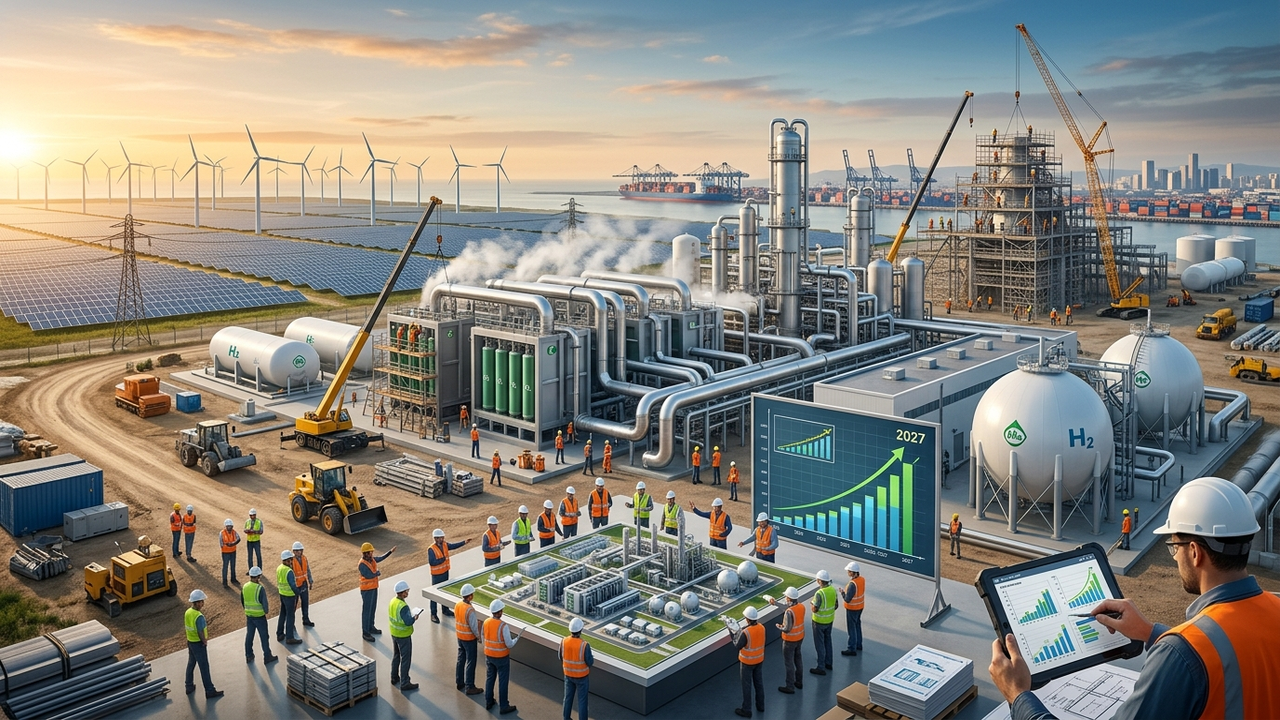
Global investments in green hydrogen are projected to reach $10 billion in 2026, with committed annual production capacity expanding to 4.3 million tonnes. Despite this financial surge, a critical challenge looms: over 100 GW of planned electrolysis capacity requires a final investment decision (FID) by the end of 2027 to remain viable.
Technical / Clinical Details
The green hydrogen sector is witnessing a significant shift from mere announcements to projects underpinned by secured financing, confirmed offtake agreements, and strong governmental backing. A prime example is Orica’s Hunter Valley hub in Australia, leveraging abundant renewable energy resources and existing industrial infrastructure to become a hydrogen production nexus. Another notable case is Moeve’s Onuba development in Spain, which has secured €304 million (approximately $320 million USD) from Spain’s hydrogen valley funding program. This project will feature 300 MW of alkaline water electrolysis equipment supplied by Thyssenkrupp Nucera, underscoring a tangible progression in European green hydrogen manufacturing capabilities.
Background & Context
Green hydrogen, produced by electrolyzing water using renewable electricity, is a zero-carbon energy carrier crucial for climate change mitigation and energy security. Many large-scale projects have been announced globally, but a substantial number are grappling with technical uncertainties, high upfront costs, and the challenge of securing stable demand. The increasing number of projects announced years ago that have not yet reached FID highlights that market maturity and concrete policy implementation are pivotal for large-scale project success. This trend signals a market where substance now outweighs speculation.
Strategic Significance & Outlook
Moving forward, the green hydrogen market will prioritize actual project execution and commercialization over mere pledges. Government grants, tax incentives, and long-term offtake agreements will be crucial for project success. Leading electrolyzer manufacturers like Thyssenkrupp Nucera are expected to develop more efficient and cost-competitive technologies while scaling up production capacity to meet this evolving demand. The 2027 FID deadline will serve as a critical filter, potentially leading to market consolidation, where only projects with robust business models and technological advantages will advance, driving the global energy transition forward.
Get our weekly technology intelligence — free
Receive an infographic that lets you judge at a glance whether each field’s analysis report is worth reading.
Subscribe Free — Weekly Tech Intelligence
By subscribing, you’ll receive Troy-Technical’s weekly technology intelligence newsletter.
- Your email and selected fields are used only to deliver the newsletter.
- We never share your information with third parties.
- You can unsubscribe anytime via the link in each email.
See our Privacy Policy for details.
Takes about a minute · Unsubscribe anytime


Comments