Key Findings
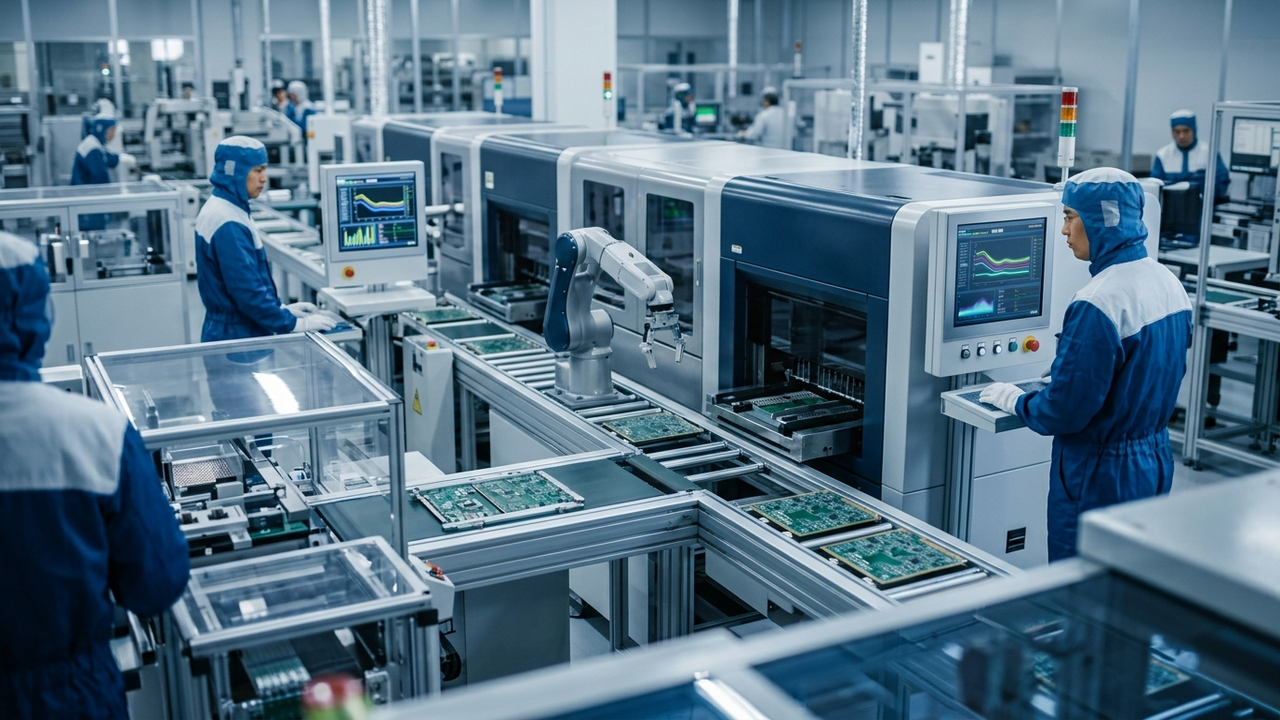
Chien Shan-Chieh, Chairman of Unimicron Technology, highlighted that the rapid surge in AI (Artificial Intelligence) demand is profoundly impacting the semiconductor substrate sector, leading to a worsening supply-demand imbalance. This is primarily attributed to a significant reliance on small and medium-sized Japanese suppliers for crucial manufacturing tools, including ABF (Ajinomoto Build-up Film) materials and Through-Glass Via (TGV) technology. Concurrently, TSMC Senior Vice President Cliff Hou reported that AI-driven demand has far exceeded forecasts, resulting in an astounding 90% increase in TSMC’s equipment orders over the past six months, a scale comparable to simultaneously constructing approximately 20 fabs worldwide. In response to this situation, Unimicron has approved additional capital expenditure, concentrating approximately 80-85% on ABF substrates, and has significantly increased its pre-orders for critical equipment for the 2027-2028 period, aiming to address this critical bottleneck.
Technical & Clinical Details
The pursuit of higher performance in AI chips is driving revolutionary changes in substrate design. Compared to conventional chips, AI chips necessitate larger substrate areas, higher layer counts (typically 12 to over 18 layers), and finer wiring structures. This dramatically elevates the manufacturing difficulty of ABF substrates, making it extremely challenging to maintain high yields. ABF substrates are an indispensable component in AI packages that densely integrate GPUs and HBM (High Bandwidth Memory), enabling high-speed data transmission between the processor and memory.
Specifically, TGV (Through-Glass Via) technology is a key technique for forming minute electrical connections in glass substrates, which are gaining attention as a next-generation packaging material. However, the formation of TGVs and the uniform conductive coating of their inner walls (e.g., using TRUMPF’s HiPIMS technology) require highly advanced technology and specialized equipment, with a limited number of suppliers. Small and medium-sized Japanese enterprises hold global leadership in these niche but critical technological fields, making their supply capacity a bottleneck for the entire AI-era semiconductor supply chain. Unimicron’s capital investment is specifically aimed at addressing the increasing demand for AI chip ABF substrates, focusing on introducing new manufacturing technologies and expanding production capacity.
Background & Context
The explosive demand for AI is exerting unprecedented pressure on the entire semiconductor manufacturing supply chain, causing bottlenecks to sequentially shift from front-end processes to packaging, substrates, and materials. While the tight supply of TSMC’s CoWoS (Chip-on-Wafer-on-Substrate) packaging has long been a concern, ABF substrates and HBM (High Bandwidth Memory) have now emerged as new primary bottlenecks. This situation is fundamentally reshaping the cooperative dynamics of the entire semiconductor industry, necessitating close collaboration among material suppliers, equipment manufacturers, foundries, and packaging companies. Governments worldwide, particularly through initiatives like the U.S. CHIPS Act, are supporting the strengthening of supply chain resilience and expanding domestic manufacturing capabilities.
Strategic Significance & Outlook
The supply-demand imbalance, as pointed out by Unimicron Chairman Chien Shan-Chieh, is highly likely to persist as AI chip evolution continues. The shortage of TGV technology and materials, especially those dependent on small and medium-sized Japanese enterprises, will directly impact the time-to-market for AI chips. Unimicron’s aggressive capital investment and long-term equipment pre-orders represent a strategic move to alleviate this challenge and meet the substrate demands of the AI era. The expansion of AI computing is extending from advanced processes to packaging, substrates, and materials, fundamentally restructuring the cooperative dynamics of the entire semiconductor supply chain. Going forward, the commercialization of glass substrates and the introduction of new packaging materials will be key to stabilizing the supply chain and enhancing performance.
Source: https://finance.biggo.com/news/4ddf34c2-ffa8-4c6c-b885-494b082dc711
Get our weekly technology intelligence — free
Receive an infographic that lets you judge at a glance whether each field’s analysis report is worth reading.
Subscribe Free — Weekly Tech Intelligence
By subscribing, you’ll receive Troy-Technical’s weekly technology intelligence newsletter.
- Your email and selected fields are used only to deliver the newsletter.
- We never share your information with third parties.
- You can unsubscribe anytime via the link in each email.
See our Privacy Policy for details.
Takes about a minute · Unsubscribe anytime








Comments