Key Findings
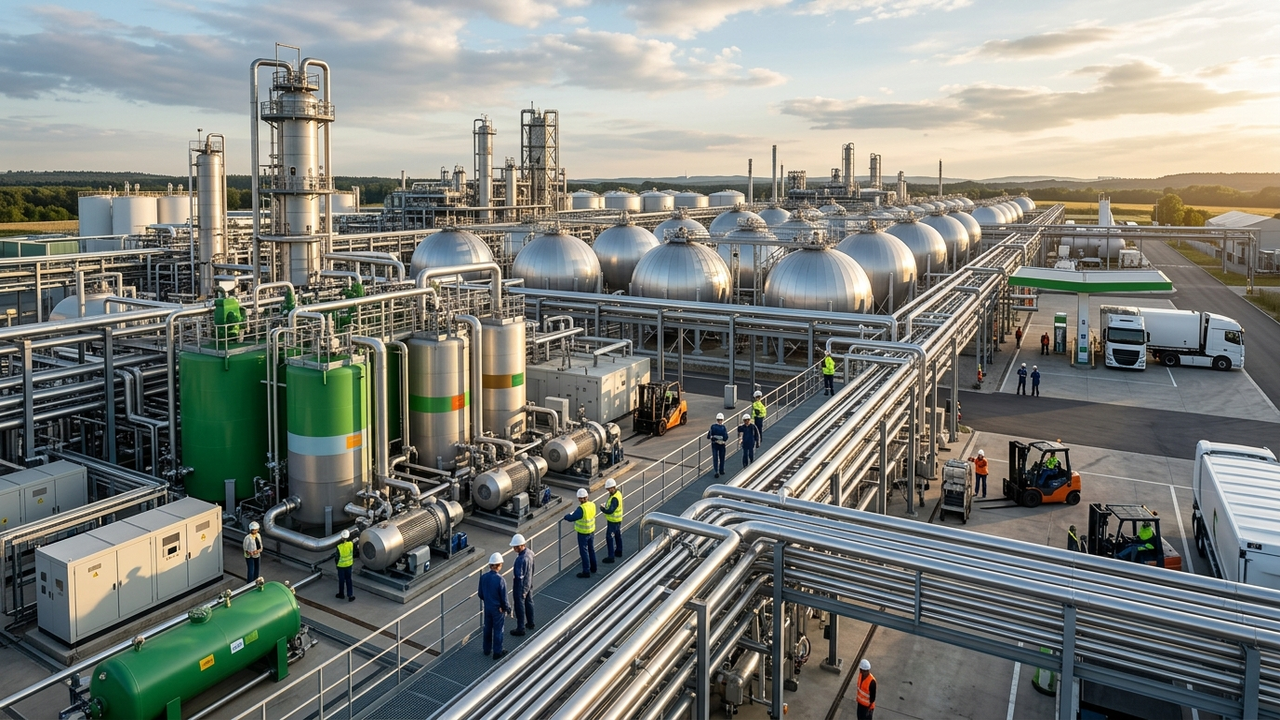
The “Global Hydrogen Compass 2026” report by the Hydrogen Council reveals that global committed investment in low-carbon hydrogen projects has exceeded $130 billion, aiming for a total production capacity of 6.9 million tonnes per annum (Mtpa) across over 570 projects. Notably, current operational capacity has seen a substantial 70% increase, reaching approximately 1.7 Mtpa, with projections indicating a further rise to around 3.8 Mtpa by 2027 as numerous projects move from planning to active production. This significant acceleration in deployment is primarily fueled by escalating energy security concerns and the urgent need for decarbonization worldwide.
Technical & Market Details
- More than 570 low-carbon hydrogen projects are currently underway globally, collectively targeting an annual production capacity of 6.9 Mtpa. A remarkable 90% of these projects are either under construction or already operational, indicating a strong translation of investment commitments into tangible infrastructure.
- The operational capacity for clean hydrogen has effectively doubled over the past year, with an additional doubling anticipated in the coming year, marking a rapid expansion of hydrogen’s role in the global energy mix.
- Geographically, China is spearheading this growth, accounting for over half of the global committed renewable hydrogen capacity. Europe represents the second-largest market by investment volume, while the United States is leading in the actual deployment of low-carbon hydrogen technologies. These regional leaders are strategically driving the evolution of the global hydrogen ecosystem.
Background & Context
This unprecedented surge in investment and production capacity is largely attributable to twin imperatives: enhancing global energy security and accelerating deep decarbonization efforts to combat climate change. Nations are increasingly seeking to reduce reliance on fossil fuels, aiming for more stable and sustainable energy sources. Hydrogen offers a versatile solution, enabling the storage of renewable energy, decarbonization of heavy industrial processes, and achieving zero emissions in various mobility sectors.
Strategic Significance & Outlook
The clean hydrogen industry is poised for continued robust growth in the coming years. Key to sustaining this trajectory will be accelerating projects to final investment decisions (FID) and driving down costs across the entire supply chain through ongoing technological innovation. New government incentives and international collaborative frameworks are expected to play a crucial role in commercializing large-scale projects and broadening market adoption. This wave of investment signifies that hydrogen is entering a pivotal phase, moving closer to becoming a cornerstone of the future global energy landscape.
Get our weekly technology intelligence — free
Receive an infographic that lets you judge at a glance whether each field’s analysis report is worth reading.
Subscribe Free — Weekly Tech Intelligence
By subscribing, you’ll receive Troy-Technical’s weekly technology intelligence newsletter.
- Your email and selected fields are used only to deliver the newsletter.
- We never share your information with third parties.
- You can unsubscribe anytime via the link in each email.
See our Privacy Policy for details.
Takes about a minute · Unsubscribe anytime





Comments