Key Findings
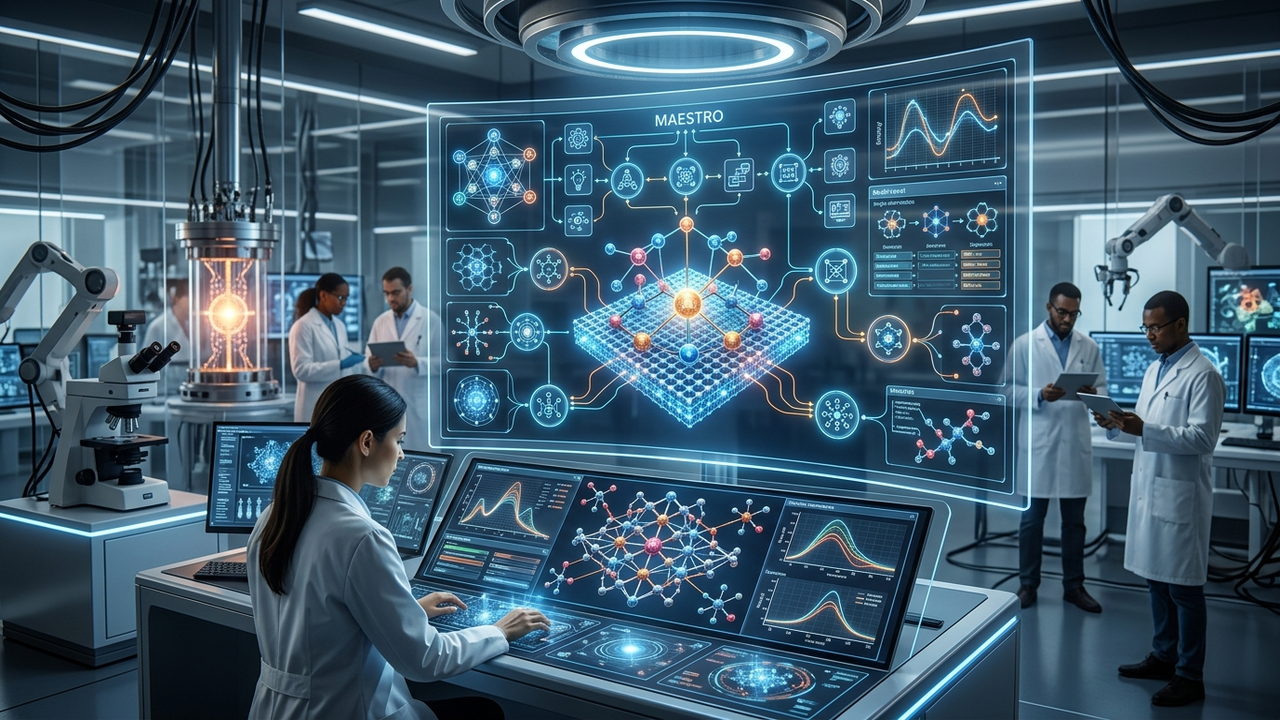
MAESTRO (Multi-Agent-based Electrocatalyst Search Through Reasoning and Optimization) is a groundbreaking reasoning-driven framework that utilizes multiple Large Language Models (LLMs) to collaboratively design high-performance single-atom catalysts. This system enables the discovery of catalysts that break the limitations of conventional chemical scaling relations, a feat challenging for traditional machine learning approaches, thus opening new frontiers in electrocatalyst design.
Technical / Clinical Details
Within the MAESTRO framework, multiple LLM agents function cooperatively. Each agent specializes in a different aspect of catalyst design (e.g., material composition, structure, reaction mechanisms) and works towards common goals by sharing information. Initially, agents propose catalyst candidates based on existing knowledge bases and historical data. They then execute quantum chemistry calculations or Density Functional Theory (DFT) simulations to evaluate the performance of the proposed catalysts. Based on these evaluation results, the agents critically ‘reflect’ and use reasoning to propose modifications to the next generation of catalyst structures or compositions. This process is autonomously iterated until the design accuracy meets the specified targets. The in-context learning capabilities of LLMs enable rapid generation of novel chemical insights, bypassing the constraints of relying on pre-defined features that traditional machine learning models face. This allows for the exploration of high-performance catalyst design spaces that can surpass the limitations imposed by conventional physicochemical scaling relations.
Background & Context
Single-atom catalysts (SACs) are of paramount importance in sustainable chemical processes and energy conversion technologies due to their high atomic utilization efficiency and unique catalytic properties. However, designing optimal SACs has remained a significant challenge due to the vast number of elemental combinations and complex electronic structures. While traditional machine learning methods excel at learning known data patterns, they have limitations in generating entirely new chemical insights or discovering designs that break the scaling laws imposed by physical principles. The advent of MAESTRO demonstrates that LLMs can act as more than just text generation tools; they can exhibit human-like ‘reasoning’ and ‘creativity’ in scientific discovery processes. This redefines the role of AI not only in catalyst design but in materials science in general.
Strategic Significance & Outlook
Reasoning-driven multi-agent LLM frameworks like MAESTRO are expected to significantly shorten the R&D cycle in catalyst science, accelerating the commercialization of more efficient and durable catalysts. They are particularly anticipated to contribute to improving efficiency in critical electrochemical reactions such as fuel cells, CO2 reduction, and ammonia synthesis. In the future, this framework could evolve into a fully autonomous catalyst discovery platform through the automatic generation of material synthesis protocols and integration with robotic experiments. Challenges include improving the reliability of LLM reasoning, optimizing computational costs, and further automating laboratory validation processes.
Get our weekly technology intelligence — free
Receive an infographic that lets you judge at a glance whether each field’s analysis report is worth reading.
Subscribe Free — Weekly Tech Intelligence
By subscribing, you’ll receive Troy-Technical’s weekly technology intelligence newsletter.
- Your email and selected fields are used only to deliver the newsletter.
- We never share your information with third parties.
- You can unsubscribe anytime via the link in each email.
See our Privacy Policy for details.
Takes about a minute · Unsubscribe anytime







Comments