Background
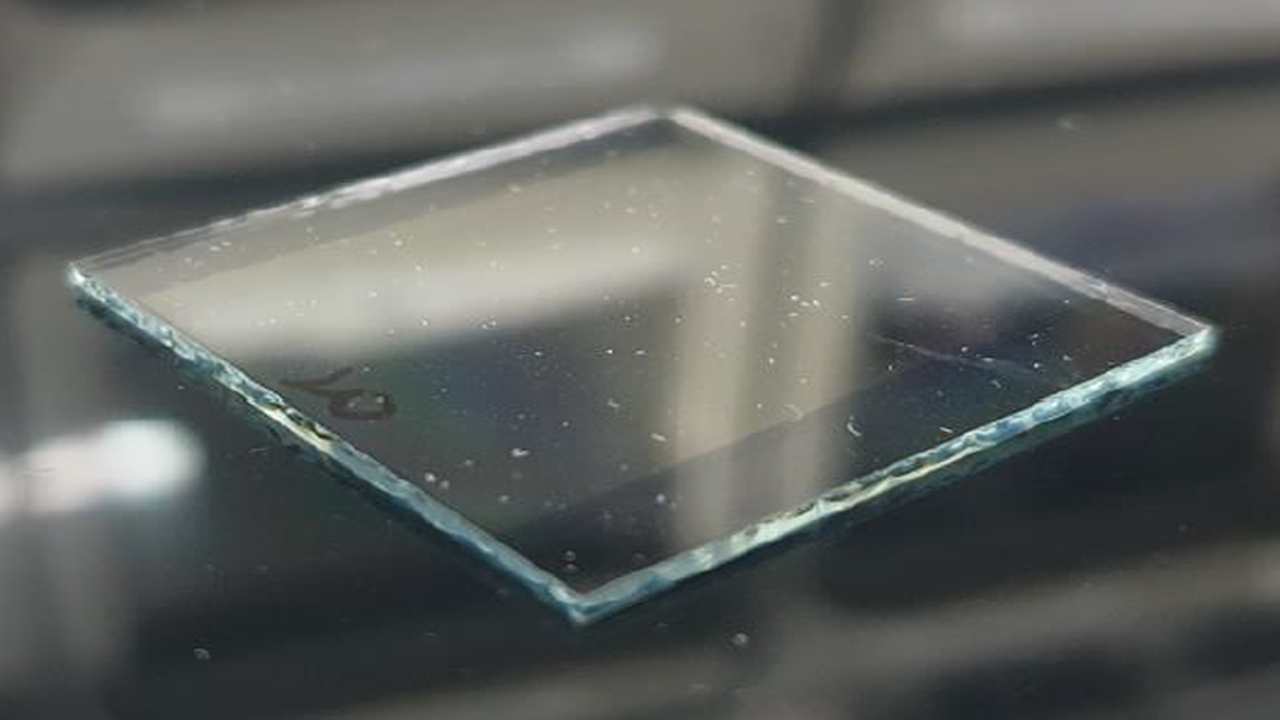
The manufacturing of high-performance semiconductor devices, including conventional solar cells, traditionally demands ultra-clean room environments. Even microscopic dust particles can act as defects, severely degrading device performance and reliability. Maintaining these stringent cleanroom conditions incurs substantial capital and operational costs, posing a significant barrier to entry for manufacturers, particularly in emerging economies. For perovskite solar cells (PSCs), achieving high efficiencies has often been implicitly linked to pristine fabrication conditions, thus contributing to higher perceived manufacturing expenses and hindering their rapid scaling and market penetration. Consequently, identifying pathways to simplify and de-risk the manufacturing process is paramount for the commercial viability of PSCs.
Key Findings / Results
Groundbreaking research emerging from the SUNRISE network (a UK-led initiative) has unveiled a remarkable property of perovskite solar cells: their unexpected resilience to dust contamination during the manufacturing process. The study systematically investigated the impact of various levels of particulate matter on perovskite film formation and device performance, challenging long-held assumptions in the field.
- High Dust Tolerance: Contrary to expectations, the research demonstrated that PSCs maintained robust performance even when fabricated in environments with detectable levels of dust. This suggests that the inherent properties of perovskite materials, such as potential self-healing mechanisms or defect tolerance at grain boundaries, may mitigate the detrimental effects of airborne particles more effectively than other semiconductor materials.
- Relaxed Manufacturing Requirements: The primary implication of this finding is that the strict, capital-intensive cleanroom environments often assumed necessary for PSC production might be significantly relaxed. This paves the way for a drastically simpler and less costly fabrication infrastructure.
Technical Significance & Outlook
This research offers a pivotal advantage for the commercialization and widespread deployment of perovskite solar cells. By reducing or potentially eliminating the need for expensive cleanroom facilities, manufacturing costs can be substantially lowered. This cost reduction is particularly impactful for enabling localized production in developing countries, fostering energy independence and diversifying the global solar supply chain. From a technical perspective, understanding the mechanisms behind this dust tolerance—whether it’s inherent material properties or specific processing windows—will be critical for optimizing future manufacturing protocols. This discovery also positions perovskite technology as a highly accessible renewable energy source, potentially accelerating its adoption in regions where high-tech infrastructure is limited. While further research is needed to fully characterize the long-term effects and industrial-scale implications, this finding represents a significant step towards making perovskite solar cells a truly low-cost, pervasive energy solution. For a Western audience, this aligns with strategic goals to reduce manufacturing overhead and democratize PV production globally.





Comments