Key Findings
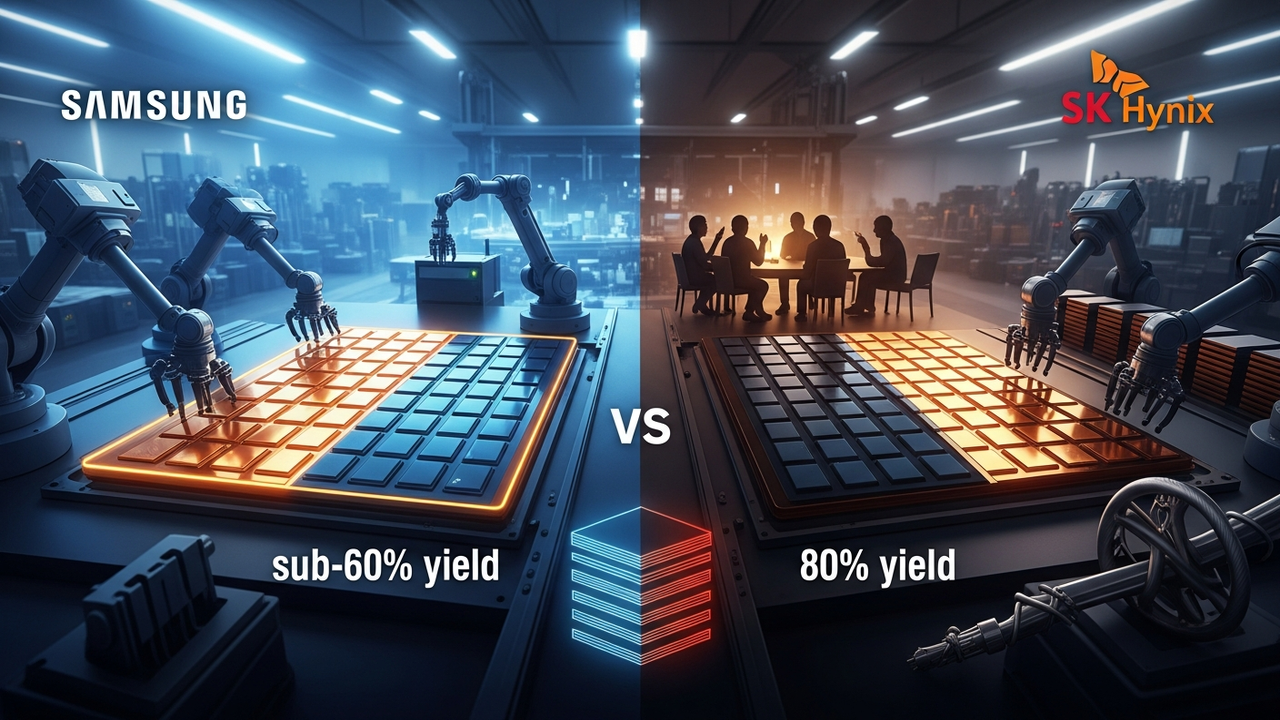
According to reports from the Seoul Economic Daily, Samsung Electronics has dramatically improved the yield of its next-generation High Bandwidth Memory (HBM), HBM4, from under 60% at the start of mass production to an impressive 80% in just a few months. This demonstrates Samsung’s exceptionally rapid process improvement amid a globally tight HBM supply, achieving its year-end 2026 target of 80% ahead of schedule. A significant contributor to the overall HBM4 yield improvement is the fact that the 1c DRAM chips, a key component, have also achieved over 80% yield. This move substantially strengthens Samsung’s competitiveness in the HBM market. Meanwhile, reports indicate that labor talks at competitor SK Hynix have broken down, with negotiations over bonus payments proving difficult, introducing new concerns about the stability of the HBM supply chain.
Technical / Clinical Details
HBM4 is a complex packaging technology that vertically stacks multiple DRAM dies and connects them with tiny Through Silicon Vias (TSVs). This process demands extremely high precision and stringent quality control, leading to generally low yields at the initial stages. Samsung’s achievement of 80% yield highlights the company’s advanced technological maturity and optimization capabilities across the intricate HBM4 manufacturing process (including DRAM chip fabrication, bump formation, die stacking, and hybrid bonding). Specifically, the 1c DRAM used in HBM4 is produced with state-of-the-art 10nm-class process technology, and its high yield indicates stable quality of individual DRAM dies. This ensures the reliability and performance of the final HBM4 package after multi-layer stacking. Samsung is believed to have leveraged its ‘turnkey system,’ integrating memory design, foundry manufacturing, and advanced packaging departments, to achieve this rapid yield improvement. HBM4 is expected to be integrated into NVIDIA’s next-generation AI chips, such as Vera Rubin, dramatically enhancing AI workload performance through increased data channels and expanded bandwidth.
Background & Context
The explosive growth of AI has created unprecedented demand for high-performance memory like HBM, leading to a structural supply shortage in the market. HBM is a crucial component that determines the performance of AI accelerators, and its supply capacity and yield are key factors influencing the growth of the entire AI industry. Samsung and SK Hynix are major competitors in the HBM market, engaged in fierce competition to establish leadership in the HBM4 generation. Samsung’s rapid yield improvement signifies a strong tailwind for the company to expand its market share in HBM. Conversely, SK Hynix’s labor dispute could potentially impact its production plans and market supply, posing a new risk factor for AI chip manufacturers. This situation underscores the importance of resilience in the overall HBM supply chain and securing multiple sources of supply.
Strategic Significance & Outlook
Samsung’s significant improvement in HBM4 yield signals intensified competition in the AI memory market and the company’s strong ambition to expand its market share. This is expected to stabilize HBM4 supply to major customers like NVIDIA, accelerating the deployment of next-generation AI chips. Should SK Hynix’s labor issues be resolved, the HBM4 mass production race between the two companies will further intensify, accelerating technological innovation. AI demand is projected to continue rising, making HBM technology evolution and stable supply indispensable for the overall development of the AI industry. This competition will also create significant business opportunities for semiconductor equipment manufacturers and material suppliers, fostering further innovation in HBM technology.
Get our weekly technology intelligence — free
Receive an infographic that lets you judge at a glance whether each field’s analysis report is worth reading.
Subscribe Free — Weekly Tech Intelligence
By subscribing, you’ll receive Troy-Technical’s weekly technology intelligence newsletter.
- Your email and selected fields are used only to deliver the newsletter.
- We never share your information with third parties.
- You can unsubscribe anytime via the link in each email.
See our Privacy Policy for details.
Takes about a minute · Unsubscribe anytime