Key Findings
The chip crisis of 2026 unequivocally demonstrated the profound dependence of all modern hardware-dependent businesses, from AI accelerators to autonomous vehicles and IoT sensors, on semiconductor supply. This crisis is not merely a temporary shortage but underscores a structural shift occurring across the entire semiconductor supply chain, driven by the explosive demand for AI fundamentally reshaping requirements for memory, GPUs, advanced packaging, and related infrastructure. The availability of chips is now recognized as a critical factor directly impacting a company’s operational efficiency and competitive edge.
Technical / Clinical Details
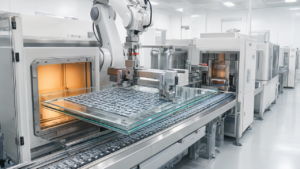
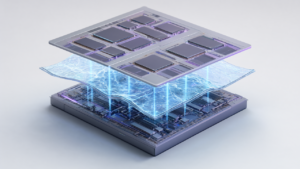
The evolution of AI necessitates high-performance computing capabilities and massive data processing, for which GPUs (Graphics Processing Units) and specialized AI accelerators are indispensable. These chips heavily rely on high-capacity, high-speed HBM (High Bandwidth Memory) and advanced packaging technologies like CoWoS (Chip-on-Wafer-on-Substrate) for efficient integration. The recent chip crisis reiterated that manufacturing these high-performance chips requires state-of-the-art foundry processes, sophisticated packaging equipment, and specialized materials and tools. Specifically, the complexity of HBM stacks, silicon interposers, and the micro-bump or hybrid bonding technologies connecting them leads to extended manufacturing lead times and yield challenges. Supply chain bottlenecks are not confined to single components but manifest across various aspects, including manufacturing equipment, specific chemical materials, and even a shortage of skilled technicians.
Background & Context
Over the past few decades, the semiconductor industry has embraced globalization and specialization, resulting in an extremely complex and interdependent supply chain structure. The current crisis highlighted the vulnerability of this structure to geopolitical risks and unexpected demand fluctuations, particularly given that a few companies dominate cutting-edge manufacturing capabilities or specific material production. AI demand, unlike traditional PC or smartphone markets, is characterized by its unpredictability and rapid scaling. This new demand pattern puts immense pressure on existing supply chain models, exacerbating shortages in specific areas such as memory, GPUs, and advanced packaging. Governments worldwide are also implementing policies, such as the U.S. CHIPS Act and the EU’s European Chips Act, to encourage domestic manufacturing and enhance semiconductor supply chain resilience.
Strategic Significance & Outlook
The 2026 chip crisis served as a ‘wake-up call’ for the semiconductor industry and all dependent hardware industries, forcing a re-evaluation and restructuring of supply chains. Moving forward, companies are expected to shift towards enhancing supply chain transparency, securing diverse sources of supply, and strengthening regional manufacturing capabilities. Particularly for AI-related semiconductors, substantial investments will continue to be poured into increasing HBM and advanced packaging capacities. Furthermore, AI itself may be integrated into supply chain management to improve demand forecasting accuracy and optimize risk management. Overcoming this crisis is expected to foster a more robust and sustainable semiconductor ecosystem, ensuring the pace of technological innovation in the AI era.
Get our weekly technology intelligence — free
Receive an infographic that lets you judge at a glance whether each field’s analysis report is worth reading.
Subscribe Free — Weekly Tech Intelligence
By subscribing, you’ll receive Troy-Technical’s weekly technology intelligence newsletter.
- Your email and selected fields are used only to deliver the newsletter.
- We never share your information with third parties.
- You can unsubscribe anytime via the link in each email.
See our Privacy Policy for details.
Takes about a minute · Unsubscribe anytime