
Background: Challenges in Hypertension Management and Wearable Potential
Hypertension is a primary risk factor for cardiovascular diseases, making its effective management critically important for public health. Traditional blood pressure measurement primarily involved spot readings at clinics or home-based cuff devices, both presenting challenges such as discomfort during measurement and difficulty in continuous monitoring, especially at night. Amidst these limitations, the evolution of wearable technology has opened possibilities for more non-invasive and continuous physiological data collection, with significant anticipation for the development of cuffless blood pressure monitors.
‘CART BP pro’: Innovation in Ring-Type Cuffless Blood Pressure Monitoring
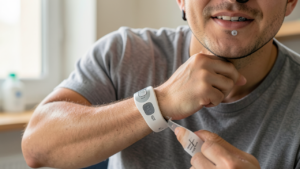
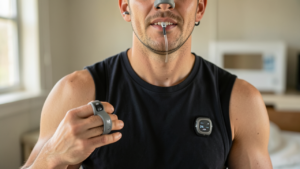
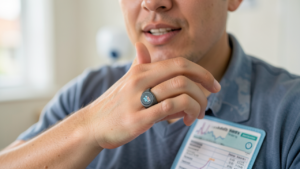
The ‘CART BP pro,’ a ring-type cuffless blood pressure monitor developed by South Korea’s Sky Labs, represents a groundbreaking advancement in this field. This device eliminates the need for an arm cuff, allowing blood pressure to be measured simply by wearing it on a finger. A particularly notable achievement is the formal integration of ‘CART BP pro’ into the ‘2026 Korean Society of Hypertension Guidelines for Hypertension Management (6th Edition).’ This marks the first time a ring-type blood pressure monitor has been included in major global hypertension treatment guidelines, signifying recognition of its accuracy and clinical utility.
High-Precision Monitoring with AI Deep Learning and Future Prospects
‘CART BP pro’ employs AI deep learning technology to analyze data collected from photoplethysmography (PPG), enabling high-precision blood pressure measurements. This allows for continuous 24-hour blood pressure monitoring during daily activities and sleep with minimal discomfort. The continuous data obtained is instrumental in detecting hypertension patterns often missed by conventional methods, such as nocturnal hypertension and morning hypertension. Its adoption into guidelines suggests that this technology will play a central role in future hypertension diagnosis, monitoring, and treatment plan optimization, greatly contributing to improved patient self-management and the advancement of personalized medicine.


Comments