Key Findings
For today’s leading AI accelerators, wafer manufacturing capacity is no longer the sole constraint; the certification cycles for CoWoS (Chip-on-Wafer-on-Substrate) advanced packaging and ABF (Ajinomoto Build-up Film) substrates also act as significant bottlenecks, sometimes imposing more direct limits on production volume than front-end fab capacity. Historically, ABF substrates faced shortages from 2021 to 2022, with supply falling approximately 20% short of demand. Although new capacity coming online in 2023 was expected to alleviate this, the current explosion in AI demand has re-established ABF substrates as an often-underestimated bottleneck, restricting the output of CPUs, GPUs, and network silicon even when die production is sufficient. TSMC acknowledges the critical importance of CoWoS supply, and accelerated AI-related capital expenditures are expected to drive growth in the manufacturing electronics and precision engineering clusters.
Technical Details
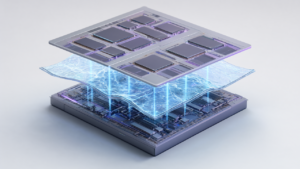
CoWoS is an advanced 2.5D packaging technology that integrates multiple chiplets (e.g., GPUs and HBMs) onto a silicon interposer, which is then packaged onto an ABF substrate. This architecture dramatically shortens inter-chip wiring distances, significantly boosting data transfer speeds and improving power efficiency. However, the CoWoS manufacturing process is highly complex, requiring advanced techniques and considerable time, particularly for wafer stacking, precise bonding, and final substrate connections. It also demands substantial investment in specialized equipment and cleanroom infrastructure; for example, expanding a CoWoS line by 10,000 wafers per month can require capital expenditures of $1.5 billion to $2 billion. ABF substrates serve as the foundational material for these CoWoS packages, making their supply crucial for high-performance packaging. A shortage of ABF substrates creates a bottleneck in the packaging stage, even with ample die production, ultimately limiting the final shipment volume of AI chips.
Background & Context
The explosive growth of the AI chip market has had widespread repercussions across the entire semiconductor supply chain. Foundry leaders like TSMC are aggressively expanding their advanced packaging capabilities, such as CoWoS, to meet the surging demand for AI accelerators, but the pace of expansion struggles to keep up with demand. This situation aligns with past observations that memory and ABF were among the two most critical shortages in semiconductors. AI-driven demand extends beyond CoWoS and HBM (High-Bandwidth Memory) to a broad range of back-end materials and equipment, including ABF substrates, necessitating integrated efforts and investments across the entire supply chain. This bottleneck is a critical industry challenge, considering the potential annual $265 billion growth opportunity in the AI chip market.
Strategic Significance & Outlook
The CoWoS and ABF substrate bottlenecks are likely to constrain AI chip supply and impact pricing in the short term. In response, industry leaders like TSMC are continuing to invest massive amounts in expanding advanced packaging capacity. In the medium to long term, the supply situation is expected to improve with the activation of new CoWoS fabs and increased production capacity from ABF substrate manufacturers. However, as AI technology evolves and applications expand, generating continuous new demand, the supply-demand balance is likely to remain tight. Furthermore, this situation will accelerate strategic initiatives to enhance supply chain resilience and reduce the risks associated with single-vendor dependence. The transition to new materials like glass substrates is also being explored as a potential direction to alleviate this bottleneck.
Source: https://www.silicontosoftware.com/tsmc-arizona-bottleneck/
Get our weekly technology intelligence — free
Receive an infographic that lets you judge at a glance whether each field’s analysis report is worth reading.
Subscribe Free — Weekly Tech Intelligence
By subscribing, you’ll receive Troy-Technical’s weekly technology intelligence newsletter.
- Your email and selected fields are used only to deliver the newsletter.
- We never share your information with third parties.
- You can unsubscribe anytime via the link in each email.
See our Privacy Policy for details.
Takes about a minute · Unsubscribe anytime