Key Findings
The U.S. Department of Energy has provided a fundamental overview of fuel cell mechanisms and types, specifically highlighting Polymer Electrolyte Membrane (PEM) fuel cells as the most promising technology for automotive applications due to their use of proton-conductive polymer membranes as electrolytes. This underscores a crucial direction for the proliferation of clean energy solutions in the transportation sector.
Technical / Clinical Details
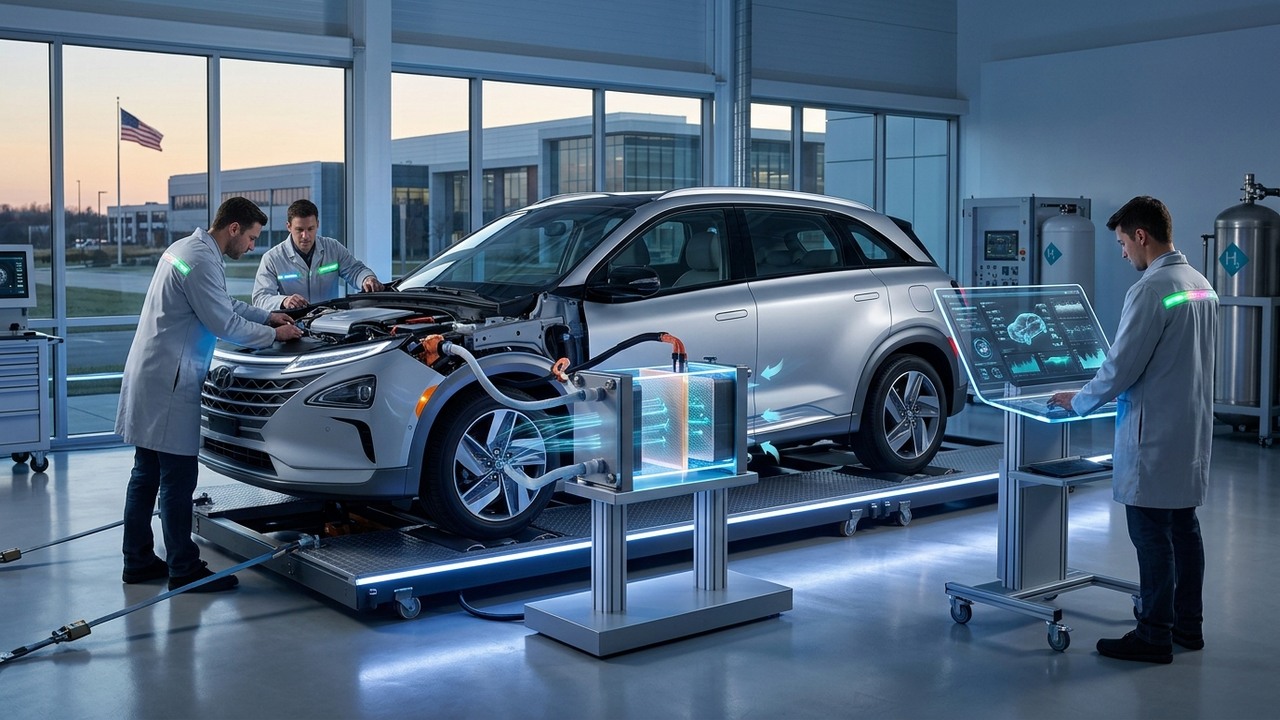
Fuel cells are electrochemical devices that convert the chemical energy of hydrogen or other fuels directly into electrical energy. They achieve high energy efficiency and zero or low emissions as they do not involve combustion. PEM fuel cells, as their name suggests, use a polymer membrane as an electrolyte to conduct protons (hydrogen ions). This polymer membrane separates hydrogen gas into protons and electrons at the anode. Protons pass through the membrane to the cathode, while electrons travel through an external circuit, generating electricity. At the cathode, protons, electrons, and oxygen from the air combine to produce only water. Operating at relatively low temperatures, PEM fuel cells offer quick startup times, high power density, and compact size, making them particularly well-suited for automotive integration. Additionally, Direct Methanol Fuel Cells (DMFCs), which directly use methanol as fuel and also employ polymer membranes as electrolytes, hold promise for portable power source applications.
Background & Context
As global energy demand rises and concerns over climate change deepen, the development of clean energy sources to replace fossil fuels has become an urgent imperative. Fuel cells, being a clean technology that emits only water during power generation, can establish a truly sustainable energy cycle when combined with hydrogen produced from renewable sources (solar, wind, etc.). In the automotive industry, Fuel Cell Vehicles (FCVs) are recognized alongside Electric Vehicles (EVs) as key players in zero-emission transport, especially valued for their rapid refueling capability and long range in heavy-duty and long-haul applications. Policymakers and research institutions strongly support the advancement and deployment of fuel cell technology, with ongoing efforts in addressing technical challenges and building infrastructure.
Strategic Significance & Outlook
PEM fuel cell technology is expected to remain central to clean energy solutions in the automotive sector. Further improvements in polymer membrane durability, cost-effectiveness, and operating temperature range will be primary research focuses. Moreover, accelerated development of hydrogen production, storage, and distribution infrastructure is anticipated to further drive market penetration of FCVs. Other polymer-based fuel cells, such as DMFCs, will also expand their potential in specific niche markets, for example, as portable power supplies or auxiliary power units. The advancement of these technologies will serve as a critical impetus for realizing a sustainable energy future.
Source: https://www.energy.gov/cmei/fuels/fuel-cell-basics
Get our weekly technology intelligence — free
Receive an infographic that lets you judge at a glance whether each field’s analysis report is worth reading.
Subscribe Free — Weekly Tech Intelligence
By subscribing, you’ll receive Troy-Technical’s weekly technology intelligence newsletter.
- Your email and selected fields are used only to deliver the newsletter.
- We never share your information with third parties.
- You can unsubscribe anytime via the link in each email.
See our Privacy Policy for details.
Takes about a minute · Unsubscribe anytime