Key Findings
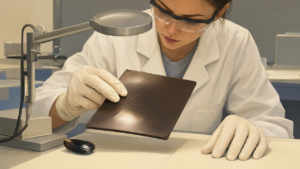
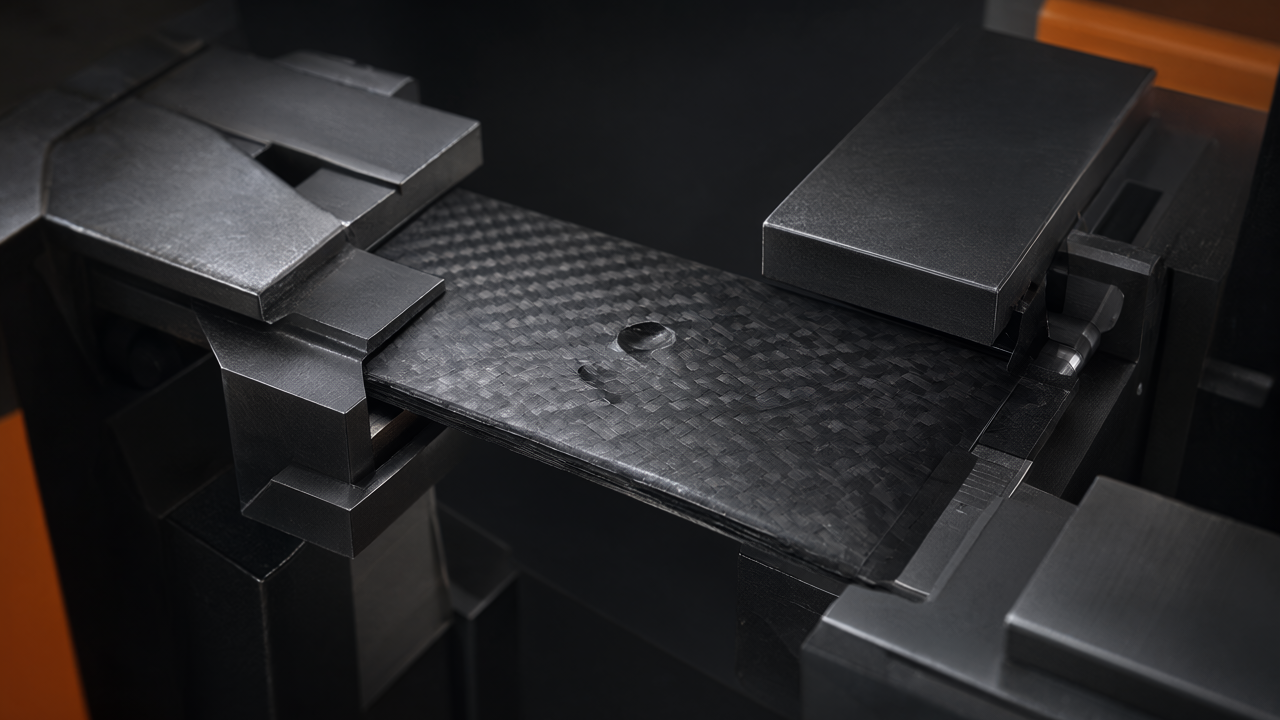
Researchers from the Moscow Aviation Institute and composite manufacturer UMATEX have developed a novel method to accurately track and predict the progression of hidden impact damage, specifically delamination, in carbon fiber composites under cyclic compressive loading, on a cycle-by-cycle basis. This groundbreaking achievement significantly enhances the reliability of damage tolerance assessment for composite materials in the aerospace industry.
Technical / Clinical Details
The study meticulously analyzed the evolution of delamination within composite materials through a combination of computational modeling and experimental validation. Specifically, composite samples subjected to initial impact were then subjected to repeated cyclic compressive loads at various levels. Non-destructive testing techniques (e.g., ultrasonic inspection) were employed to monitor changes in delamination size and shape in real-time. Simultaneously, advanced finite element method simulations were used to construct models predicting how these damages initiate and propagate. The high concordance between experimental results and computational models demonstrated that it is now possible to measure and predict damage growth with a fidelity that meets the stringent requirements of aerospace applications—a feat previously challenging with conventional prediction models.
Background & Context
Carbon fiber composites are indispensable materials for aircraft structures due to their lightweight and high strength properties. However, unseen internal damage, such as delaminations caused by unexpected impacts (e.g., bird strikes, dropped tools), can severely affect the material’s fatigue life and structural integrity. Accurately predicting the progression of such damage has been a persistent challenge in ensuring aircraft safety. Traditional damage assessment methods struggled to precisely capture this damage evolution under fatigue, imposing significant constraints on maintenance frequency and design safety margins. This research offers a more scientific and practical solution to these critical issues, providing a benchmark for global aerospace material standards.
Strategic Significance & Outlook
This new tracking and prediction technology will improve the accuracy of damage tolerance analysis during the aircraft design phase, enabling the development of lighter and more reliable structural designs. It will also contribute to optimizing maintenance programs for in-service aircraft, reducing unnecessary part replacements while identifying potential failure risks early. This will contribute to both reducing aircraft operating costs and enhancing safety, playing a vital role in the development of next-generation aircraft. The research team aims to expand the application of this damage progression prediction to diverse composite materials and under various loading conditions in the future.
Get our weekly technology intelligence — free
Receive an infographic that lets you judge at a glance whether each field’s analysis report is worth reading.
Subscribe Free — Weekly Tech Intelligence
By subscribing, you’ll receive Troy-Technical’s weekly technology intelligence newsletter.
- Your email and selected fields are used only to deliver the newsletter.
- We never share your information with third parties.
- You can unsubscribe anytime via the link in each email.
See our Privacy Policy for details.
Takes about a minute · Unsubscribe anytime