Key Findings
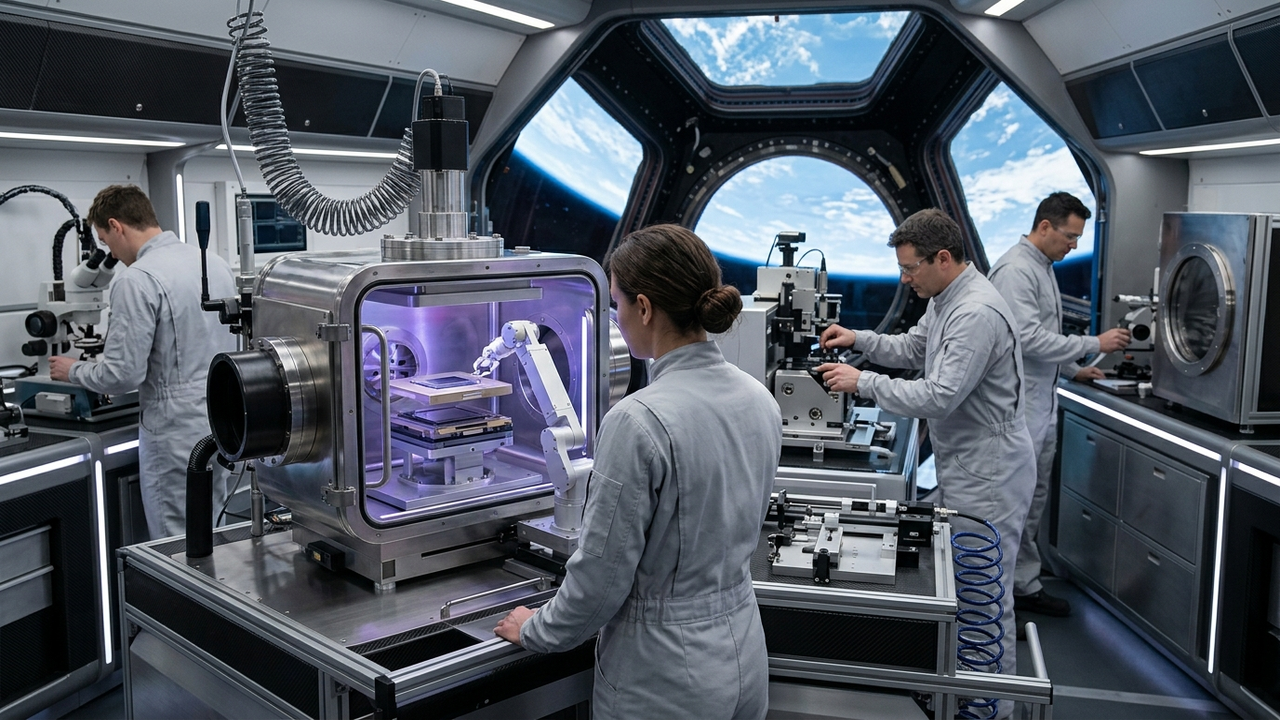
The International Space Station (ISS) National Lab has selected eight promising startups, including Astrileux and Micro-gRx, for its “Orbital Edge Accelerator” program, established to accelerate innovation in commercial space. This program specifically targets advanced manufacturing, biotechnology, and the development of new commercial opportunities in the microgravity environment.
Technical and Clinical Details
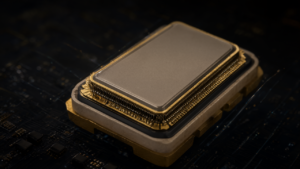
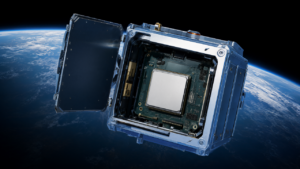
The selected startups are pursuing innovations across diverse sectors. Notably, Astrileux is developing Extreme Ultraviolet (EUV) photomasks, critical components for next-generation advanced semiconductor manufacturing, where microgravity could enable unprecedented precision and purity. Micro-gRx aims to optimize protein crystal structures in microgravity to develop more stable and highly functional nanodrugs. Other selected companies are also driving groundbreaking R&D in areas such as materials science, biotechnology, sensor technology, and energy solutions within the space environment.
Background and Industry Context
The ISS National Lab opens the unique microgravity environment of Earth orbit to private companies and research institutions, supporting the acceleration of commercialization and scientific discovery. The Orbital Edge Accelerator program is a core initiative within this mission, providing selected startups with mentorship, technical assistance, and funding opportunities specifically tailored for spaceflight technology development, business growth, and product commercialization. This makes previously costly and difficult-to-access space R&D more accessible to a broader range of innovators, driving the growth of the entire space economy.
Future Outlook
Support from this accelerator program serves as a critical platform for selected startups to accelerate their on-orbit research and bring innovative products and services to market. Semiconductor-related companies like Astrileux, by establishing manufacturing technologies in space, could bring new value propositions to the terrestrial semiconductor industry and contribute to improving the performance of next-generation electronic devices. Biopharmaceutical companies like Micro-gRx could offer new hope for treating intractable diseases with novel drugs and therapies developed in microgravity. The program’s success will further enhance the diversity and competitiveness of the commercial space industry, strengthening the ISS’s role not just as a scientific facility but as a hub for innovation and economic growth. These initiatives are expected to contribute to both long-term space exploration and sustainable global societal development.
Get our weekly technology intelligence — free
Receive an infographic that lets you judge at a glance whether each field’s analysis report is worth reading.
Subscribe Free — Weekly Tech Intelligence
By subscribing, you’ll receive Troy-Technical’s weekly technology intelligence newsletter.
- Your email and selected fields are used only to deliver the newsletter.
- We never share your information with third parties.
- You can unsubscribe anytime via the link in each email.
See our Privacy Policy for details.
Takes about a minute · Unsubscribe anytime