Key Findings
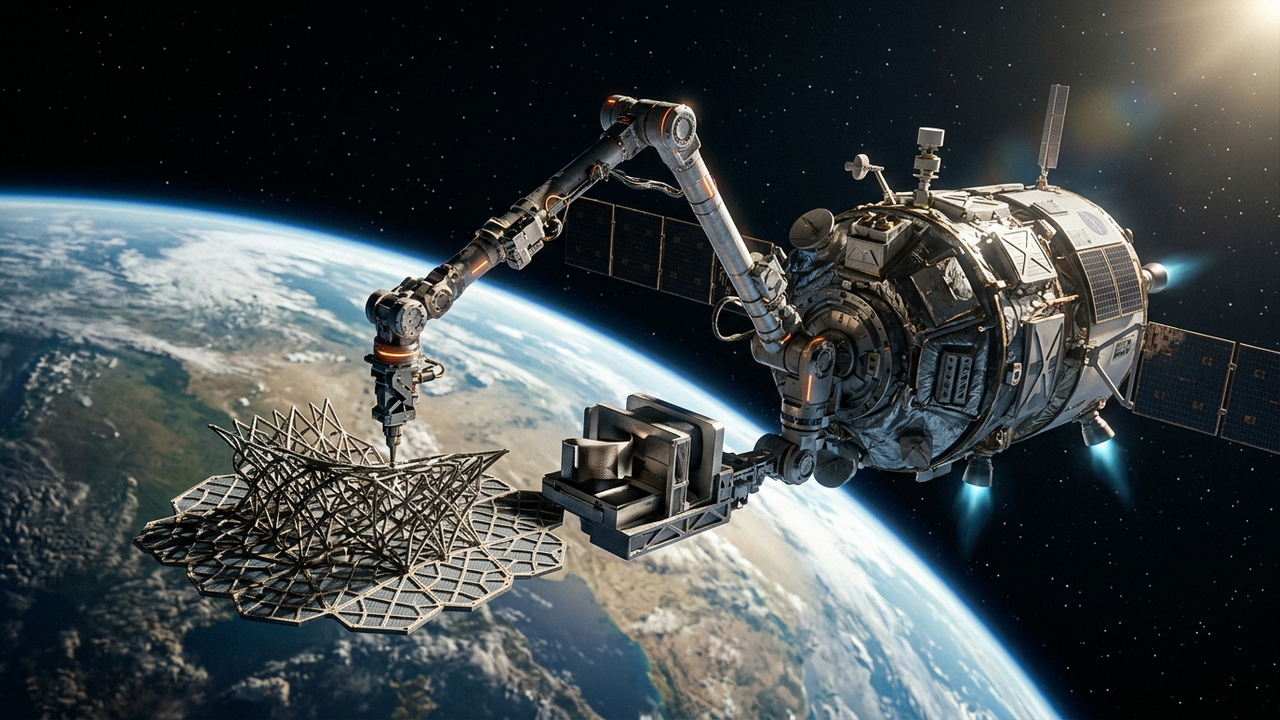
NASA’s SSPICY (Small Spacecraft Propulsion and Inspection Capability) mission has successfully demonstrated groundbreaking technologies for in-space satellite servicing and inspection. This public-private partnership showcased significant advancements in new propulsion systems, sophisticated guidance, navigation, and control (GNC) technologies, and, particularly, an innovative multi-jointed robotic arm, indicating a major leap forward for future autonomous on-orbit services and In-Space Manufacturing and Assembly (ISAM) capabilities.
Technical and Clinical Details
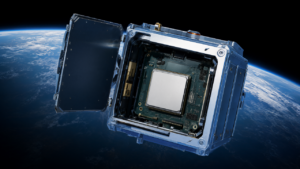
The SSPICY mission successfully demonstrated several key technologies. First, highly efficient and precise propulsion systems enabled flexible orbital maneuvers and accurate rendezvous operations for small spacecraft. Second, state-of-the-art GNC technologies achieved autonomous positioning and attitude control in complex space environments. Most notably, the mission validated the performance of an innovative multi-jointed robotic arm designed for in-space object manipulation. This arm exhibited high degrees of freedom and precision, demonstrating the capability to autonomously perform delicate tasks such as refueling, component replacement, inspection, and repair in orbit. This establishes foundational technologies essential for extending spacecraft lifespan, enhancing functionality, and achieving ISAM objectives, including the manufacturing and assembly of new structures and components in space.
Background and Industry Context
The increasing volume of space activities has led to a growing problem of orbital debris and a heightened demand for extending the operational lifespan and improving the functionality of satellites. In response, global investment in ISAM technologies—in-space servicing, repair, and manufacturing—is accelerating. Traditionally, satellites were difficult to repair or modify once launched. However, with the establishment of autonomous robotic arms and precise propulsion technologies, it becomes possible to refuel satellites nearing the end of their lives, replace faulty components, or even add new functional modules in orbit. NASA’s SSPICY mission is a strategic effort to develop and demonstrate these core technologies, positioning the U.S. to continue leading the frontier of space technology.
Future Outlook
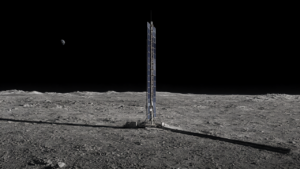
The success of the SSPICY mission holds immense implications for the future of space. In the short term, it will contribute to extending the lifespan of satellites and reducing maintenance costs in orbit, thereby improving the overall economic efficiency of space systems. It also provides new tools for environmental preservation activities, such as orbital debris assessment and removal. In the long term, this technology will form the foundation for advanced construction, resource extraction, and scientific experimentation in deep-space missions to destinations like the Moon and Mars, without direct human intervention. For instance, autonomous construction of lunar bases or modular expansion of space stations could transition from science fiction to reality. This is expected to significantly enhance the safety, efficiency, and sustainability of space exploration, dramatically expanding humanity’s access to and activities in space.
Source: https://www.nasa.gov/smallspacecraft/what-is-sspicy/
Get our weekly technology intelligence — free
Receive an infographic that lets you judge at a glance whether each field’s analysis report is worth reading.
Subscribe Free — Weekly Tech Intelligence
By subscribing, you’ll receive Troy-Technical’s weekly technology intelligence newsletter.
- Your email and selected fields are used only to deliver the newsletter.
- We never share your information with third parties.
- You can unsubscribe anytime via the link in each email.
See our Privacy Policy for details.
Takes about a minute · Unsubscribe anytime