Key Findings
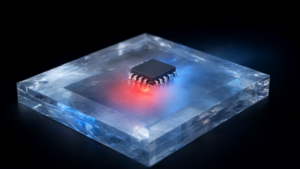
Henkel Adhesive Technologies has announced the launch of its LOCTITE ABLESTIK CDF900 series, a new generation of conductive die attach film (cDAF) with groundbreaking thermal conductivity exceeding 8 W/m-K. Introduced at SEMICON Taiwan 2026, this innovative material is specifically designed to tackle the critical thermal and stress management issues inherent in high-power artificial intelligence (AI), 5G/6G communication, and high-performance computing (HPC) applications.
Technical / Clinical Details
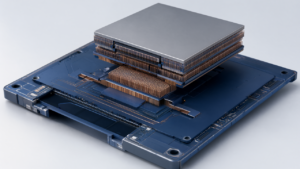
The LOCTITE ABLESTIK CDF900 series achieves its exceptional performance through a combination of Henkel’s proprietary advanced thermal filler technology and a sophisticated polymer matrix design. This unique formulation allows the cDAF to deliver both high thermal conductivity and superior adhesion, a balance often challenging to achieve in traditional die attach materials. By facilitating an efficient thermal pathway between high-power chips and their substrates, the material effectively lowers junction temperatures, which is crucial for maintaining performance stability. Furthermore, its inherent flexibility and robust bonding capability help mitigate thermal stresses, preventing issues such as package warpage and cracking—common reliability concerns in heterogeneous integration and large die applications. This enables the development of more reliable and longer-lasting advanced semiconductor devices.
Background & Context
The relentless push for higher performance and miniaturization in semiconductor devices, driven by the exponential growth of data and advancements in AI, has put immense pressure on thermal management solutions. With the proliferation of advanced packaging techniques like chiplets and 3D stacking, power densities per unit area have dramatically increased, making effective heat dissipation and thermal stress management paramount. Henkel’s new cDAF series directly addresses these evolving market demands, positioning it as a key enabler for the design and mass production of next-generation semiconductors.
Strategic Significance & Outlook
The introduction of the LOCTITE ABLESTIK CDF900 series is set to significantly improve the performance and reliability of devices in thermally critical sectors, including 5G/6G base stations, data centers, advanced AI processors, and automotive chips for autonomous driving. Henkel aims to leverage this technology to support the realization of more efficient and sustainable electronic devices, driving further innovation across the global semiconductor industry.
Get our weekly technology intelligence — free
Receive an infographic that lets you judge at a glance whether each field’s analysis report is worth reading.
Subscribe Free — Weekly Tech Intelligence
By subscribing, you’ll receive Troy-Technical’s weekly technology intelligence newsletter.
- Your email and selected fields are used only to deliver the newsletter.
- We never share your information with third parties.
- You can unsubscribe anytime via the link in each email.
See our Privacy Policy for details.
Takes about a minute · Unsubscribe anytime