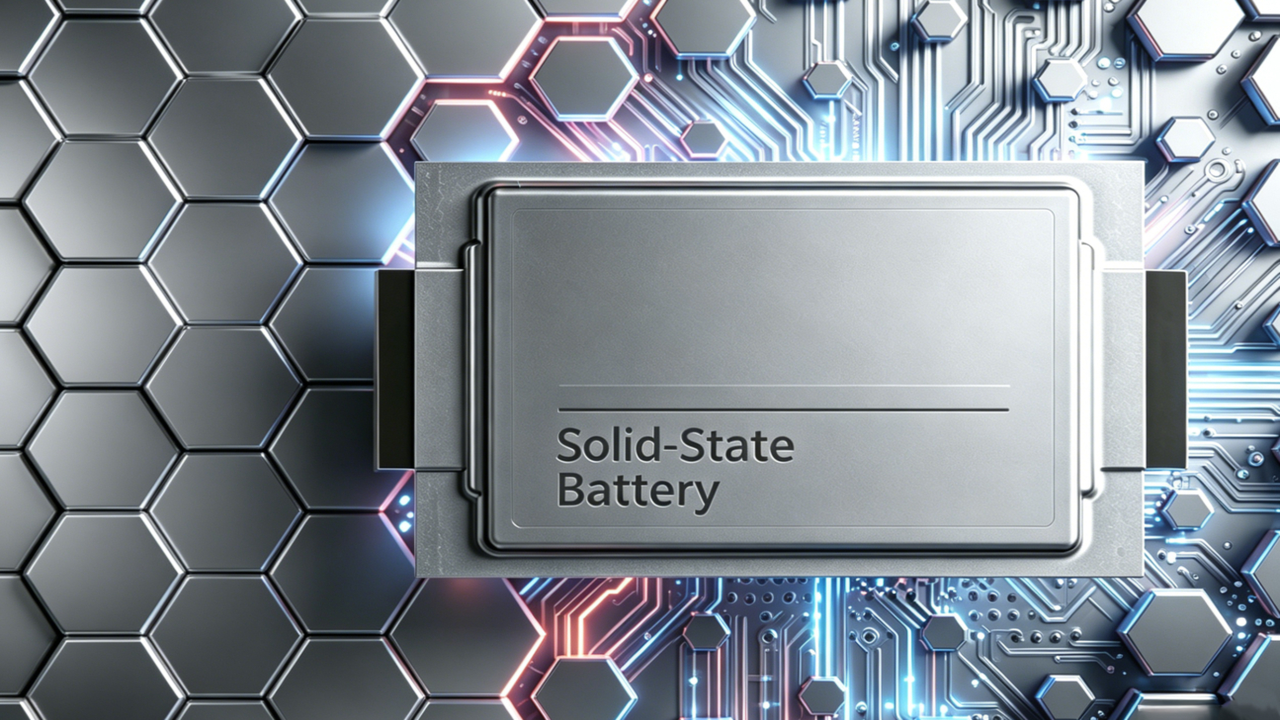
Revolutionizing EV Charging and Energy Density
The rapid expansion of the electric vehicle (EV) market demands significant advancements in battery technology, particularly in terms of energy density and charging speed. All-solid-state batteries (ASSBs) are widely regarded as a critical next-generation solution, offering enhanced safety and higher energy density compared to conventional lithium-ion counterparts. A team of researchers from the Chinese Academy of Sciences has achieved a groundbreaking development, unveiling an ASSB that pushes the boundaries of both performance metrics, bringing practical solid-state solutions closer to reality.
Breakthrough in Interfacial Stability and Fast Charging
The newly developed all-solid-state lithium metal battery exhibits an impressive energy density of 451.5 Wh/kg. More strikingly, it supports ultra-fast charging at a 20C rate, meaning it can achieve significant charge in approximately three minutes, while maintaining stable performance for more than 700 cycles. This remarkable capability is attributed to a novel approach utilizing polymer-modulated solvation chemistry. This technique effectively suppresses unwanted side reactions at the interface between the lithium metal anode and the solid-state electrolyte. Crucially, it facilitates the formation of a stable, lithium fluoride (LiF)-rich interphase layer. This engineered interface is pivotal in preventing lithium dendrite growth and ensuring efficient lithium ion transport, thereby enabling high-rate charging and extending the battery’s operational lifespan.
Implications for the EV Market and Global Landscape
This technological leap holds transformative potential for the EV industry, directly addressing the common consumer concern of long charging times. By enabling a “refueling” experience comparable to gasoline vehicles, such fast-charging ASSBs could accelerate EV adoption globally. Beyond this research, major Chinese battery manufacturers like CATL are actively pursuing commercialization of ASSBs, with targets set for around 2026-2027. CATL itself is reportedly engaged in pilot production of 500 Wh/kg class solid-state cells. This ongoing innovation underscores China’s burgeoning leadership in advanced battery technology, positioning it to significantly influence the future trajectory of the global EV market.


Comments