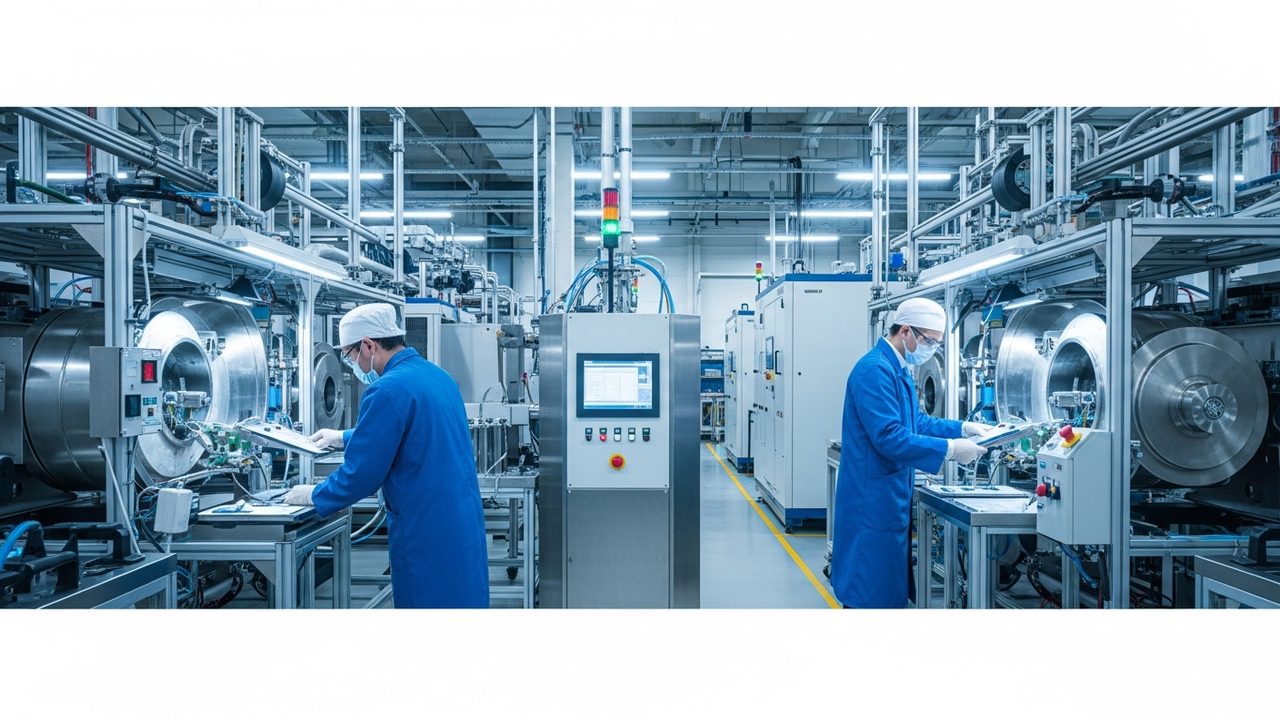
Transition to Solvent-Free Manufacturing and Its Advantages
The dry electrode process is recognized as a pivotal advancement in the manufacturing of both conventional lithium-ion and next-generation solid-state batteries. Traditionally, electrode production involves coating slurries, where active materials, conductive additives, and binders are dispersed in organic solvents like N-methyl-2-pyrrolidone (NMP), followed by energy-intensive drying and solvent recovery. NMP is not only costly but also environmentally hazardous. The dry electrode process fundamentally addresses these issues by completely eliminating the use of such solvents, leading to substantial reductions in manufacturing costs (CAPEX and OPEX) and environmental footprint due to the removal of drying ovens and solvent recovery systems.
Technical Hurdles and Scaling Up Efforts
While offering significant benefits, the dry electrode process presents its own set of technical challenges, including controlling crack formation in the electrodes and ensuring uniform mixing of binder and active materials. For solid-state batteries (SSBs), these challenges are amplified because the interface between the solid electrolyte and active material is more complex, and the mechanical properties of the electrode directly impact battery performance. Precise process control is paramount. Despite these hurdles, the technology is rapidly progressing from pilot-scale validation to full-scale mass production, with various companies actively developing and refining their proprietary dry processing techniques. This transition is crucial for demonstrating the scalability and economic viability of the method.
Indispensable for Solid-State Battery Production
Solid-state batteries, by their nature, replace flammable liquid electrolytes with solid counterparts, making moisture management an extremely critical factor in their manufacturing. Sulfide-based solid electrolytes, in particular, are highly sensitive to moisture and can produce hazardous gases upon contact with water. The solvent-free nature of the dry electrode process inherently minimizes the risk of moisture ingress and facilitates manufacturing in ultra-low dew point environments (e.g., -60°C), thereby drastically reducing degradation rates by over tenfold. This makes dry electrode processing an essential technology for preventing solid electrolyte degradation and ensuring the stable production of high-quality solid-state batteries, ultimately accelerating their cost competitiveness and market introduction.







Comments