The Pivotal Role of Calendering in Battery Manufacturing
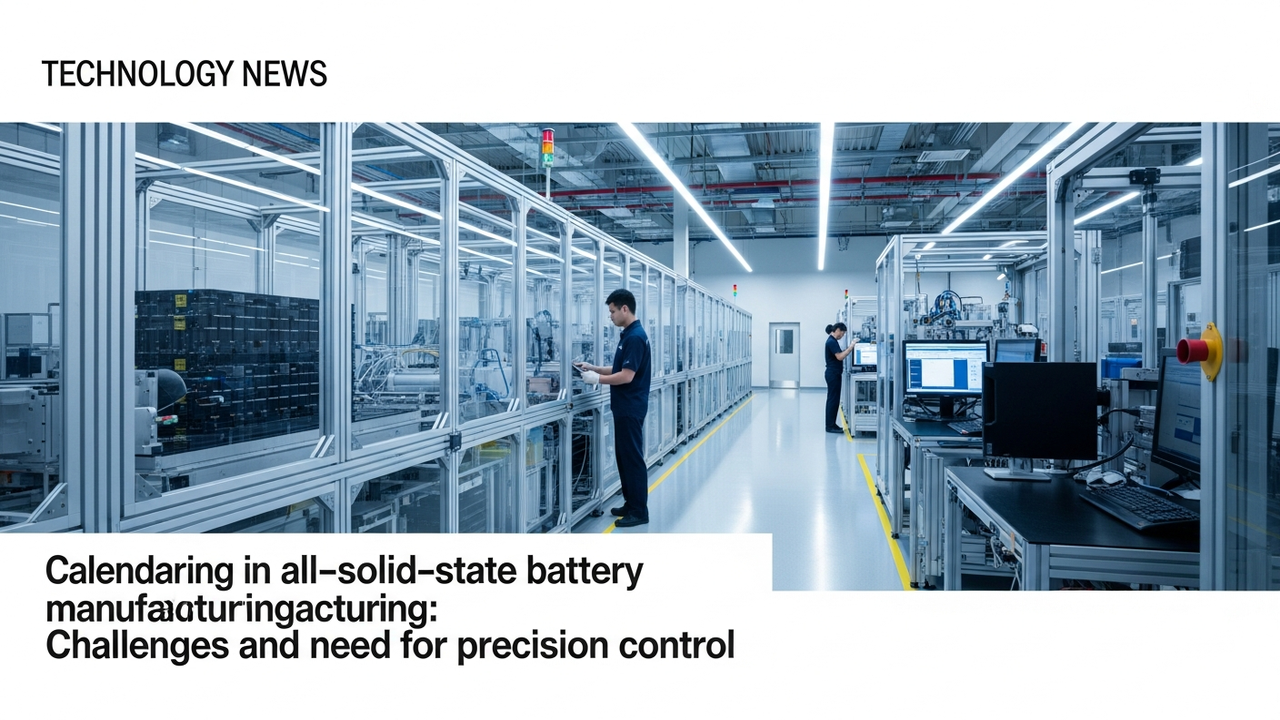
In the battery manufacturing process, calendering is a crucial step that determines the physical properties of electrodes, such as density, thickness, and surface roughness, thereby significantly impacting the final cell performance. For conventional liquid-electrolyte lithium-ion batteries, calendering involves compressing dried electrode slurries with rollers after coating. However, for all-solid-state batteries (SSBs), which utilize brittle solid electrolytes, the calendering conditions differ substantially, requiring a much higher degree of precision and control.
Specialized Requirements for Solid-State Battery Calendering
According to a report from PatSnap Eureka, calendering for solid-state batteries necessitates a distinct pressure range and temperature control compared to traditional batteries. To prevent fracture or cracking of the solid electrolyte while minimizing interfacial resistance between the electrodes and electrolyte, pressures are typically adjusted within the 30-100 MPa range, combined with controlled heating between 60-120°C. Inadequate calendering can lead to poor interfacial contact, potentially increasing interfacial resistance by an alarming 200-500%. This severe increase can significantly degrade battery performance, leading to higher internal resistance, reduced power density, and increased heat generation within the cell.
Challenges of Precision Pressure Control in Roll-to-Roll Manufacturing
In large-scale roll-to-roll manufacturing environments, calendering for solid-state batteries presents even more complex challenges. To prevent delamination and microscopic cracking of the inherently brittle solid electrolyte materials, an exceptionally uniform and precise pressure distribution across the entire roll width is indispensable. Even slight pressure inconsistencies can damage the solid electrolyte layer, disrupting ion conduction pathways. Therefore, the optimization of calender roll design, material selection, temperature management, and process parameters constitutes a critical research and development area for SSB mass production. The integration of advanced sensor technologies and real-time control systems is essential to overcome these challenges and ensure the stable production of high-quality solid-state batteries.









Comments