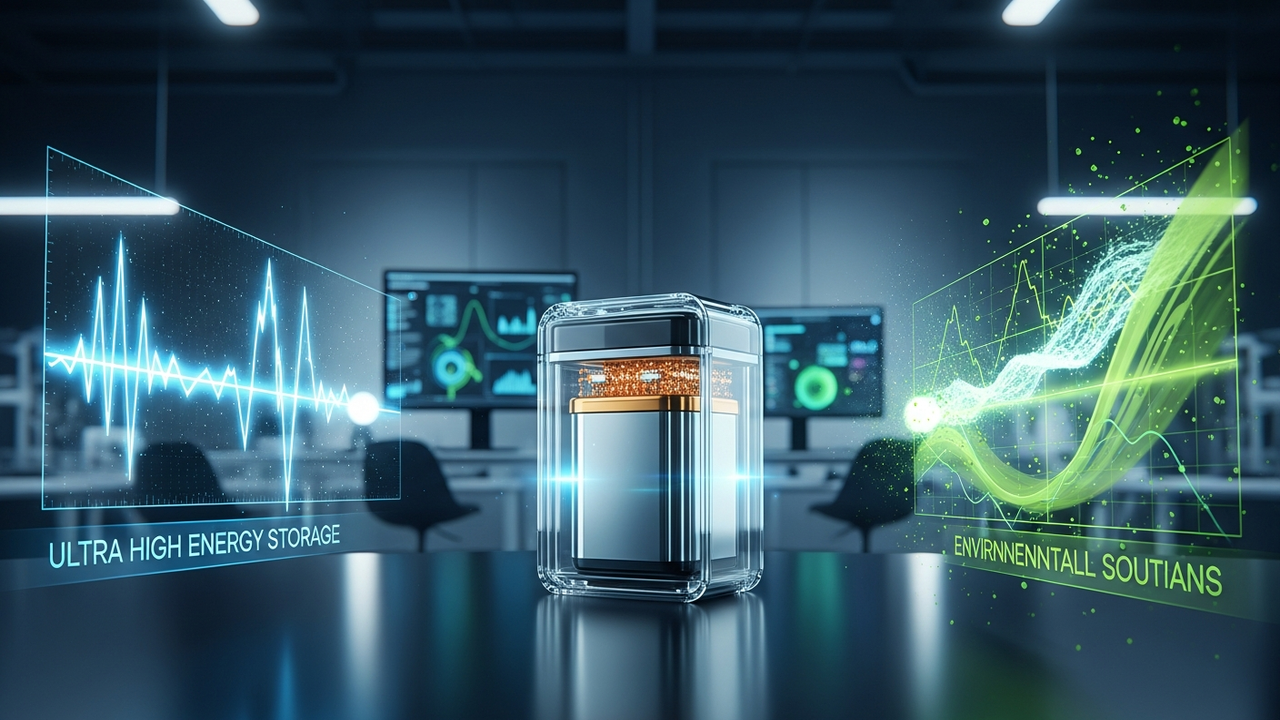
Pursuing Ultra-High Energy Density and Sustainable Storage
Anode-Free Lithium Metal Batteries (AFLMBs) represent a transformative next-generation technology poised to revolutionize energy storage. By eliminating the conventional graphite anode found in current lithium-ion batteries, AFLMBs hold the potential to significantly boost battery energy density by 25-40%, targeting an ambitious 400-480 Wh/kg. Beyond superior performance, this design promises environmental and economic benefits, including reduced carbon footprint associated with graphite production and lower material costs. Consequently, AFLMBs are gaining increasing attention as a sustainable and high-performance solution for diverse applications.
Challenges in Dendrite Suppression and Interfacial Stability
This comprehensive review, published by RSC Publishing, meticulously analyzes the key technical challenges and advancements in AFLMBs. Next-generation solid electrolytes, particularly polymer-ceramic composites and sulfide-based solid electrolytes, are identified as promising solutions for effectively suppressing the notorious growth of lithium dendrites. These solid electrolytes offer both mechanical strength and excellent ionic conductivity, mitigating the risk of internal short circuits caused by dendrite formation. However, critical challenges persist concerning interfacial stability between the electrolyte and anode, as well as maintaining long-term cycle life. Overcoming these fundamental issues is paramount for the successful commercialization of AFLMBs.
Integrated Approaches for Practical Implementation
The review concludes that a multi-faceted research and development approach is indispensable for the commercial success of AFLMBs. This integrated strategy encompasses several key elements: firstly, “interfacial engineering” to optimize the interface between the electrode and electrolyte, ensuring stable, low-resistance ion transport pathways. Secondly, the implementation of “pre-lithiation techniques” to stabilize the initial formation of the lithium metal anode, thereby improving first-cycle efficiency. Lastly, defining “optimized operating conditions,” including charging rates, temperature, and pressure, to maximize overall battery performance and lifespan. By integrating these advanced technologies, AFLMBs can fully realize their potential as ultra-high energy and green energy storage solutions, with anticipated applications spanning electric vehicles, drones, and portable electronic devices.
Source: https://pubs.rsc.org/en/content/articlehtml/2026/ra/d6ra01751g?page=search





Comments