Background and Delamination Challenges
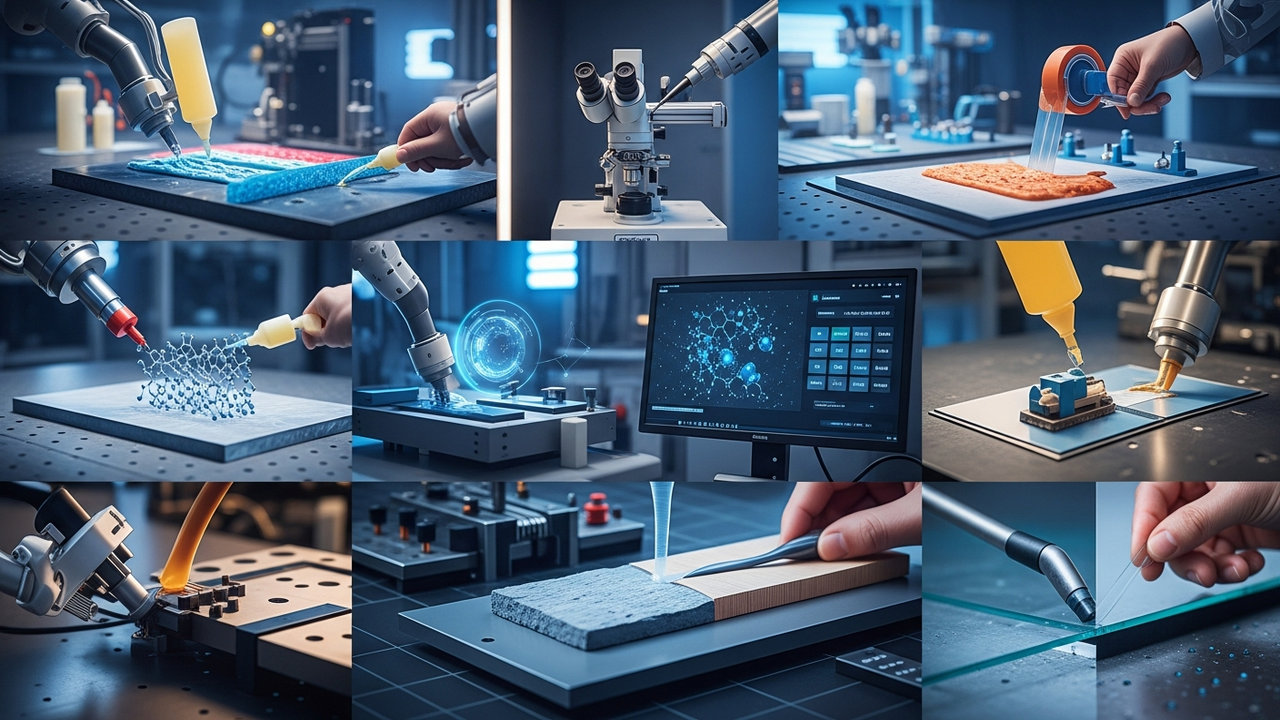
In modern manufacturing, joining dissimilar materials is a critical technique for achieving lightweighting, enhanced functionality, and cost reduction. However, adhesive bonds inherently carry the risk of delamination due to thermal cycling, mechanical stress, and environmental factors. In high-stress applications such as aerospace, automotive, and electronics, the reliability of adhesive layers directly impacts overall product performance and safety, making the development of delamination-resistant adhesives imperative. Concurrently, increasing environmental regulations demand greater consideration for recyclability and reduced environmental impact.
Adhesive Types and Responses to Delamination Mechanisms
The type of adhesive significantly influences its ability to resist delamination and its implications for end-of-life processing:
- Structural Adhesives (for High-Stress Applications): Epoxy and polyurethane-based structural adhesives provide excellent bond strength and durability. These adhesives leverage advanced polymer chemistry to form strong chemical bonds or mechanical interlocks with substrates, effectively distributing stress concentrations that could initiate delamination. This enhances their resistance to layer separation. However, these thermoset adhesives, once cured, are difficult to re-dissolve or separate, complicating the recycling process of bonded materials. They often require specialized separation techniques, which can contribute to disposal costs and environmental burden.
- Emerging Bio-Based Adhesives: Driven by environmental concerns, R&D in bio-based adhesives is accelerating. These adhesives, derived from plant-based polymers or natural proteins, offer superior biodegradability and renewability. They are attracting significant attention as sustainable material solutions, as they maintain adhesive performance while reducing environmental impact at the end of their lifecycle. Furthermore, certain bio-based adhesives can be designed to be reversibly detachable under specific stimuli (e.g., heat, light, pH changes), offering significant potential to improve recyclability.
Technical Significance and Outlook
The choice of adhesive critically affects not only product performance but also its environmental footprint. Mitigating delamination risk in high-stress applications while simultaneously enhancing recyclability represents a major R&D theme for future adhesive technologies. Bio-based adhesives, with their environmental compatibility and potential for controlled debonding mechanisms, offer a promising direction for achieving this dual objective. Adhesive manufacturers must continue to innovate, balancing bond strength, durability, processability, and environmental characteristics. This will pave the way for a safer and more sustainable future in manufacturing. Specifically, achieving both delamination resistance and recyclability in EV battery packs and composite structures remains a key challenge.
Source: https://eureka.patsnap.com/report-how-adhesive-type-mitigates-substrate-delamination-risk






Comments