
Background: Technological Evolution in the AI Era and the Role of Materials
The rapid advancement of artificial intelligence (AI) technology demands high-performance hardware and reliable infrastructure across all sectors, from AI servers in data centers to robots and smart devices. Particularly, with the increase in AI computing power, challenges such as rising heat generation and power consumption have become apparent. To overcome these, materials with excellent heat dissipation, durability, insulation, and lightweight properties are essential. Furthermore, as sustainability demands grow, environmentally friendly materials and stable supply chains are also critical considerations.
Key Findings: Covestro’s High-Performance Material Solutions for AI Infrastructure
Covestro, a leading German chemicals company, prominently displayed its high-performance material solutions for AI infrastructure and embodied intelligence (e.g., robots, IoT devices) at COMPUTEX 2026 in Taipei, under the theme “The Material Effect.” The company showcased key materials from its diverse product portfolio and their applications:
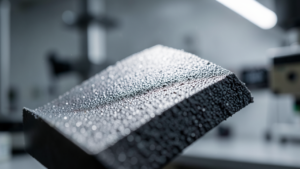
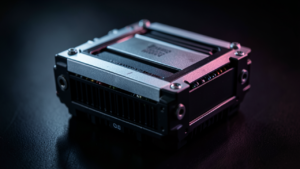
- Engineering Plastics: Polycarbonates and their alloys, boasting high strength, rigidity, and excellent heat resistance, are used in server racks, cooling systems, and AI accelerator housings, contributing to improved durability and reliability. Their high rigidity and dimensional stability are particularly crucial for supporting precise electronic components.
- Thermoplastic Polyurethanes (TPU): Known for flexibility, abrasion resistance, and shock absorption, TPUs are utilized in cable insulation, connectors, and housings for wearable devices, offering durability and design freedom. They are also promising for soft body parts of robots with embodied intelligence and as protective materials for sensors.
- Sustainable Solutions: Solutions that reduce environmental impact, such as recyclable, bio-based, or CO2-utilized materials, were also highlighted. This demonstrates Covestro’s commitment to pursuing sustainability at the material level, addressing the challenge of increased power consumption brought about by AI technology.
These materials aim to ensure the performance required for AI technological advancement while balancing energy efficiency and environmental considerations.
Technical Significance and Outlook
Covestro’s exhibit at COMPUTEX 2026 clearly illustrates the central role of materials science in hardware innovation during the AI era. High-performance engineering plastics and TPUs are indispensable for managing thermal issues in AI servers and enhancing their reliability. For embodied intelligence devices and connected devices, the flexibility, durability, and lightweight nature of materials enable more human-like interactions and widespread deployment. In the future, these material solutions will accelerate the further enhancement of AI computing capabilities, improve energy efficiency in data centers, and foster the development of IoT ecosystems such such as smart cities and smart factories. Covestro is expected to contribute to building the physical foundation of a future society driven by AI and IoT, realizing sustainable and high-performance next-generation technologies through material innovation.





Comments