Key Findings
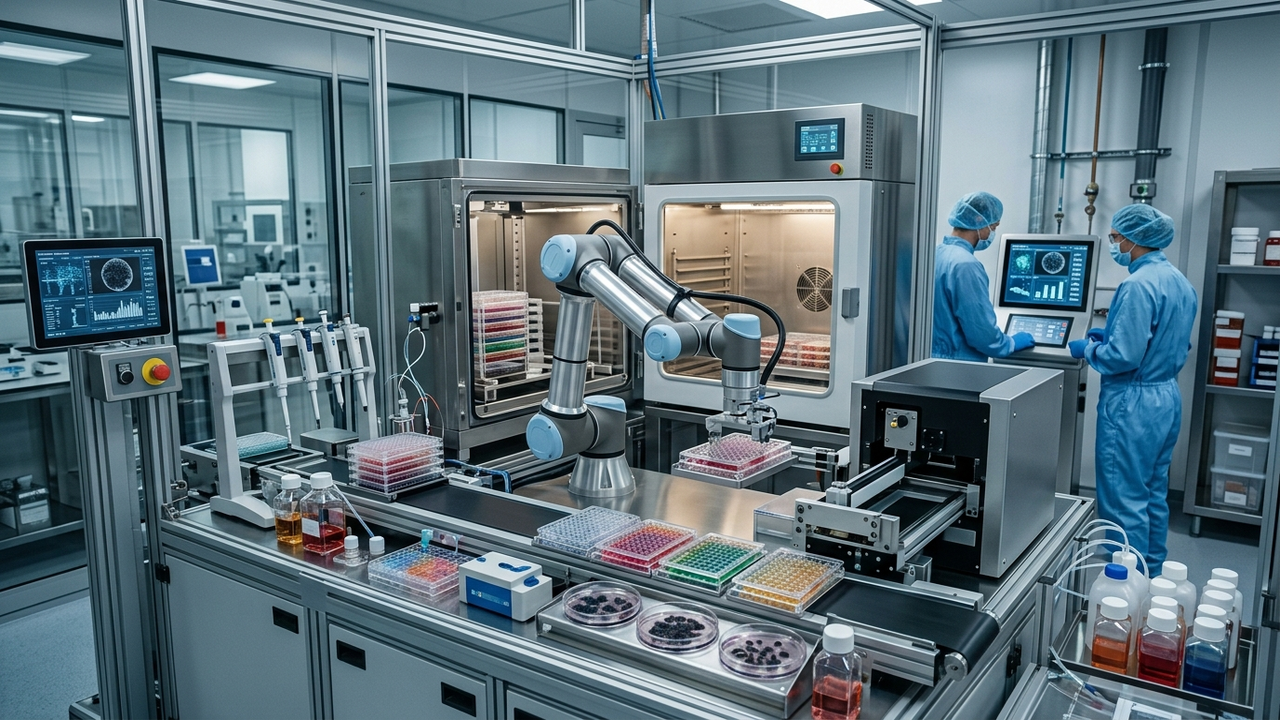
Researchers have successfully developed a groundbreaking automated manufacturing workflow that can derive monoclonal induced pluripotent stem cell (iPSC) lines from human skin biopsies, complete with comprehensive quality control, in a mere seven weeks. This rapid, standardized, and automatable process marks a significant step towards enabling the cost-efficient clinical implementation of autologous iPSC-based therapies.
Technical / Clinical Details
- Accelerated Production: The workflow dramatically reduces the time required for iPSC line derivation and quality assurance from several months to just seven weeks, directly impacting the speed at which personalized cell therapies can reach patients.
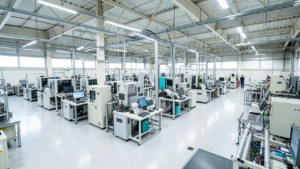
- Automation and Closed Systems: Proof-of-concept experiments demonstrate the feasibility of transferring traditionally error-prone and labor-intensive open-system steps to semi-automated, closed manufacturing environments. This minimizes human intervention, reduces contamination risks, and improves product consistency and safety.
- Integrated Quality Control: The process incorporates robust quality control measures, ensuring that the generated iPSC lines meet the stringent criteria necessary for clinical applications, thereby facilitating regulatory approval pathways.
Background & Context
Autologous iPSC-derived cell therapies offer immense potential by circumventing immune rejection issues, but their widespread clinical adoption has been hampered by complex, time-consuming, and costly manufacturing processes. The need for patient-specific cell production creates significant challenges in scalability and economic viability. This research directly addresses these barriers by introducing efficiencies that could fundamentally alter the manufacturing landscape for personalized regenerative medicines. The shift towards automated, closed systems also aligns with global trends in advanced therapy medicinal product (ATMP) manufacturing, which prioritize sterility, reproducibility, and compliance with Good Manufacturing Practice (GMP) regulations.
Strategic Significance & Outlook
This streamlined iPSC manufacturing approach holds substantial strategic significance for the regenerative medicine sector. By substantially cutting production time and costs, it enhances the commercial viability of autologous iPSC therapies, potentially making these advanced treatments accessible to a broader patient population. The technology’s emphasis on standardization and automation is also crucial for facilitating regulatory submissions and accelerating the transition of iPSC research from bench to bedside. Future efforts will likely focus on further optimizing and scaling this platform, integrating it with downstream differentiation protocols to create a fully industrialized, end-to-end manufacturing solution for diverse iPSC-derived cellular products.
Source: https://www.biorxiv.org/content/10.64898/2026.08.04.741960v2
Get our weekly technology intelligence — free
Receive an infographic that lets you judge at a glance whether each field’s analysis report is worth reading.
Subscribe Free — Weekly Tech Intelligence
By subscribing, you’ll receive Troy-Technical’s weekly technology intelligence newsletter.
- Your email and selected fields are used only to deliver the newsletter.
- We never share your information with third parties.
- You can unsubscribe anytime via the link in each email.
See our Privacy Policy for details.
Takes about a minute · Unsubscribe anytime





Comments