Key Findings
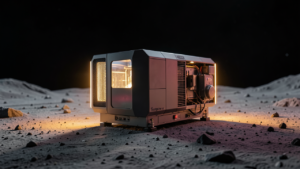
The U.S. Department of Energy (DOE) and NASA are collaborating on the development of fission surface power systems, with a target demonstration on the lunar surface by the late 2020s. These nuclear power systems are deemed indispensable for providing a reliable and continuous power supply for long-duration human and robotic missions on the Moon and Mars, particularly in regions such as the lunar South Pole where solar energy is insufficient during extended lunar nights. Capable of generating up to 40 kilowatts of electricity, these systems are designed to support astronauts and scientific instruments with uninterrupted power.
Technical & Clinical Details
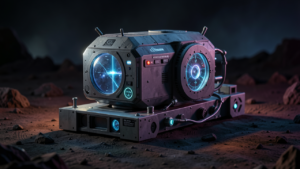
The fission surface power system integrates cutting-edge advancements in reactor design and nuclear fuel technology. Its primary components include a small nuclear reactor to control fission reactions, a power conversion system to transform heat into electricity, a heat rejection system to dissipate excess heat into space, and a power management and distribution system for overall control. Engineered for autonomous operation and prolonged deployment in the harsh space environment, the system can support missions for several years without interruption. This capability unlocks continuous exploration and habitation activities on the Moon that are unattainable with solar power alone.
Background & Industry Context
Establishing a sustainable human presence on the Moon and Mars necessitates a robust and high-capacity power supply, which stands as one of the paramount challenges. The lunar surface, in particular, experiences frigid two-week-long nights, rendering solar panels ineffective. Fission power systems offer a compelling solution by providing a constant and stable energy source independent of environmental conditions, making them the most promising technology to overcome this hurdle. The DOE and NASA are accelerating this technology’s development through partnerships with commercial entities, underscoring its escalating importance for future deep-space exploration missions like the Artemis program.
Future Outlook
The planned lunar demonstration mission in the late 2020s represents a critical milestone for validating the commercial viability and operational readiness of this technology. A successful demonstration would establish fission surface power systems as a cornerstone of future lunar and Martian outpost power infrastructure, dramatically accelerating human expansion into space. Furthermore, this technology holds promise for applications in deep-space AI data centers and other high-power-demand applications, contributing significantly to the burgeoning space economy. The U.S. aims to secure leadership in this domain, advancing national security and space exploration objectives.
Source: https://www.energy.gov/ne/articles/5-things-you-need-know-about-fission-surface-power-systems


Comments