Background
The rapid proliferation of Artificial Intelligence (AI), High-Performance Computing (HPC), and data centers has dramatically escalated the demand for faster and more efficient data transmission across chips, boards, and racks. Traditional copper interconnects are reaching their limits in addressing these demands due to inherent signal attenuation, escalating power consumption, and physical space constraints. Co-packaged optics (CPO) has emerged as an innovative and crucial solution to break this “electrical bottleneck.” Major semiconductor industry players, including TSMC, Intel, and Broadcom, are investing significant resources into the development and deployment of CPO technology, anticipating it will form the foundational infrastructure for next-generation data centers.
Key Findings
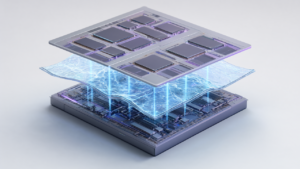
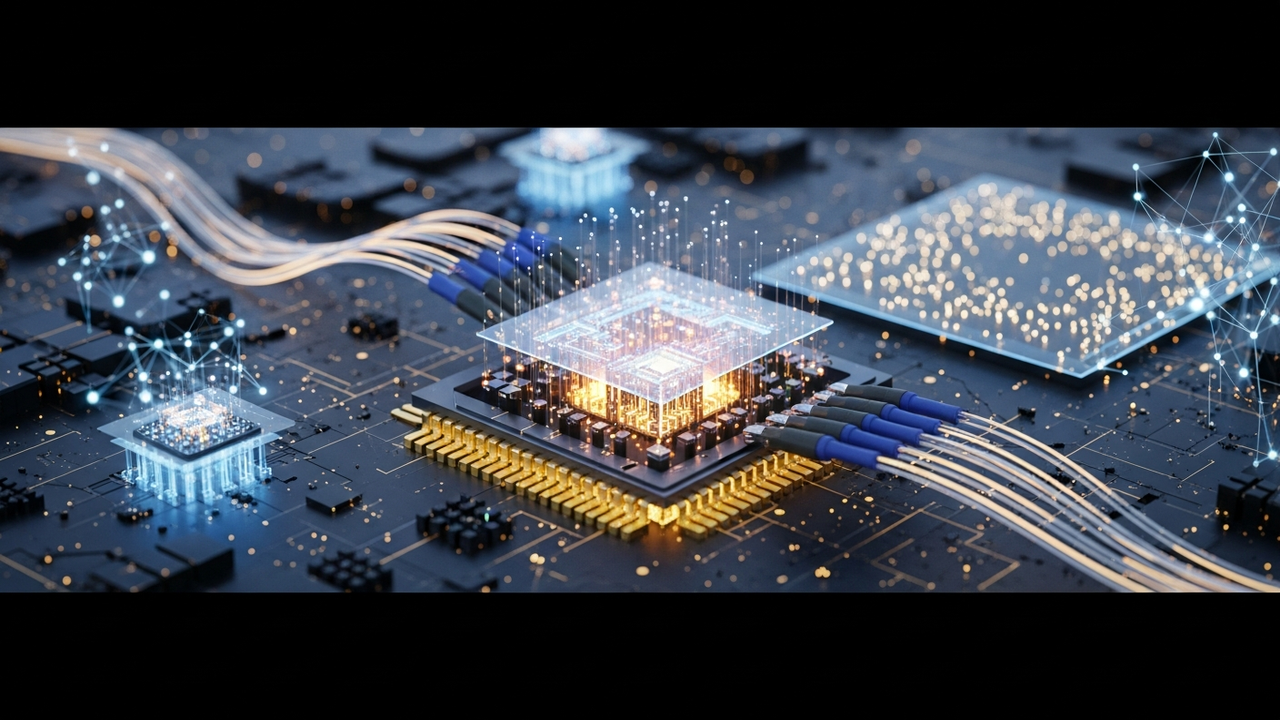
TSMC has announced the mass production launch of its groundbreaking “COUPE” (Compact Universal Photonic Engine) platform in 2026. This platform is specifically designed for co-packaged optics (CPO), a pivotal next-generation high-speed interconnect technology critical for AI data centers. The COUPE platform leverages TSMC’s advanced System-on-Integrated-Chips (SoIC) bonding technology to directly stack photonic ICs and electronic ICs. This approach is engineered to achieve a tenfold reduction in latency and substantial improvements in power efficiency compared to conventional pluggable optical modules. Crucially, CPO solutions integrated with Micro LED technology, specifically developed for NVIDIA’s AI clusters, are expected to make their commercial debut through TSMC’s COUPE process.
Technical Details
The COUPE platform is built upon TSMC’s sophisticated 3D stacking technology, SoIC. SoIC bonding facilitates the direct, high-density stacking of photonic chips (responsible for the generation, modulation, and detection of optical signals) and electronic chips (responsible for processing electrical signals) at the chip level. This integration drastically shortens the physical distance electrical signals must travel before being converted to optical signals and back, yielding several key advantages:
- Ultra-Low Latency: By minimizing the physical separation between the chip and the optical module, signal transmission delay is reduced to less than one-tenth of that experienced with conventional methods. This is paramount for AI clusters where thousands of GPUs must operate in tight synchronization for efficient AI/ML model training and inference.
- Significant Power Efficiency Improvement: Eliminating the need for signals to traverse lengthy electrical traces substantially reduces the power consumption associated with high-volume data transfer. This directly contributes to lower operational costs and enhanced sustainability for AI data centers.
- High Bandwidth: The high-density optical connections enabled by COUPE facilitate ultra-high bandwidths, reaching terabits per second (Tbps) levels, which are exceedingly challenging to achieve with traditional electrical interconnects.
A distinctive feature of the COUPE process is the planned integration of Micro LED technology into its co-packaged optics. Micro LEDs offer compelling advantages over conventional light sources such as VCSELs (Vertical Cavity Surface Emitting Lasers), including superior high-speed modulation capabilities, enhanced miniaturization, higher efficiency, and extended lifespan. These attributes are expected to further elevate CPO performance. The anticipated adoption of this technology by leading AI chip vendors like NVIDIA for their next-generation AI clusters will likely accelerate industry-wide CPO deployment.
Challenges and Outlook
Despite the immense promise, initial CPO technology faces significant manufacturing yield challenges. Industry analyses indicate that TSMC’s SoIC manufacturing yield for CPO is currently estimated at approximately 50-60%, with downstream assembly processes showing yields as low as 20-50%. These figures pose a challenge to the short-term supply volume of CPO. However, market projections from firms like Morgan Stanley anticipate explosive growth in the CPO market post-2028, suggesting that these initial yield issues are expected to be resolved as the technology matures and manufacturing processes are optimized.
The 2026 mass production launch of TSMC’s COUPE platform with Micro LED co-packaged optics represents a pivotal moment, poised to dramatically enhance the performance and efficiency of AI data centers. While initial yield hurdles exist, CPO technology is strategically positioned to resolve long-term bottlenecks in AI accelerators, thereby enabling the realization of even larger and more powerful AI clusters. The widespread adoption of this electro-photonic integration technology is expected to accommodate the increasing complexity of AI models and data volumes, accelerating the development of AI applications across diverse fields such as autonomous driving, medical diagnostics, and advanced scientific research. As a leader in the foundry space, TSMC is set to continue driving innovation across the semiconductor industry through this critical technological advancement.