
Background: The Challenge of Modeling Human Myelination
Myelination, the process by which oligodendrocytes wrap around neural axons to form the myelin sheath, is crucial for rapid and efficient nerve signal transmission in the central nervous system. Demyelination or impaired myelination underlies severe neurological disorders such as multiple sclerosis and contributes to age-related cognitive decline. Despite its critical importance, establishing an accurate, physiologically relevant, and quantitatively assessable in vitro model of human myelination has been a persistent challenge. Existing models often lack the complex structural cues necessary to mimic the in vivo microenvironment, hindering comprehensive studies on disease mechanisms and therapeutic development.
Key Findings / Results: Nanofiber-iPSC Platform for Quantitative Myelination Studies
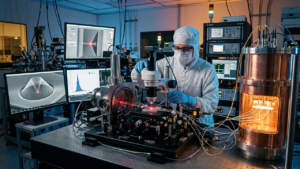
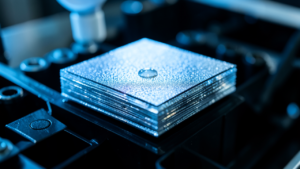
Researchers at Kyoto University’s Center for iPS Cell Research and Application (CiRA) have developed a groundbreaking in vitro human myelination model that addresses these limitations. Their approach involves co-culturing human induced pluripotent stem cell (iPSC)-derived oligodendrocytes with precisely engineered nanofibers, approximately 0.7 micrometers (µm) in diameter. These nanofibers serve as bio-mimetic scaffolds, guiding the extension of oligodendrocyte processes and inducing them to ensheath the fibers in a manner highly analogous to myelination around actual axons in vivo. This system successfully replicates the critical initial stages of myelin formation in a controlled environment. A key innovation of this research is the establishment of a quantitative evaluation method for human myelination, using Claudin-11, a myelin-specific molecule, as a reliable indicator. This quantifiable metric allows for objective assessment of myelination progress and response to experimental interventions, providing a robust tool for scientific investigation. The fidelity of this nanofiber-based microphysiological system (MPS) to in vivo myelination significantly enhances its utility for both basic and translational research.
Technical Significance & Outlook: Advancing Neurological Drug Discovery and Treatment
The development of this nanofiber-based human myelination model carries immense technical significance for neuroscience and regenerative medicine. Firstly, it provides an unprecedented platform for dissecting the intricate molecular and cellular mechanisms underlying human myelination and demyelination, which is vital for understanding diseases like multiple sclerosis at a fundamental level. Secondly, its quantitative nature makes it an ideal high-throughput screening tool for identifying novel therapeutic compounds that promote myelin repair or prevent its degradation. This can significantly accelerate drug discovery efforts for currently untreatable neurological conditions. Furthermore, the model holds promise for investigating the role of myelination in age-related neurodegenerative diseases and cognitive impairments, offering avenues for developing strategies to maintain brain health in an aging population. By leveraging the precise control offered by nanofabrication techniques and the biological relevance of iPSC-derived cells, this technology establishes a robust bridge between materials science and clinical neurology. The ability to reliably model and quantify human myelination in vitro represents a crucial step towards developing effective diagnostics and regenerative therapies, ultimately improving the lives of patients suffering from a wide range of debilitating neurological disorders.
Source: https://www.cira.kyoto-u.ac.jp/j/pressrelease/news/260515-000000.html





Comments