Background: The Global Imperative for Sustainable Material Solutions
The escalating global plastic pollution crisis and the urgent need to mitigate greenhouse gas emissions have driven an intense search for sustainable alternatives to petrochemical-based materials. In this context, cellulose nanofibers (CNF), derived from abundant renewable plant biomass, have emerged as a highly promising next-generation material. CNF boasts an impressive combination of properties: exceptional strength-to-weight ratio, high transparency, and remarkable flexibility, making it a strong candidate for various high-performance applications. However, transforming CNF into functional, plastic-like materials with tailored properties for industrial applications remains a significant technical challenge.
Key Findings / Results: Breakthrough in CNF-Derived Plastic-like Materials
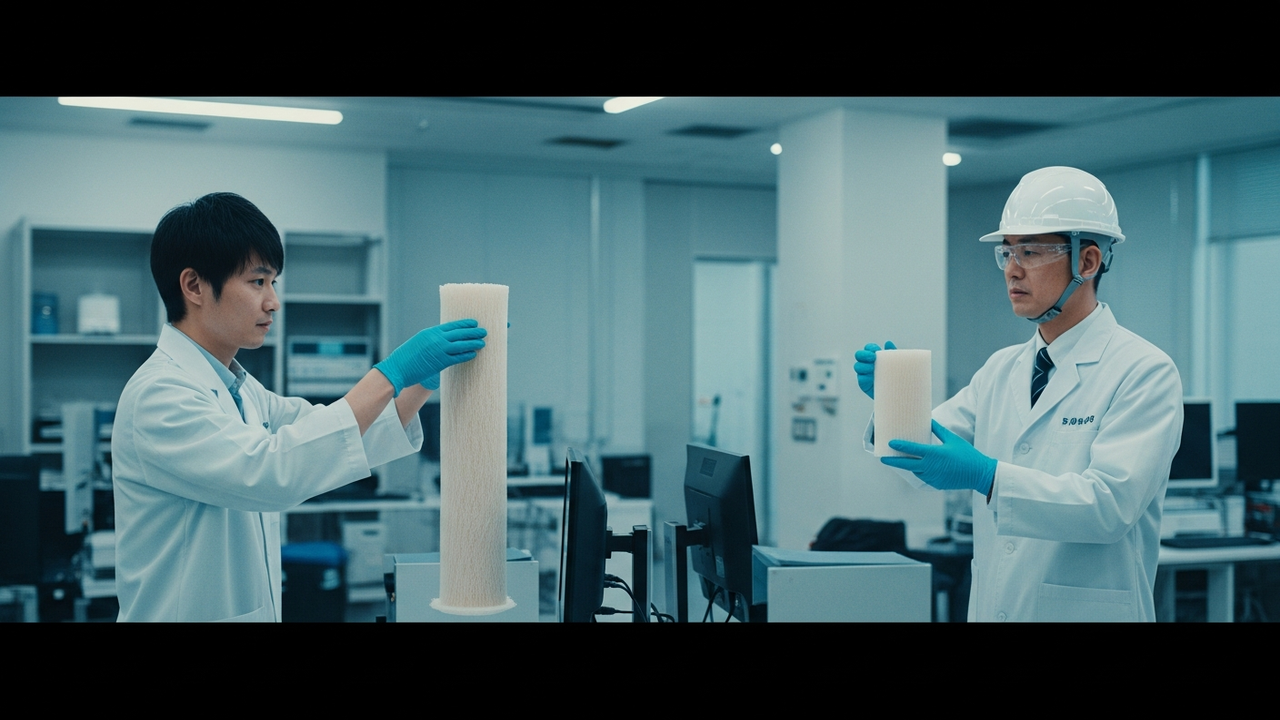
Dai-ichi Kogyo Seiyaku Co., Ltd., in collaboration with leading Japanese research institutions including Osaka University, the University of Tokyo, and the Japan Agency for Marine-Earth Science and Technology (JAMSTEC), has announced a significant breakthrough in CNF utilization. The joint research successfully developed novel plastic-like materials from wood-derived cellulose nanofibers, specifically leveraging Dai-ichi Kogyo Seiyaku’s proprietary CNF product, “Rheocrysta®”. This new material exhibits a unique combination of functionalities that expand upon the inherent advantages of CNF. Key properties include effective prevention of particle sedimentation in suspensions, the ability to form a sprayable, non-drip gel, and the formation of highly transparent, high-strength, and flexible films. These characteristics position the material for diverse applications where traditional plastics are currently used, such as advanced packaging, automotive components, and electronic devices. The scientific merit of this achievement has been recognized by its publication in the prestigious US scientific journal *Science Advances*, underscoring its potential impact on materials science and engineering. The collaboration exemplifies a successful synergy between industrial material expertise and cutting-edge academic research in nanotechnology.
Technical Significance & Outlook: Contributing to a Circular Economy
The development of these CNF-based plastic-like materials holds profound technical and environmental significance. By offering a viable, bio-derived alternative to conventional plastics, it directly addresses critical environmental concerns related to fossil resource depletion and plastic waste accumulation. The unique combination of transparency, strength, and flexibility, coupled with its renewable origin, makes it an ideal candidate for high-performance applications where both mechanical integrity and visual clarity are paramount. From a sustainability perspective, replacing petroleum-based plastics with wood-derived CNF contributes to a reduction in greenhouse gas emissions and fosters a more circular economy. Dai-ichi Kogyo Seiyaku plans to accelerate further material development and application engineering based on the distinctive characteristics of “Rheocrysta®”. This strategic focus aims to unlock new market segments for CNF, facilitating its widespread adoption across various industries as a sustainable, high-performance material. The advancement not only enhances the value proposition of CNF as a next-generation material but also plays a crucial role in enabling a low-carbon, resource-efficient society, signaling a significant step forward in the global pursuit of sustainable development goals.
Source: https://prtimes.jp/main/html/rd/p/000000175.000073630.html







Comments