Key Findings
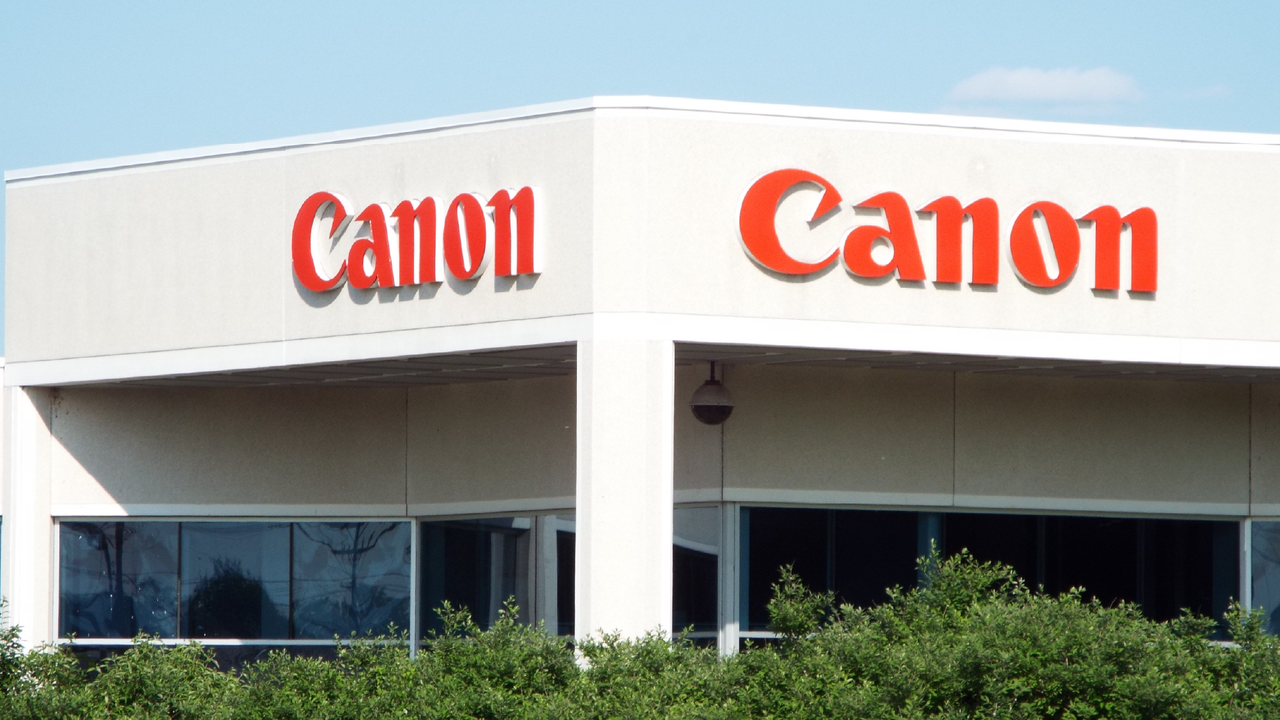
Canon is making a substantial strategic investment in Nanoimprint Lithography (NIL) technology, committing ¥50 billion (approximately $320 million USD) to construct a new lithography equipment factory in Utsunomiya, Japan. This move aims to position NIL as a formidable challenger to ASML’s Extreme Ultraviolet (EUV) lithography, targeting the realization of 2nm process nodes. The new facility is projected to commence operations in September 2025 and reach full production capacity by 2027, potentially reshaping the future of semiconductor manufacturing.
Technical / Clinical Details
- Advantages of Nanoimprint Lithography (NIL): Canon’s NIL technology involves physically imprinting patterns onto a wafer using a master mold (mask), bypassing the optical diffraction limits inherent in traditional photolithography. Canon asserts that this technique can theoretically achieve extremely fine 2nm process nodes, delivering high resolution through a simpler process compared to existing EUV technology. This direct patterning approach eliminates complex optical systems, reducing potential sources of error and increasing pattern fidelity.
- Significant Cost and Energy Reduction: NIL does not require the expensive laser light sources and intricate vacuum systems that are essential for EUV lithography. This fundamentally lowers equipment costs and, due to its simpler process flow, is expected to substantially reduce energy consumption during operation. Such cost and energy efficiencies could enable semiconductor manufacturers to produce high-performance chips at a lower overall manufacturing cost, making advanced nodes more accessible.
- Strengthening Production Capacity: The new factory in Utsunomiya is designed to significantly boost Canon’s production capacity for NIL equipment, addressing anticipated global demand from semiconductor manufacturers. With operations beginning in September 2025 and scaling to full capacity by 2027, Canon aims to accelerate the market introduction of NIL technology and rapidly gain market share, positioning itself as a key supplier for advanced chip fabrication.
Background & Context
The semiconductor industry is under increasing pressure to deliver higher-performance and more power-efficient chips, driven by advancements in AI, 5G, and IoT. Traditional optical lithography is approaching its physical limits, making EUV lithography the current state-of-the-art for advanced nodes. However, EUV systems come with prohibitively high capital costs and operational complexities. Canon’s NIL technology has been researched for years as a potential low-cost, energy-efficient alternative to EUV, but faced challenges in practical implementation and mass production. The construction of this new factory signifies a major step towards overcoming these hurdles, suggesting NIL could become a mainstream technology for semiconductor manufacturing.
Strategic Significance & Outlook
Canon’s substantial investment in NIL has the potential to dramatically alter the competitive landscape of the semiconductor equipment market. If NIL successfully achieves mass production at the 2nm process node, it could reduce semiconductor manufacturers’ reliance on ASML and lead to significant reductions in manufacturing costs. This would represent a revolutionary shift in the cost structure of chip fabrication, making it a highly attractive option, particularly for smaller foundries and manufacturers of specialized application-specific integrated circuits (ASICs). Canon aims to leverage this technology to rapidly increase its presence in the semiconductor equipment market and establish itself as a critical player in next-generation chip development.
Source: https://movesilicon.com/news/canon-bets-on-nanoimprint-new-japan-fab-targets-advanced-chipmaking
Get our weekly technology intelligence — free
Receive an infographic that lets you judge at a glance whether each field’s analysis report is worth reading.
Subscribe Free — Weekly Tech Intelligence
By subscribing, you’ll receive Troy-Technical’s weekly technology intelligence newsletter.
- Your email and selected fields are used only to deliver the newsletter.
- We never share your information with third parties.
- You can unsubscribe anytime via the link in each email.
See our Privacy Policy for details.
Takes about a minute · Unsubscribe anytime