Key Findings
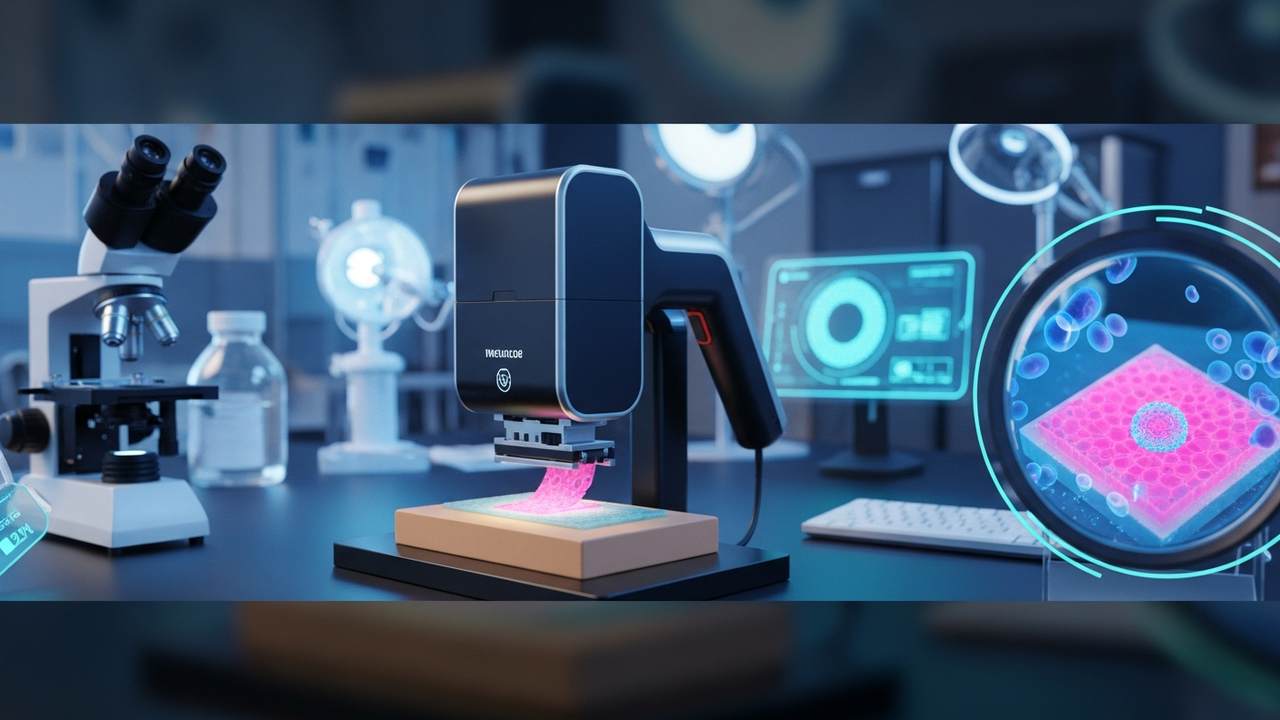
Research published in ACS Applied Materials & Interfaces describes an innovative handheld digital printer designed for the on-site fabrication of micro/nano composite dressings. This multi-functional printer integrates three distinct operational modes: electrospinning, spray deposition, and photocrosslinking extrusion printing. It addresses the growing need for personalized therapeutic dressings and emergency wound management. Notably, the cell-laden electrospinning mode demonstrated an impressive cell viability exceeding 92%, showcasing its significant potential for fabricating bioactive dressings directly at the point of care.
Technical and Clinical Details
This handheld digital printer integrates advanced functionalities:
- Electrospinning Mode: Enables the direct, on-site production of highly porous nanofiber membranes. These nanofibers provide an optimal scaffold for cell growth and can be loaded with drugs for controlled release. The demonstrated cell viability of over 92% during cell-laden electrospinning indicates its suitability for creating complex dressings incorporating live cells.
- Spray Deposition Mode: Allows for the rapid formation of layers containing drugs or biomolecules directly onto the wound surface. This is expected to aid in infection prevention and accelerate healing.
- Photocrosslinking Extrusion Printing Mode: Facilitates the printing of gel-like structures with specific shapes and thicknesses. These can serve as barrier layers to cover wounds or as reservoirs to hold specific therapeutic agents, offering customizable protective and drug-delivery functionalities.
By combining these modes, the printer can produce customized, multi-layered composite dressings tailored to diverse wound types and patient needs directly at the point of care. This “on-site manufacturing” capability is particularly valuable in remote areas or disaster zones for medical interventions.
Background and Industry Context
Modern wound management faces complex challenges, including reducing infection risks, promoting healing, and enhancing patient comfort. Advanced, personalized dressings are critically needed for difficult-to-treat wounds such as extensive burns, diabetic ulcers, and chronic wounds. While existing products offer versatility, their ability to be customized on-site has been limited. This handheld printer offers an innovative solution to these challenges by combining precision medicine with nanotechnology.
Strategic Significance and Outlook
The development of this handheld digital printer holds the potential to revolutionize the field of wound care. Its ability to rapidly fabricate high-quality therapeutic dressings on-site in emergency medical settings, military medicine, telemedicine, and even personalized home healthcare could significantly improve patient prognoses and reduce healthcare costs. Future steps will involve in vivo validation of safety and efficacy, as well as further simplification and miniaturization of the manufacturing process. Should this technology be commercialized, it is expected to make advanced wound care more accessible and profoundly impact the future of healthcare.
Source: https://pubs.acs.org/doi/10.1021/acsami.
Get our weekly technology intelligence — free
Receive an infographic that lets you judge at a glance whether each field’s analysis report is worth reading.
Subscribe Free — Weekly Tech Intelligence
By subscribing, you’ll receive Troy-Technical’s weekly technology intelligence newsletter.
- Your email and selected fields are used only to deliver the newsletter.
- We never share your information with third parties.
- You can unsubscribe anytime via the link in each email.
See our Privacy Policy for details.
Takes about a minute · Unsubscribe anytime