Key Findings
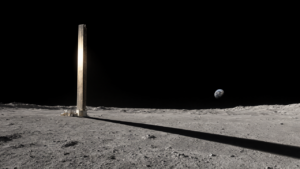
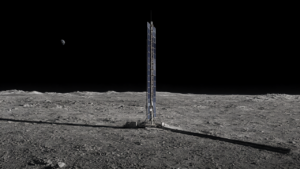
NASA has released its detailed architectural strategy for achieving permanent human habitation on the Moon. Central to this strategy is In-Situ Resource Utilization (ISRU), focusing specifically on processing lunar regolith (Moon dust and rock fragments) into viable construction materials. The plan involves utilizing robotic sintering techniques and advanced 3D printing technologies to construct sustainable infrastructure directly on the lunar surface. This approach aims to drastically reduce the cost of transporting materials from Earth and enhance the self-sufficiency of lunar operations, which is critical for long-term presence.
Technical / Clinical Details
NASA’s lunar architectural strategy highlights robotic sintering, where lunar regolith is heated and fused, and 3D printing with regolith mixed with binders, as primary construction technologies. These methods will be employed to build vital structures such as landing pads, lunar roads, and robust protective barriers. These barriers are essential for shielding astronauts and equipment from harsh space environments, including extreme temperature variations (nearly 300°C between lunar day and night) and intense cosmic radiation. Lunar regolith is expected to meet these requirements effectively, also serving as a natural radiation shield. Initially, autonomous robots will perform the majority of construction tasks, with human crews integrating into and expanding the infrastructure in later missions.
Background & Context
The Artemis program, marking humanity’s return to the Moon since the Apollo era, aims for a sustained lunar presence rather than merely short-term exploration. Transporting all construction materials from Earth is logistically and economically unfeasible, making ISRU the cornerstone for the viability of lunar base construction. With other nations, including China, also pursuing lunar ambitions, the development of lunar resource utilization technologies is directly linked to national competitiveness in space. NASA’s strategy positions the Moon as a critical stepping stone for future human missions to Mars, serving as a proving ground for technologies and processes required for living and working in deep space.
Strategic Significance & Outlook
The implementation of this architectural strategy is indispensable for achieving the Artemis program’s goal of establishing a lunar base by 2032. Once autonomous construction capabilities are established on the Moon, it will accelerate the extraction of water ice resources at the lunar poles, the setup of scientific research facilities, and the expansion of commercial activities such as space tourism and resource development. In the long term, this technology will be applicable to constructing habitats on other celestial bodies like Mars, forming the foundation for humanity’s future as a multi-planetary species. NASA’s efforts are establishing a new field of space architecture and providing the technical and operational framework for sustainable extraterrestrial living.
Get our weekly technology intelligence — free
Receive an infographic that lets you judge at a glance whether each field’s analysis report is worth reading.
Subscribe Free — Weekly Tech Intelligence
By subscribing, you’ll receive Troy-Technical’s weekly technology intelligence newsletter.
- Your email and selected fields are used only to deliver the newsletter.
- We never share your information with third parties.
- You can unsubscribe anytime via the link in each email.
See our Privacy Policy for details.
Takes about a minute · Unsubscribe anytime