Background
The global race for quantum computing supremacy is intensifying, with major governments and technology giants making substantial investments. This article highlights two parallel but equally significant developments: the U.S. government’s impending large-scale financial commitments to quantum computing and the aggressive advancements being made by Japanese firms, particularly Fujitsu in partnership with RIKEN. These efforts underscore the strategic importance of quantum technology in the era of artificial intelligence and advanced computing.
Key Findings
- U.S. Government’s Major Investment: The U.S. government is reportedly poised to make substantial investments in quantum computing, recognizing its critical role in future technological and economic leadership. This is expected to energize the quantum-related stock market.
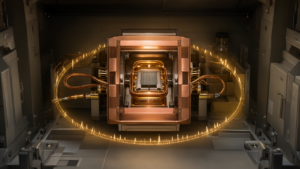
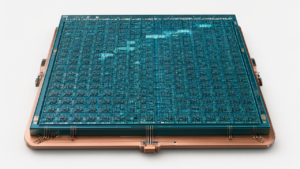
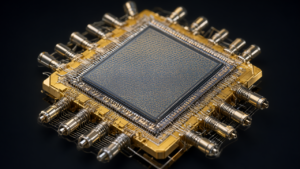
- Fujitsu and RIKEN’s Superconducting Quantum Computer Development: Fujitsu, in collaboration with RIKEN, is actively developing superconducting quantum computers. They currently have a 256-qubit system.
- Ambitious Qubit Roadmap: Fujitsu and RIKEN have outlined an aggressive roadmap for qubit scaling:
- Target of 1,024 qubits by the fiscal year ending March 2027.
- Aim for over 10,000 physical qubits and 250 logical (error-corrected) qubits by the fiscal year ending March 2031. This latter target is particularly significant for achieving fault-tolerant quantum computing.
- Broader Japanese Industry Engagement: Other major Japanese companies, including Hitachi, NEC, and NTT, are also significantly accelerating their research and development activities towards the practical application of quantum computing. This indicates a concerted national effort to establish a strong quantum ecosystem.
Significance & Outlook
These developments signify a heightened global commitment to quantum computing, driven by both national security and economic competitiveness. The U.S. government’s investment will likely fuel innovation and infrastructure development in the American quantum sector. Concurrently, Fujitsu and RIKEN’s ambitious roadmap, particularly the target of 250 logical qubits by 2031, represents a critical step towards fault-tolerant quantum computing—the stage where quantum machines can tackle truly intractable problems reliably. The collective efforts of Japanese tech giants reinforce the global nature of this technological race. As quantum computing progresses, it is poised to become a foundational technology for advancements in AI, materials science, cryptography, and numerous other fields, profoundly impacting the next era of computation and innovation.
Get our weekly technology intelligence — free
Receive an infographic that lets you judge at a glance whether each field’s analysis report is worth reading.
Subscribe Free — Weekly Tech Intelligence
By subscribing, you’ll receive Troy-Technical’s weekly technology intelligence newsletter.
- Your email and selected fields are used only to deliver the newsletter.
- We never share your information with third parties.
- You can unsubscribe anytime via the link in each email.
See our Privacy Policy for details.
Takes about a minute · Unsubscribe anytime