Key Findings
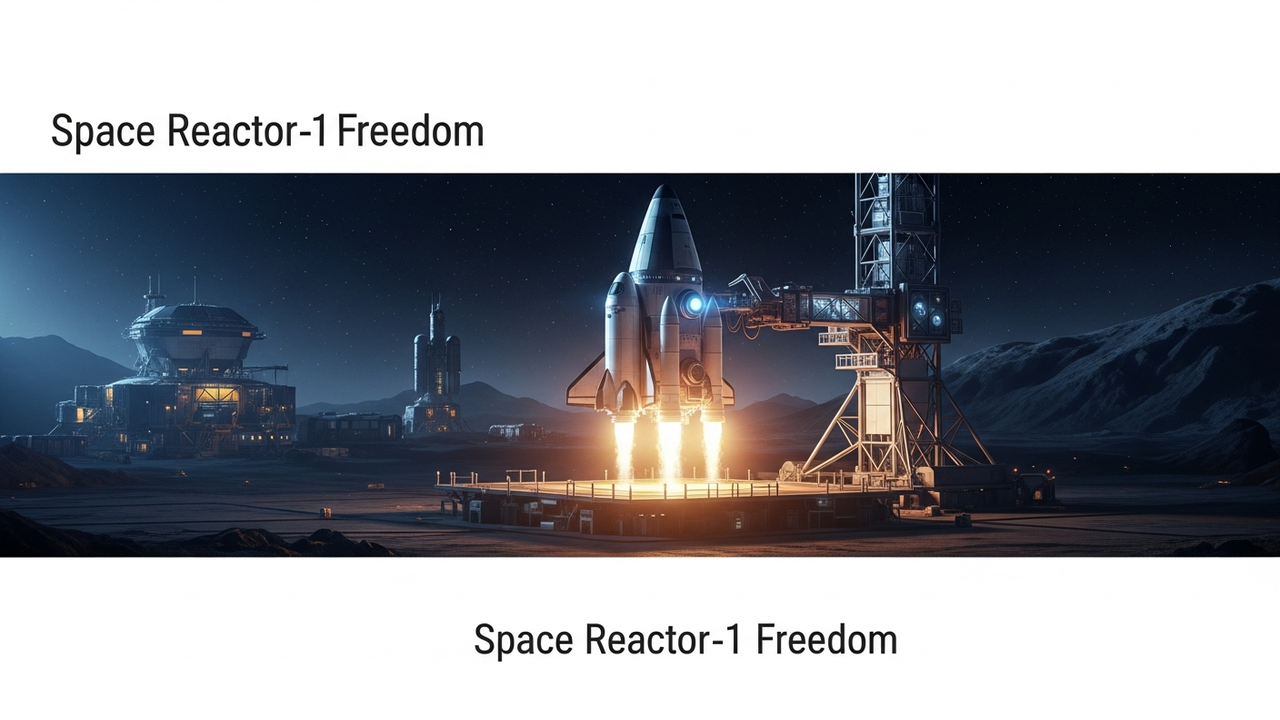
NASA has unveiled plans to launch ‘Space Reactor-1 Freedom (SR-1 Freedom)’ in late 2028, marking the first spacecraft to utilize a nuclear fission reactor for propulsion beyond Earth orbit. This pioneering mission has a dual objective: to demonstrate U.S. nuclear power operational capabilities in space and to validate NASA’s fission surface power technology, currently under development for lunar bases, in an orbital environment. SR-1 Freedom has the potential to fundamentally transform the landscape of deep space exploration.
Technical and Clinical Details
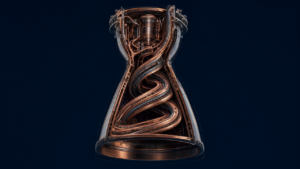
SR-1 Freedom builds upon the legacy of the System for Nuclear Auxiliary Power (SNAP) program, incorporating a compact, lightweight, and reliable nuclear reactor as the core of its propulsion system. The Nuclear Electric Propulsion (NEP) system utilizes propellant far more efficiently than traditional chemical propulsion, dramatically extending mission durations and increasing payload capacities for deep space missions, potentially enabling travel to Mars in under 90 days. The reactor is designed for remote activation and operation in space, prioritizing safety with measures to minimize radiation hazards. The SR-1 Freedom payload includes three Mars helicopters as part of the SkyFall mission, which will demonstrate new exploration methods by flying within the Martian atmosphere. This mission also contributes to the broader U.S. goal of landing a 100-kilowatt nuclear reactor on the Moon by 2030.
Background and Industry Context
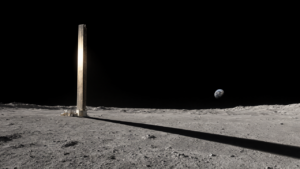
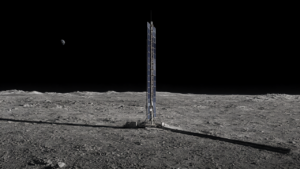
The utilization of nuclear technology in space is crucial for long-duration deep space exploration and for providing stable power to lunar and Martian bases. Solar power is insufficient during extended lunar nights, which can last for two weeks, making nuclear energy the only practical option for sustained operations. The announcement by China and Russia to jointly construct a nuclear-powered lunar base by 2036 has intensified the competition in space nuclear technology development. In response, the U.S. Department of Energy (DOE) and NASA have formalized their own plan to launch a 100-kilowatt lunar reactor by late 2029, with SR-1 Freedom being a vital step toward this goal. The historical success of SNAP 10A, which generated over 500 watts of power in orbit for 43 days in 1965, underscores the U.S.’s long-standing experience in this field.
Strategic Significance and Outlook
The success of the SR-1 Freedom mission will usher in a new era of deep space exploration. Nuclear Electric Propulsion will not only enhance the feasibility of crewed Mars missions but also shorten mission durations to outer planets and allow for larger scientific payloads. Stable power supply for lunar bases will form the foundation for sustained human presence, enabling scientific research, resource extraction, and ultimately, human settlement on Mars. This technology is expected to be a game-changer for energy and propulsion in the space industry, playing a critical role in establishing U.S. strategic advantage in international space development.
Source: https://www.nasa.gov/mission/space-reactor-1-freedom/
Get our weekly technology intelligence — free
Receive an infographic that lets you judge at a glance whether each field’s analysis report is worth reading.
Subscribe Free — Weekly Tech Intelligence
By subscribing, you’ll receive Troy-Technical’s weekly technology intelligence newsletter.
- Your email and selected fields are used only to deliver the newsletter.
- We never share your information with third parties.
- You can unsubscribe anytime via the link in each email.
See our Privacy Policy for details.
Takes about a minute · Unsubscribe anytime