Key Findings
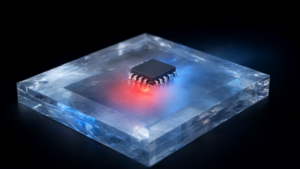
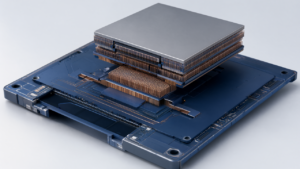
A novel low-temperature sintering die attach material has been announced, poised to revolutionize the manufacturing process of IGBT (Insulated Gate Bipolar Transistor) modules. This groundbreaking material, in contrast to conventional high-temperature sintering processes, enables bonding at lower temperatures while delivering exceptionally high thermal conductivity and superior long-term reliability. This represents a critical advancement that significantly reduces thermal stress on heat-sensitive IGBT chips and surrounding components, contributing to improved manufacturing yield and extended performance and lifespan of the entire module.
Technical Details
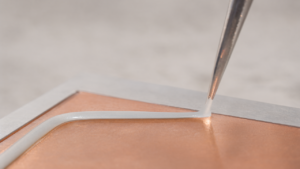
- Low-Temperature Sintering Process: The new die attach material forms a dense, high-strength bond layer at temperatures tens of degrees lower than existing sintering processes. This minimizes the risk of thermal damage to IGBT chips and prevents semiconductor property degradation.
- High Thermal Conductivity: Efficiently dissipates the large amount of heat generated by IGBTs, suppressing hot spots within the module. This maintains low junction temperatures for IGBTs, ensuring stable operation at high power densities and long-term reliability. It typically achieves several times higher thermal conductivity than solder materials.
- High Bond Strength and Reliability: Despite the low-temperature process, it forms a robust metallic bond between the semiconductor chip and the substrate, maintaining excellent reliability even under severe environmental conditions such as thermal cycling, vibration, and shock. Void formation is also suppressed.
- High Heat Resistance: Maintains stable performance in high-temperature environments after curing, ensuring long-term reliability in power modules where high-temperature operation is commonplace.
Background & Context
IGBT modules are core semiconductor devices in a wide range of high-power applications, including electric vehicles (EVs), industrial motor drives, and renewable energy conversion systems. In recent years, as demands for higher efficiency, higher power output, and miniaturization in these applications have increased, the amount of heat generated by IGBT modules has also grown, making thermal management and ensuring long-term reliability the biggest challenges. Conventional solder bonding, due to limitations in melting point and thermal fatigue characteristics, has hindered the performance enhancement of IGBTs, creating a strong demand for more advanced die attach materials.
Strategic Significance & Outlook
The introduction of this new low-temperature sintering die attach material will be a major breakthrough in the manufacturing process of IGBT modules, having widespread implications for the power electronics industry. In addition to reducing manufacturing costs and improving yield, enhanced module performance and reliability will directly contribute to extended EV range, energy savings in industrial equipment, and improved efficiency of renewable energy systems. Moving forward, this technology is also expected to be applied to next-generation power semiconductor modules such as SiC (silicon carbide) and GaN (gallium nitride), becoming a key enabler for the further development of power electronics.
Source: #
Get our weekly technology intelligence — free
Receive an infographic that lets you judge at a glance whether each field’s analysis report is worth reading.
Subscribe Free — Weekly Tech Intelligence
By subscribing, you’ll receive Troy-Technical’s weekly technology intelligence newsletter.
- Your email and selected fields are used only to deliver the newsletter.
- We never share your information with third parties.
- You can unsubscribe anytime via the link in each email.
See our Privacy Policy for details.
Takes about a minute · Unsubscribe anytime