New Technology– category –
-

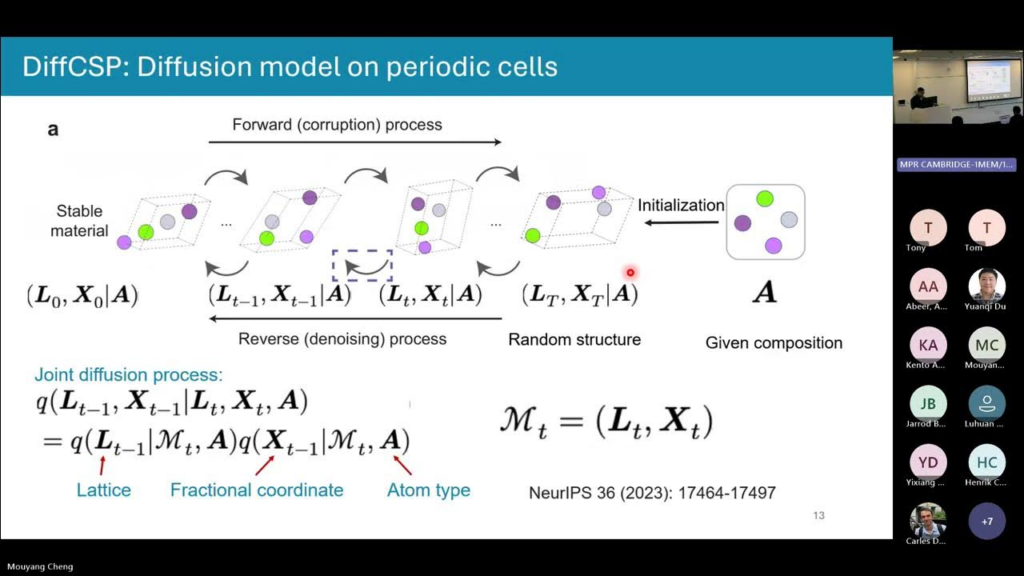
MIT Researchers Introduce Valence Constraints in Generative AI for Inverse Design of Chemically Stable Crystal Structures
YouTube USA Overview Researchers at MIT, led by Mouyang Cheng, have presented a novel approach to integrate stringent constraints into generative AI for inverse materials design. By employing structural motif constraints with diffusion m... -
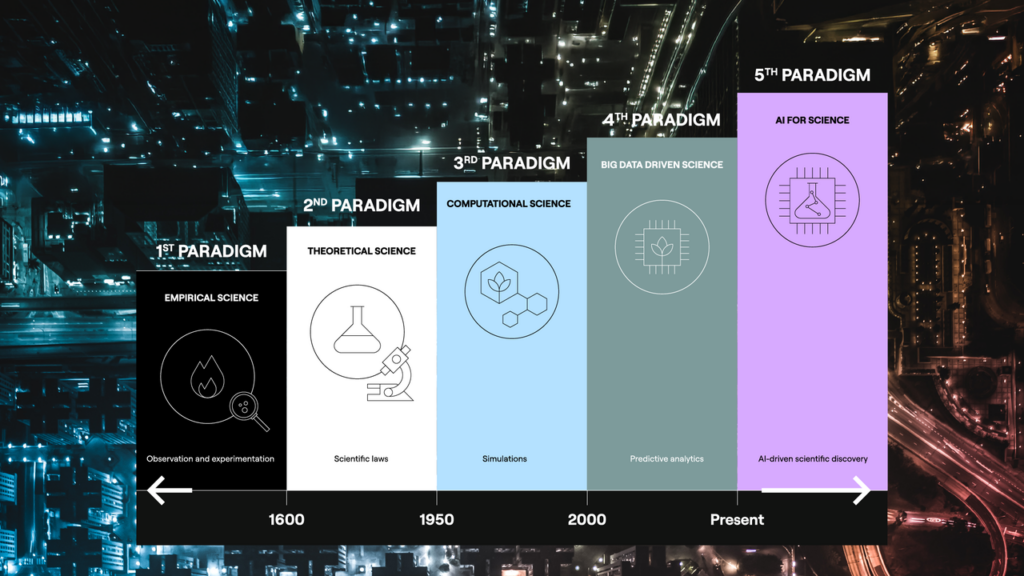
Topsoe Declares AI the ‘Fifth Paradigm’ for Next-Gen Materials: Accelerating Catalysis, Electrolysis, and Battery Innovation
Topsoe デンマーク Overview Danish chemical catalyst leader Topsoe has officially designated Artificial Intelligence as the 'fifth paradigm' in materials science. This strategic move aims to dramatically accelerate the discovery and desig... -
U.S. DOE Pioneers Physics-Aware AI Framework to Accelerate Materials Design and Discovery
Department of Energy USA Overview The U.S. Department of Energy (DOE) has developed a physics-aware AI framework integrating foundation models, deep learning, generative AI, and agent AI to dramatically enhance materials design capabilit... -
Perovskite Solar Cells: Stability and Scalability Dominate Discussion at NIPHO26
nanoGe Conferences イタリア Overview The nanoGe International Perovskite Thin Film Solar Cells and Perovskite Photonics & Optoelectronics Conference (NIPHO26) recently convened in Pavia, Italy, bringing together global experts. The e... -
U.S. DOE Continues Investing in Next-Gen PV: Driving Perovskite Efficiency Beyond 25%, Lead-Free Solutions, and Enhanced Stability
U.S. Department of Energy (DOE) USA Overview The U.S. Department of Energy (DOE) has renewed its funding for next-generation photovoltaics (PV) projects, with a strong focus on perovskite solar cell research. Key areas include developing... -
U.S. DOE Updates Perovskite Solar Cell R&D Program, Focusing on 27% Efficient Tandem Cells and Enhanced Stability Technologies
U.S. Department of Energy (DOE) USA Overview On June 4, 2026, the U.S. Department of Energy (DOE)'s Solar Energy Technologies Office (SETO) updated the progress of its FY2020 Perovskite Funding Program, emphasizing breakthroughs in effic... -
KIT and University of Valencia Pioneer Scalable Tandem Solar Cells with High-Throughput, Solvent-Free Vacuum Processing and Tunable Bandgaps
Photonics Spectra Germany, スペイン Overview Researchers at the Karlsruhe Institute of Technology (KIT) and the University of Valencia have engineered a high-throughput, solvent-free vacuum process for fabricating both single-junction an... -
Perovskite Solar Cells: 30.6% Efficiency Achieved, But 10-Year Durability Remains a Key Challenge for Oxford PV’s 20-Year Target by 2027
Sunsave UK Overview A Sunsave article examines the current state of perovskite solar cells, reporting record efficiencies of 30.6% by Trina Solar (June 2025) and 26.9% for Oxford PV's residential panels (2024). While perovskite-silicon t... -
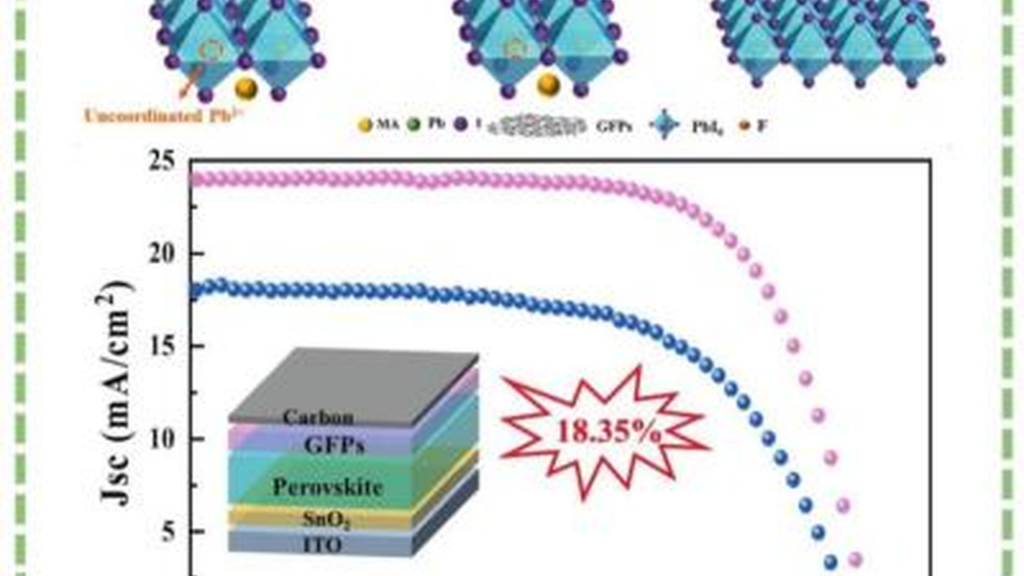
Yan’an University Achieves 18.35% Efficiency in Carbon-Based Perovskite Solar Cells, Fluorinated Polymer Interface Boosts Stability
Perovskite-Info China Overview Researchers at Yan'an University have achieved a 18.35% power conversion efficiency in carbon-based perovskite solar cells (C-PSCs) by implementing a novel interface engineering strategy using fluorinated g... -
UNSW Professor Martin Green Establishes Field-Testing Facility for Perovskite Solar, Aiming to Commercialize 35.2% Tandem Efficiency
UNSW Sydney Australia Overview Professor Martin Green of UNSW Sydney, renowned as the "father of modern photovoltaics," is establishing an independent field-testing facility for perovskite solar modules to validate their long-term durabi...