Background and Technical Challenges
High-performance applications such as electric vehicles (EVs) and aerospace demand energy densities far beyond what conventional batteries can provide. Lithium-sulfur (Li-S) batteries are considered one of the most promising candidates for next-generation power sources, theoretically boasting an exceptionally high energy density of approximately 2,600 Wh/kg—roughly 10 times that of existing lithium-ion batteries (typically 250-300 Wh/kg). However, several significant technical hurdles have impeded their commercialization:
- Low Electrical Conductivity of Sulfur: Sulfur, as a cathode material, has poor electrical conductivity, making efficient electron transfer challenging.
- Polysulfide Shuttle Effect: Intermediate polysulfide species formed during charge-discharge cycles dissolve into the electrolyte and migrate between cathode and anode, leading to active material loss and irreversible reactions that severely degrade cycle life.
- Volume Expansion: During discharge, sulfur reacts with lithium to form lithium sulfides, resulting in up to 80% volume expansion. This can cause structural degradation and physical disruption of the electrodes.
These challenges have severely limited the performance of Li-S batteries, particularly their cycle life and energy efficiency. Furthermore, the flammability of liquid organic electrolytes raised safety concerns for high-energy-density Li-S battery systems.
Key Findings and Technical Breakthroughs
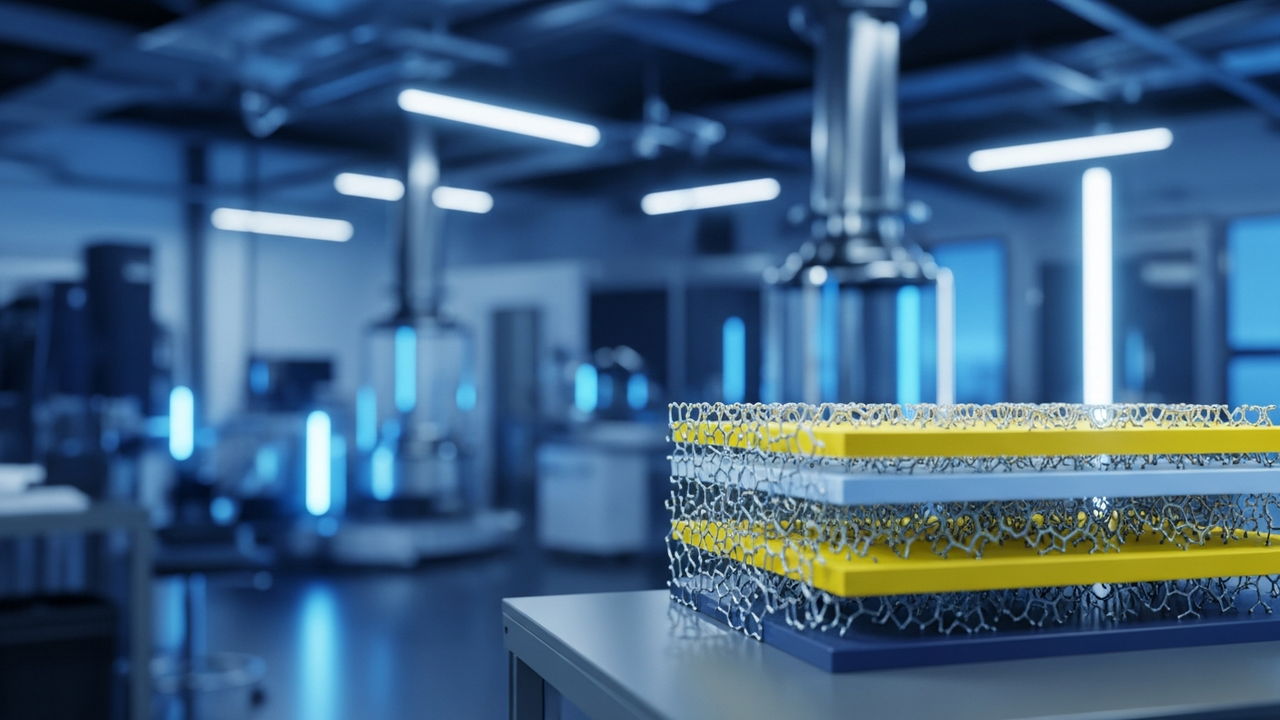
This technical analysis focuses on recent advancements aimed at overcoming these key challenges in Li-S batteries. While various strategies, including optimizing conductive host materials and controlling the polysulfide shuttle effect, are under investigation, ‘hybrid solid-state electrolytes’ are particularly emphasized as a promising technological direction.
Hybrid solid-state electrolytes aim to combine the following advantages:
- Processability of Polymer Electrolytes: Retains flexible and easy-to-process characteristics.
- Ionic Conductivity and Stability of Ceramic Electrolytes: Benefits from high ionic conductivity and chemical stability.
This composite approach is particularly critical for Li-S systems due to the following:
- Suppression of Polysulfide Shuttle Effect: The solid electrolyte physically blocks the dissolution and diffusion of polysulfides, significantly reducing active material loss.
- Stabilization of Lithium Metal Anodes: Suppresses dendrite formation, enabling the safe operation of lithium metal anodes, which are essential for maximizing energy density.
- Enhanced Safety: Eliminating flammable liquid electrolytes substantially improves battery safety.
Once considered a laboratory curiosity, Li-S batteries are reportedly transitioning into early commercialization stages, particularly for automotive applications, thanks to these technological advancements.
Technical Significance and Outlook
The commercialization of lithium-sulfur batteries has the potential to revolutionize the EV market by extending the range of electric vehicles several-fold and significantly contributing to battery weight reduction. Its applications are immeasurable in fields where weight directly impacts performance, such as aircraft, drones, and space probes.
Advances in hybrid solid-state electrolyte technology are key to resolving the two major challenges of Li-S batteries—safety and cycle life—thereby accelerating their practical implementation. However, future focus will be on cost reduction in large-scale production, optimization of manufacturing processes, and ensuring long-term stability. As this technology matures, it is expected to push the performance limits of battery-powered devices and contribute to a sustainable society.









Comments