Background: The Imperative for Sustainable Battery Manufacturing
The burgeoning demand for electric vehicles (EVs) has led to an exponential increase in battery production. However, conventional wet-coating methods for electrode fabrication present significant challenges in terms of environmental impact and manufacturing costs, primarily due to their heavy reliance on organic solvents and the substantial energy required for drying. As the global push for sustainable solutions intensifies, the battery industry faces an urgent need for manufacturing technologies that are both eco-friendly and economically efficient. In this context, dry electrode technology, which eliminates solvent usage, has emerged as a promising next-generation manufacturing approach.
Key Findings / Results: Collaborative Development and Ambitious Goals for Dry Electrodes
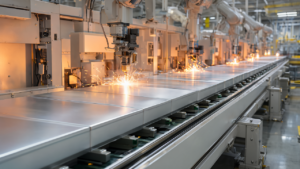
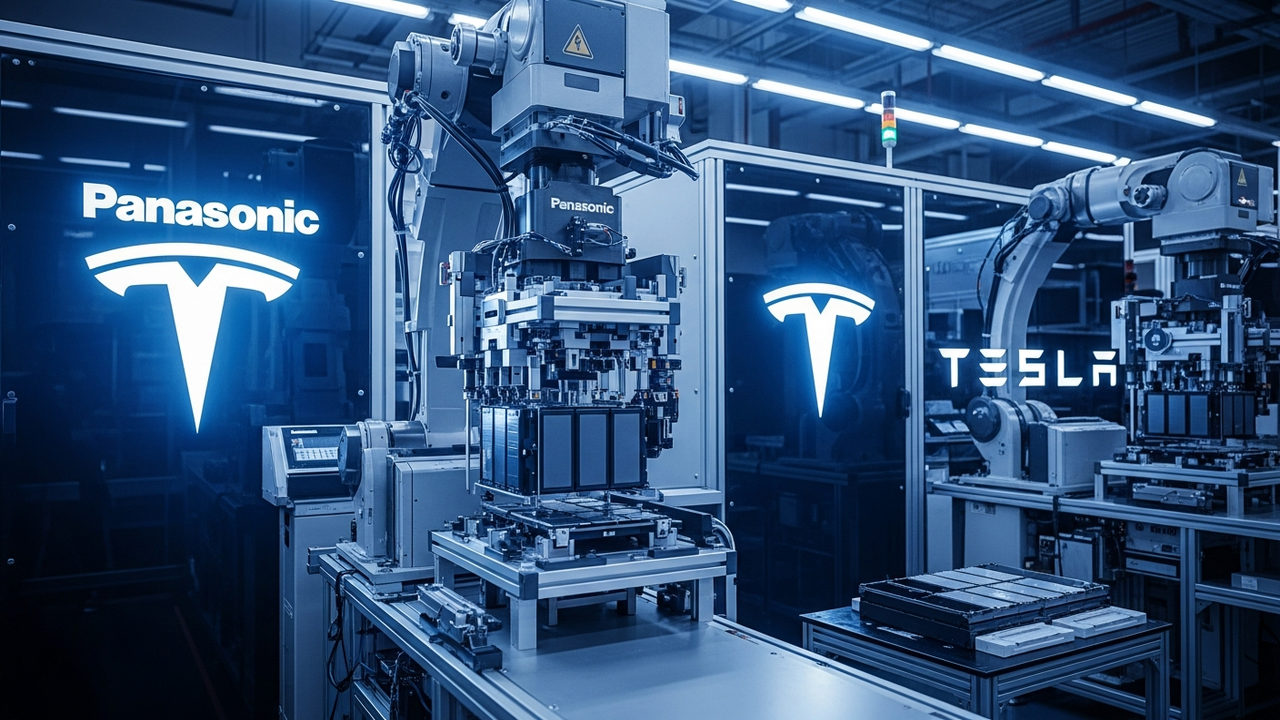
Panasonic Energy, a leading Japanese battery manufacturer, and Tesla, the prominent U.S. EV innovator, have announced a strengthened partnership focused on developing dry electrode technology designed to drastically improve the efficiency and environmental performance of EV battery production. Dry electrode technology involves blending and calendering electrode materials and binders directly, bypassing the solvent coating and drying steps essential in traditional wet processes. Through this innovative approach, the companies aim to achieve a approximately 20% reduction in manufacturing costs and a substantial 30% decrease in energy consumption during the production phase. Both entities are actively engaged in validating and optimizing the technology on a joint pilot production line, moving closer to large-scale commercialization.
- Technological Core: Solvent-free dry process for electrode manufacturing.
- Primary Objectives: Up to 20% reduction in manufacturing costs and up to 30% reduction in energy consumption.
- Collaborative Synergy: Combining Panasonic Energy’s manufacturing expertise with Tesla’s EV battery design know-how.
- Current Progress: Ongoing validation and optimization on a joint pilot line, moving towards commercial readiness.
- Environmental Impact: Elimination of organic solvent emissions and reduced CO2 footprint from lower energy consumption.
Technical Significance & Outlook: A Paradigm Shift for Battery Production
The enhanced collaboration between Panasonic and Tesla on dry electrode technology signals a potential paradigm shift in battery manufacturing processes. Should this technology be successfully scaled commercially, it could dramatically lower EV battery production costs and environmental impact, significantly boosting EV affordability and accelerating market penetration. The reduction in energy consumption is particularly critical, as it would substantially improve the carbon footprint of battery manufacturing, serving as a cornerstone for building sustainable supply chains. Furthermore, process simplification could lead to shorter factory construction times and reduced initial capital expenditures, facilitating the expansion of battery production capacity worldwide. This innovation is expected to create new business opportunities for battery manufacturing equipment suppliers and material providers, becoming a crucial driving force towards realizing a clean energy future.
Source: https://www.panasonic.com/global/corporate/news/articles/20240507.html