Background: The Bottleneck of Electrical Interconnects in AI
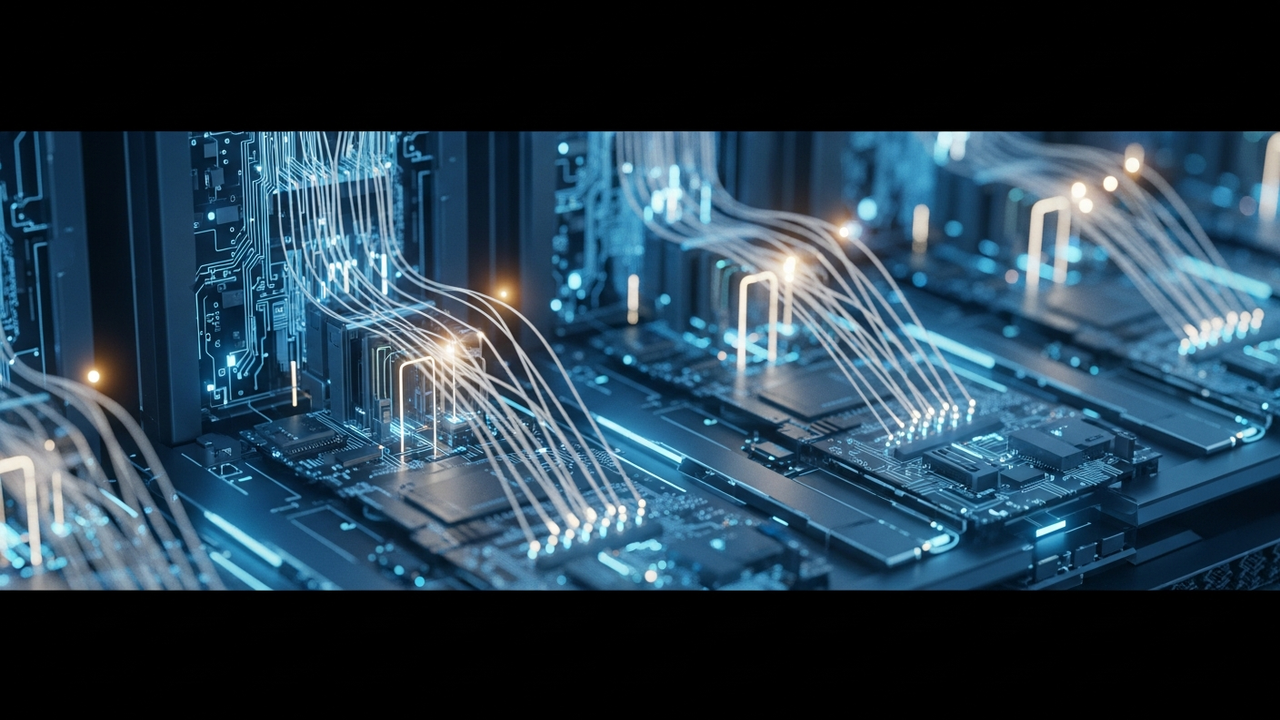
The explosive growth of AI workloads has pushed traditional electrical interconnects in data centers to their limits. As bandwidth demands escalate, the inherent limitations of copper — including increasing power consumption, signal degradation over distance, and thermal management challenges — become significant bottlenecks. This has spurred a fundamental shift towards optical interconnect solutions, with Co-Packaged Optics (CPO) emerging as a leading contender to address these pressing issues.
Key Findings: CPO’s Transformative Technical Advantages
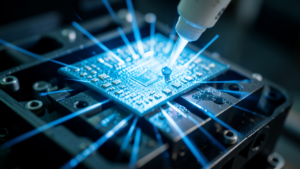
CPO represents a paradigm shift where optical transceivers are placed in the same package as the host switch ASIC (Application-Specific Integrated Circuit), dramatically shortening electrical trace lengths. This close integration offers several compelling technical and operational advantages:
- Dramatic Power Efficiency Gains: By minimizing the distance electrical signals travel before conversion to optical, CPO can reduce interconnect power consumption by an estimated 60-70%. This is critical for scaling AI superclusters that consume gigawatts of power.
- Enhanced Bandwidth Density: The compact nature of CPO allows for significantly higher port density within a given form factor, leading to a more than 100% increase in bandwidth density compared to traditional pluggable optics. This enables more efficient utilization of precious rack space and better support for massive GPU-to-GPU communication.
- Superior Signal Integrity and Lower Latency: Shorter electrical paths inherently reduce signal loss and distortion, leading to improved signal integrity and lower latency. This is crucial for real-time AI model training and inference, where even small delays can impact performance.
Industry leaders are rapidly advancing CPO technology towards mass deployment. TSMC, for instance, has developed its COUPE 3D packaging process, a key enabler for high-density CPO integration. Broadcom and NVIDIA are actively developing and commercializing CPO-enabled switches, with 2026 widely anticipated as the year for initial industrial deployment. NVIDIA’s Spectrum-X Ethernet Photonics switch, leveraging CPO, aims for 10X greater network resiliency and up to 5X better power efficiency, supporting 1.6T silicon photonics optical engines and a maximum bandwidth of 102.4Tb/s per ASIC.
Technical Significance & Outlook: Reshaping AI Infrastructure
CPO is not merely an incremental improvement; it signifies a foundational change in how AI data centers are designed and operated. Its ability to manage power, density, and latency at exascale will be indispensable for future AI infrastructure. The transition from pluggable optics to CPO, potentially preceded by Near-Packaged Optics (NPO), represents a clear roadmap for optical interconnect evolution. Furthermore, future iterations, such as NVIDIA’s Feynman generation (2028), are projected to extend native optical NVLink scaling across entire systems, potentially replacing copper entirely even for short intra-rack communications. This strategic pivot by major players underscores CPO’s role as a cornerstone technology for the next decade of AI computing.




Comments