Background
Modern industries are intensely focused on lightweighting products and enhancing energy efficiency. For sectors like automotive, aerospace, marine, and construction, reducing the weight of structural and bonding materials directly translates to improved fuel efficiency, reduced CO2 emissions, and extended range for electric vehicles. Adhesives and sealants are no exception, with increasing demand for technologies that can lower their density while maintaining or even improving performance.
Key Findings / Results
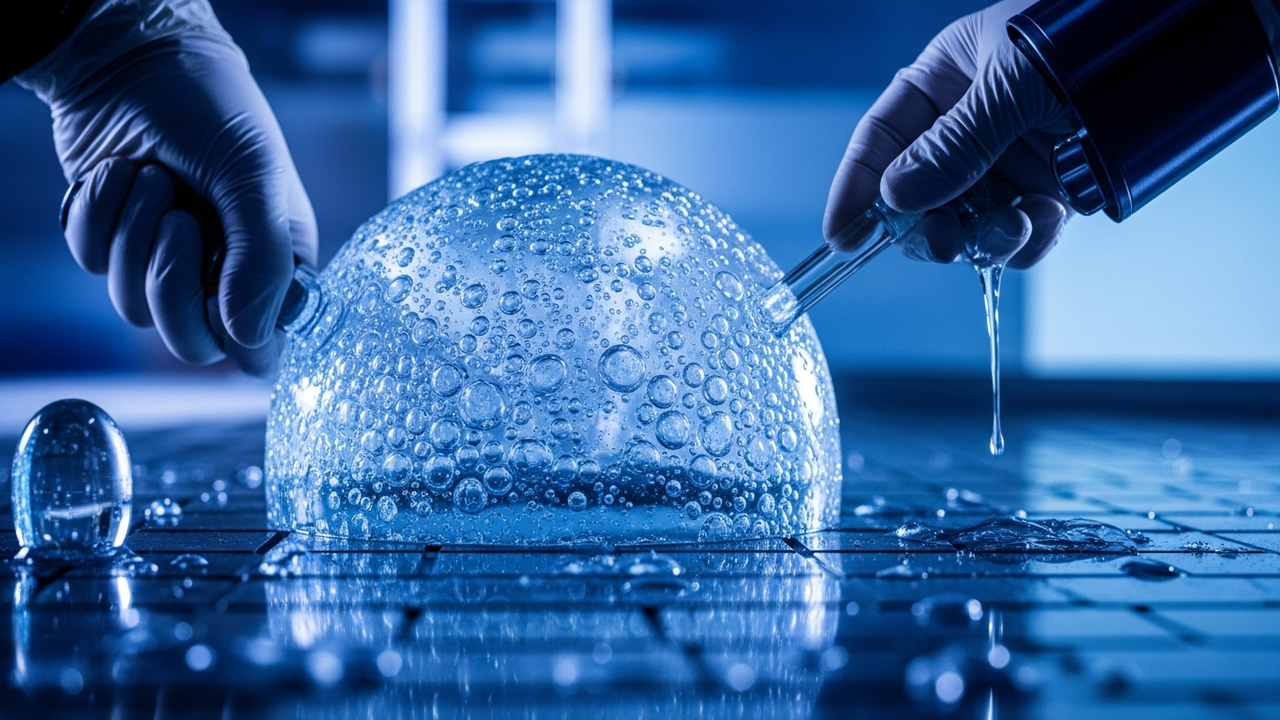
Glass bubbles have emerged as an innovative material addressing these critical needs. These micron-sized, lightweight, hollow glass microspheres, when incorporated into adhesives and sealants as fillers, offer numerous advantages that traditional heavy fillers cannot provide:
- Significant Lightweighting: Due to their extremely low density, glass bubbles substantially reduce the overall weight of adhesive and sealant formulations. This directly lowers transportation costs, simplifies application processes, and contributes to the lightweighting of end products, which is crucial for efficiency in moving platforms.
- Enhanced Thermal Insulation: The hollow structure of glass bubbles provides excellent thermal insulation properties to adhesives and sealants. This reduces thermal conductivity, making them ideal for improving the energy efficiency of building materials, automotive components, and marine applications by minimizing heat transfer across bonded joints.
- Improved Processability: The spherical shape of glass bubble particles enhances the flow characteristics and rheology of adhesives and sealants, improving their workability during application. They can reduce sag in thick applications and help maintain uniform thickness, contributing to consistent performance and reduced manufacturing defects.
- Adjustable Mechanical Properties: By selecting specific types of glass bubbles, manufacturers can tailor mechanical properties such as compressive strength, impact resistance, and dimensional stability of adhesives, allowing for precise customization to meet demanding physical property requirements for specific applications.
These combined attributes make glass bubbles highly versatile for a broad range of applications, including interior automotive components, marine deck sealants, structural adhesives in aircraft, and insulative sealants in construction.
Technical Significance & Outlook
The integration of glass bubble materials into adhesives and sealants is opening new avenues for product design and performance. Lightweighting is a significant advantage, particularly in transport applications like electric vehicles and aircraft, where it directly contributes to reduced energy consumption and extended operational range. Furthermore, their superior insulation properties contribute to energy savings in buildings and improved performance in electronic appliances, supporting global sustainability goals.
Moving forward, as environmental regulations become stricter and the demand for lightweight solutions intensifies, the need for high-performance, environmentally friendly materials like glass bubbles is expected to grow. Advancements in materials science will likely lead to the development of even more optimized glass bubbles, further enhancing adhesive and sealant technologies. This will accelerate innovation across various industrial sectors. This trend represents a major impact on both material design and end-product performance, providing solutions crucial for future engineering challenges.






Comments