Background
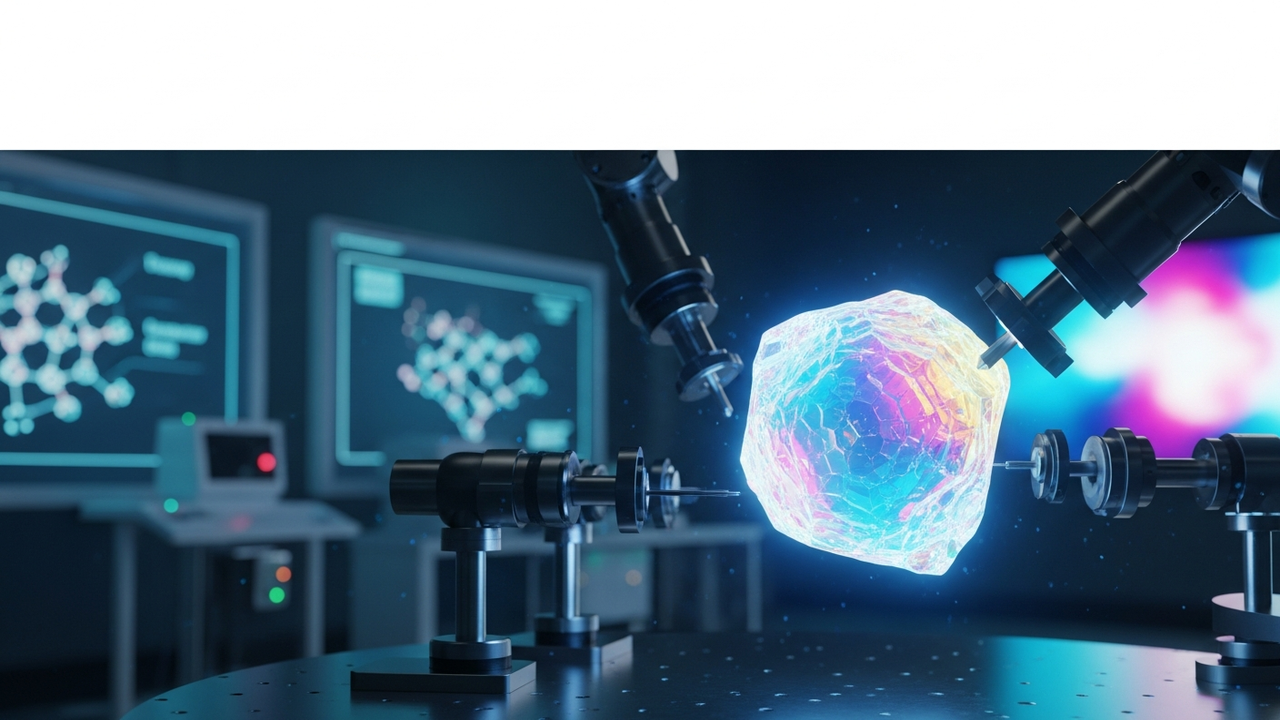
While perovskite materials have revolutionized solar cell research due to their exceptional photovoltaic properties, their potential extends significantly into light-emission applications. Perovskite Light-Emitting Diodes (PeLEDs) are gaining increasing attention as promising candidates for next-generation displays and lighting, offering high color purity, tunable emission wavelengths, and potentially lower manufacturing costs compared to organic LEDs (OLEDs) and quantum dot LEDs (QLEDs). However, achieving high external quantum efficiency (EQE) and long-term operational stability in PeLEDs, particularly for large-area devices, has remained a key challenge, primarily due to non-radiative recombination losses and environmental sensitivity.
Key Findings / Results
A research team from Jilin University in China has reported a significant advancement in PeLED technology, achieving a record external quantum efficiency (EQE) for large-area devices. Their innovative approach focuses on engineering the material composition to enhance both efficiency and stability.
- ZnBr₂ Incorporation and Interfacial Phase Formation: The researchers introduced zinc bromide (ZnBr₂) as an additive into cesium lead bromide (CsPbBr₃) perovskite films. This strategic addition led to the in-situ formation of a unique Cs₂ZnBr₄ interfacial phase within the perovskite layer.
- Multi-functional Enhancement: This newly formed interfacial phase played several critical roles in boosting PeLED performance:
- Defect Passivation: The Cs₂ZnBr₄ phase effectively passivated defects within the perovskite film, significantly reducing non-radiative recombination pathways.
- Preferential Crystal Orientation: The presence of ZnBr₂ promoted a more favorable crystal orientation in the CsPbBr₃ film, which enhances light extraction efficiency.
- Improved Environmental Stability: The modified film demonstrated enhanced resilience against environmental factors such as moisture and oxygen, addressing a major bottleneck for PeLED commercialization.
- Record EQE: As a result of these synergistic improvements, the team achieved an unprecedented EQE of 25.2% for large-area PeLEDs, marking a new benchmark for this technology.
Technical Significance & Outlook
This achievement by Jilin University underscores the immense versatility of perovskite materials beyond photovoltaics, firmly positioning PeLEDs as a strong contender in the lighting and display sectors. The record 25.2% EQE for large-area devices demonstrates that PeLEDs are now competitive with, and in some aspects, surpassing, established technologies like OLEDs. This breakthrough holds promise for developing brighter, more color-pure, and potentially lower-cost displays and lighting solutions. Specific applications could include flexible displays for wearable electronics, high-definition televisions, and energy-efficient general lighting. The engineering of interfacial phases, such as the Cs₂ZnBr₄, offers a powerful strategy for mitigating defects and enhancing stability, which are crucial for industrial scalability. Future efforts will focus on achieving similar efficiencies and stabilities across the full color spectrum (especially for blue and green emission), optimizing device architectures for mass production, and conducting long-term reliability tests to meet commercial standards. This research highlights China’s leadership in advanced optoelectronic materials, contributing significantly to the global development of next-generation display and lighting technologies.
Source: https://ceramics.org/ceramic-tech-today/perovskites-in-lighting-and-display-technologies/



Comments