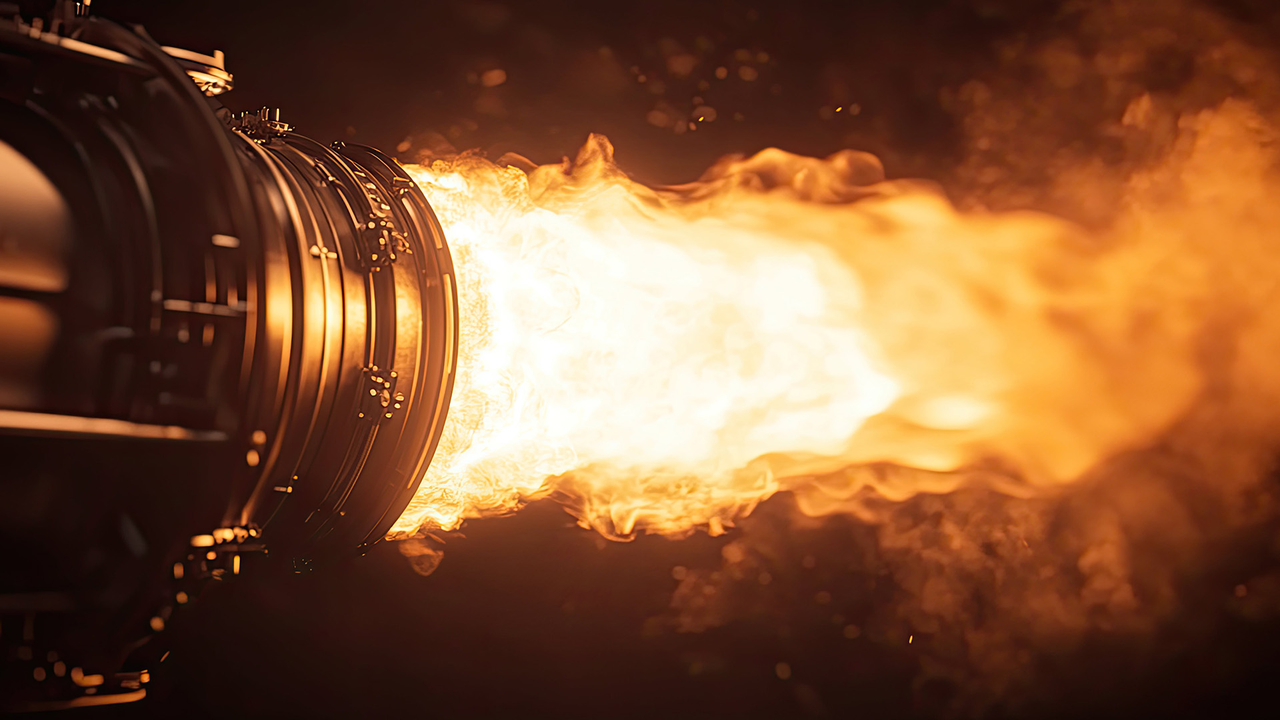
Background: Demand for High-Performance Materials in Extreme Environments
In the aerospace and defense sectors, high-performance materials capable of withstanding extreme high-temperature environments, such as hypersonic flight, atmospheric reentry, and space, are indispensable. Specifically, components for aircraft engines, thermal shields for hypersonic weapons, and structural elements of spacecraft require materials that combine lightweight properties with exceptional strength and heat resistance. Ceramic materials and ceramic matrix composites (CMCs) are considered promising due to their superior thermal and corrosion resistance, but they present challenges related to manufacturing complexity, brittleness, and cost, necessitating further research and development. Strengthening domestic advanced materials development capabilities is also an urgent priority within U.S. national defense strategy.
Key Findings: AeroVironment’s Contract for Next-Generation Ceramic Materials Research
AeroVironment, headquartered in California, announced that it has been awarded a $20 million contract from the U.S. Air Force Research Laboratory (AFRL)’s Materials and Manufacturing Directorate. This contract is for the advancement of next-generation ceramic and ceramic matrix composite (CMC) materials research and development. The 39-month agreement has the explicit objective of accelerating the development of high-temperature materials and their manufacturing processes for extreme aerospace and defense applications, such as those used in hypersonic environments. In this project, AeroVironment will actively apply advanced additive manufacturing, 3D printing technologies, and sensor integration techniques. By utilizing these technologies, the company aims to create components and structures that are lightweight yet possess unparalleled heat resistance and structural integrity.
Technical Significance and Outlook
This contract holds critical significance for enhancing U.S. defense capabilities. The high-temperature ceramic materials and CMCs developed by AeroVironment have the potential to significantly improve the performance of next-generation aircraft, missiles, and spacecraft. The utilization of additive manufacturing and 3D printing technologies enables the rapid and efficient production of complex-shaped parts, increasing design freedom. Furthermore, sensor integration technology allows for real-time monitoring of material conditions, contributing to improved safety and reliability. This is expected to extend operational lifespans in extreme environments and enable more predictable material behavior. In the future, these technologies will likely be applied to the commercial aerospace industry and other high-temperature sectors, establishing new standards for high-performance materials. This initiative will also strengthen the domestic advanced materials supply chain, contributing to national security and economic independence.




Comments