
Background
Quantum computing holds the promise of revolutionizing computation across various sectors, including drug discovery, materials science, and artificial intelligence, by solving problems intractable for classical supercomputers. A critical bottleneck in scaling quantum computers is the ability to densely interconnect a large number of quantum bits (qubits) while maintaining signal integrity and minimizing decoherence. Traditional metallic interconnects face fundamental challenges at the nanoscale, including increasing resistance, cross-talk, and limited density, which hinder the realization of large-scale quantum processors.
Key Findings / Results
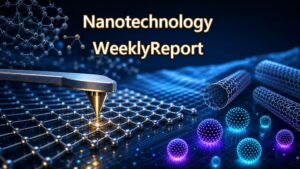
The development of high-density graphene interconnects represents a cutting-edge area at the intersection of materials science and quantum technology. Graphene, a single layer of carbon atoms arranged in a hexagonal lattice, possesses extraordinary electrical and thermal properties, including extremely high carrier mobility (up to 200,000 cm²/Vs at room temperature) and atomic thickness (0.34 nm). These attributes make it an ideal candidate for ultradense, high-performance interconnects in quantum computing applications. Key advancements include:
- Exceptional Conductivity: Graphene’s near-ballistic transport properties allow for efficient signal transmission with minimal loss, even at extremely narrow linewidths, crucial for qubit control and readout.
- Ultra-High Density: Its atomic thickness enables the fabrication of interconnects with sub-10 nanometer precision, facilitating unprecedented integration densities required for processors with hundreds to thousands of qubits.
- Thermal Management: Graphene’s superior thermal conductivity aids in dissipating heat efficiently, which is vital for maintaining the cryogenic operating temperatures often required for quantum processors, preventing thermal crosstalk.
- Manufacturing Reliability: Current research focuses on developing reliable processes for producing these graphene interconnects at scale, ensuring consistent quality and pattern fidelity for commercial viability. This includes advancements in chemical vapor deposition (CVD) for high-quality graphene synthesis and advanced lithography/etching techniques.
Technical Significance & Outlook
The technical significance of high-density graphene interconnects is profound for the advancement of quantum computing. By enabling a significant increase in qubit count and enhancing the fidelity of qubit control, this technology is poised to unlock the full potential of quantum processors. This will pave the way for tackling complex computational problems that are currently beyond the scope of even the most powerful supercomputers, ranging from materials design to complex biological simulations. However, challenges remain, particularly in achieving wafer-scale, defect-free graphene growth, developing robust integration schemes with existing semiconductor platforms, and ensuring long-term stability in cryogenic environments. The ability to reliably manufacture graphene interconnects with sub-10 nanometer precision is a key metric for success. International collaborations between academic institutions and industry leaders are actively addressing these issues, positioning graphene to become a cornerstone material for the future of quantum computing, potentially alongside or even beyond silicon in the next era of high-performance computing.





Comments