Background
Prepregs are foundational materials in advanced composite manufacturing, widely utilized across aerospace, automotive, and wind energy sectors due to their superior strength-to-weight ratios. However, a significant limitation of these materials has been their inherently low electrical conductivity. This deficiency poses challenges for applications requiring electrostatic discharge (ESD) dissipation, lightning strike protection (LSP), and electromagnetic interference (EMI) shielding, particularly in sophisticated platforms like modern aircraft, where high electrical performance is critical for both safety and functionality.
Key Findings / Results
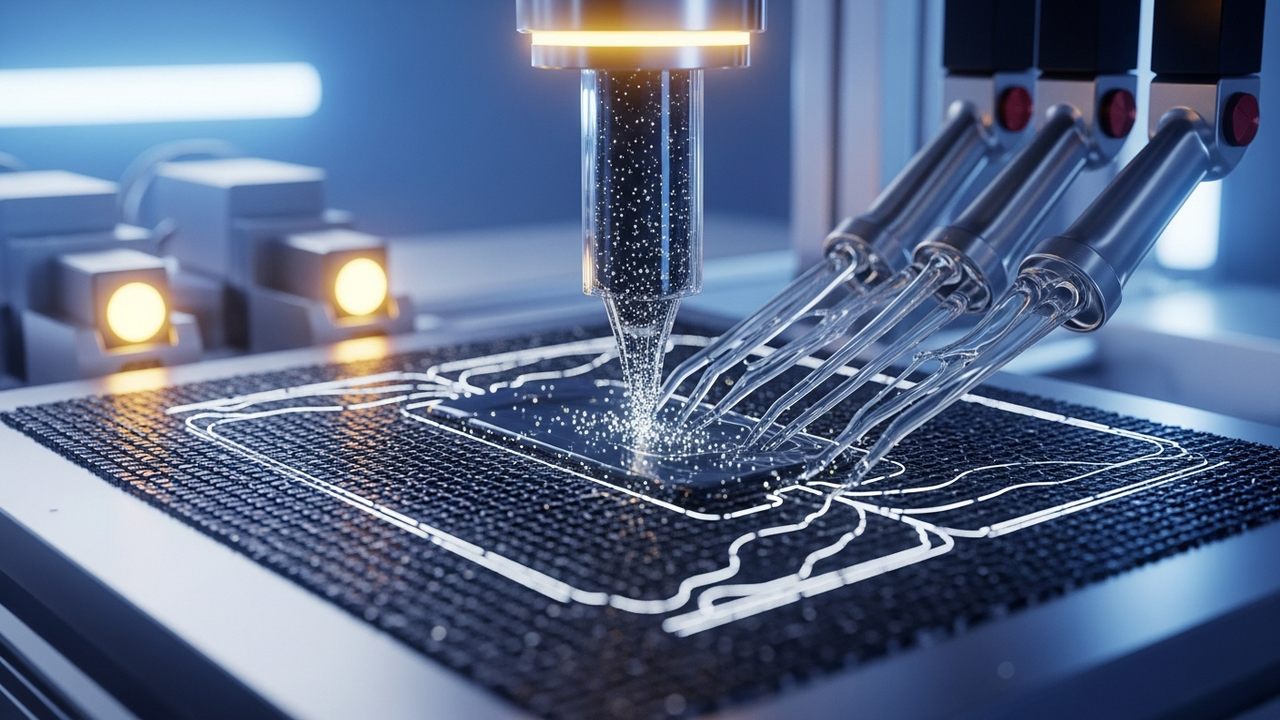
The integration of nano-infused resin systems represents a significant breakthrough in overcoming the conductivity limitations of traditional prepregs. This approach involves uniformly dispersing conductive nanofillers within the polymer matrix of the prepreg. The primary nanofillers employed include:
- Carbon Nanotubes (CNTs): Known for their exceptional aspect ratio and high electrical conductivity, CNTs can form effective percolation networks at relatively low loading concentrations, substantially increasing the material’s overall conductivity.
- Graphene Nanoplatelets (GNPs): Offering extremely high surface area and excellent electrical properties, GNPs contribute significantly to conductivity, with multi-layered structures providing enhanced performance.
- Metallic Nanoparticles: Nanoparticles of silver or copper act as highly efficient electrical conductors, enabling specific applications requiring very high conductivity thresholds.
Hexcel Corporation, a leading advanced composites manufacturer, has reported remarkable achievements in this domain. Their nano-infused resin systems have elevated the electrical conductivity of carbon fiber reinforced plastics (CFRPs) to levels as high as 10^6 S/m. This represents an improvement of several orders of magnitude compared to un-modified composites, enabling effective lightning strike protection and robust EMI shielding. The key to achieving such performance lies in the uniform and homogeneous dispersion of these nanofillers within the resin matrix, which facilitates the formation of a continuous conductive pathway without compromising the composite’s crucial mechanical properties.
Technical Significance & Outlook
The development of nano-infused resin systems is technically significant as it unlocks the potential for truly multifunctional composite materials. For the aerospace industry, this means the ability to design lighter aircraft structures with integrated lightning strike protection and superior EMI shielding, leading to enhanced safety, reduced fuel consumption, and improved electronic system reliability. Beyond aerospace, these materials are poised for adoption in electric vehicles for battery packaging and EMI shielding, as well as in wind turbine blades for improved lightning protection. Future research will focus on optimizing the type, morphology, and loading of nanofillers, improving interfacial adhesion between nanofillers and the resin matrix, and developing scalable manufacturing processes for uniform dispersion. Addressing these challenges will accelerate the widespread adoption of these advanced composites, driving innovation in high-performance materials across diverse industrial applications and setting new benchmarks for structural and electrical performance.
Source: https://eureka.patsnap.com/report-enhancing-prepreg-conductivity-using-nano-infused-resin-systems








Comments