


Key Findings
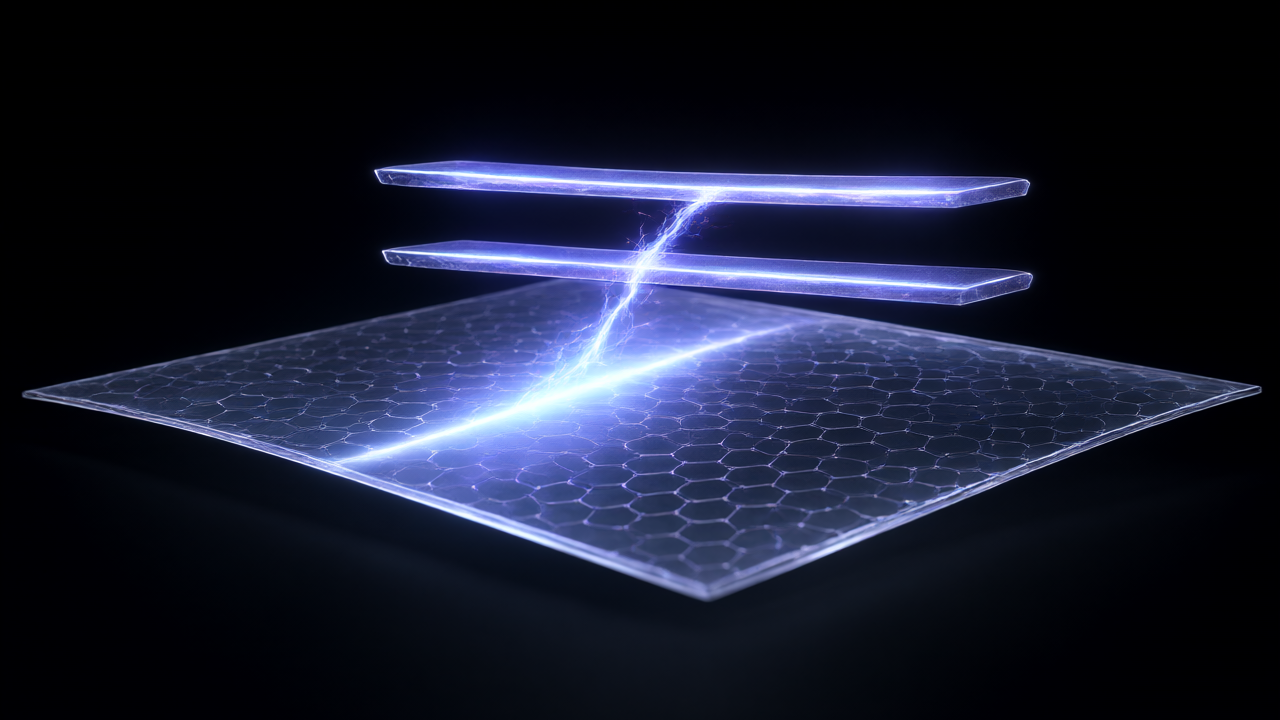
A research team from the University of Regensburg, Philipps-Universität Marburg, and Forschungszentrum Jülich has achieved the first direct visualization of electrons in graphene bypassing established energy transfer rules. The team observed electrons “jump” from energy levels one, two, and three directly to level twenty, confirming a quantum mechanical process known as a Landau-Zener-Majorana transition. Notably, the researchers demonstrated a one hundred percent tunneling probability as electrons traversed the band gap.
Technical Details
The experiment utilized a novel combination of laser technology and electron microscopy to capture ultrafast transitions in real time. To ensure that impurities did not interfere with the delicate quantum dynamics, the team employed high-purity, atomically thin carbon layers and “rotated” graphene developed at Jülich. The process occurs when electrons are accelerated through the material’s band structure under the influence of a strong electric field generated by a light pulse. The resulting slow-motion images revealed how electrons switch between energy bands as they move.
Background and Context
The Landau-Zener-Majorana transition had previously been theorized but never directly visualized. The team noted that capturing these transitions required observing a large number of electrons simultaneously. This achievement was the result of several years of work and relied heavily on the precision of the material’s atomic structure to avoid obscuring the quantum dynamics.
Significance and Outlook
The ability to track electrons across the entire energy landscape of a solid in real time offers a new level of control compared to indirect measurements. These findings suggest that electrons could be controlled not only with electrical voltages but also with the rapid oscillations of light. This capability provides valuable insights for the development of high-speed semiconductor electronics, potentially leading to significantly more efficient technology.
Source: https://quantumzeitgeist.com/julich-graphene-quantum-leap-electrons-jump/
Get our weekly technology intelligence — free
Receive an infographic that lets you judge at a glance whether each field’s analysis report is worth reading.
Subscribe Free — Weekly Tech Intelligence
By subscribing, you’ll receive Troy-Technical’s weekly technology intelligence newsletter.
- Your email and selected fields are used only to deliver the newsletter.
- We never share your information with third parties.
- You can unsubscribe anytime via the link in each email.
See our Privacy Policy for details.
Takes about a minute · Unsubscribe anytime